
The Story
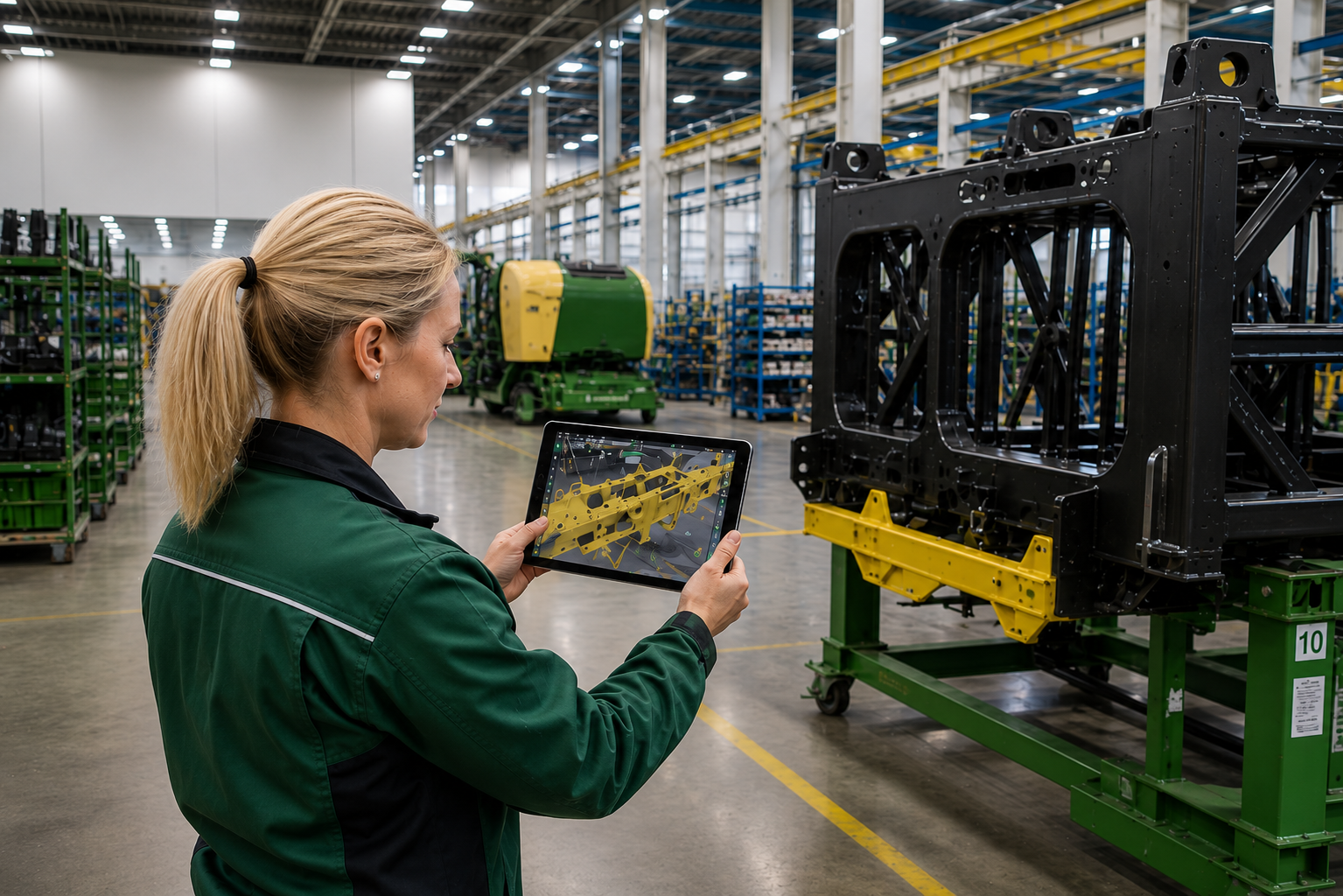
In the heart of German manufacturing excellence, the agricultural machinery giant faced a paradox Their unwavering commitment to precision, the very foundation of their brand, had become a critical operational bottleneck. The air in the Spelle, Germany plant, thick with the smell of hot metal and ozone, was aa testament to the company's manufacturing might. Yet, this sensory backdrop was also the stage for a growing operational drama. The challenge was rooted in the sheer scale of their products. Inspecting the massive, heavy, and complex welded components arriving from a global network of suppliers was a logistical nightmare that rippled through their entire production process. The established protocol was a relic of a bygone era, a slow, risky, and exorbitantly expensive dance of heavy machinery. It began with the laborious task of moving these colossal parts—some weighing several tons—from the receiving dock to a specialized, climate-controlled measurement room. A team of skilled riggers would carefully attach chains from an overhead crane, their shouts echoing in the cavernous hall as they coordinated the lift. The component would then be painstakingly maneuvered onto a heavy-duty forklift, a process fraught with peril. A slight miscalculation, a moment of inattention, and a multi-thousand-euro component could be damaged, or worse, a worker could be injured. This was the human cost of the old way – a constant, low-level anxiety that permeated the factory floor. The journey to the climate-controlled measurement room was a slow, deliberate procession, a stark contrast to the high-speed automation that characterized the rest of the plant.
Once inside the sterile environment of the measurement room, the inspection process itself was a study in inefficiency. Highly skilled technicians would spend hours wrestling with Coordinate Measuring Machines (CMMs) or meticulously applying cumbersome physical templates to verify dimensions. This painstaking process meant that only a small fraction of incoming components could ever be inspected, creating a statistical blind spot and a constant, nagging risk of quality issues slipping through the cracks. A single misaligned bracket or a weld that was off by a few millimeters could lead to significant rework costs, assembly line delays, and, most critically, a potential failure in the field—a scenario thatcould tarnish the company's hard-won reputation for quality and reliability. The trigger for change was not a single event, but a growing, undeniable realization: this outdated process was fundamentally incompatible with their ambitions to scale production, innovate, and maintain their competitive edge in a rapidly evolving global market. The leadership team knew that to build the future of farming, they first had to revolutionize the way they built their machines.
How It Works
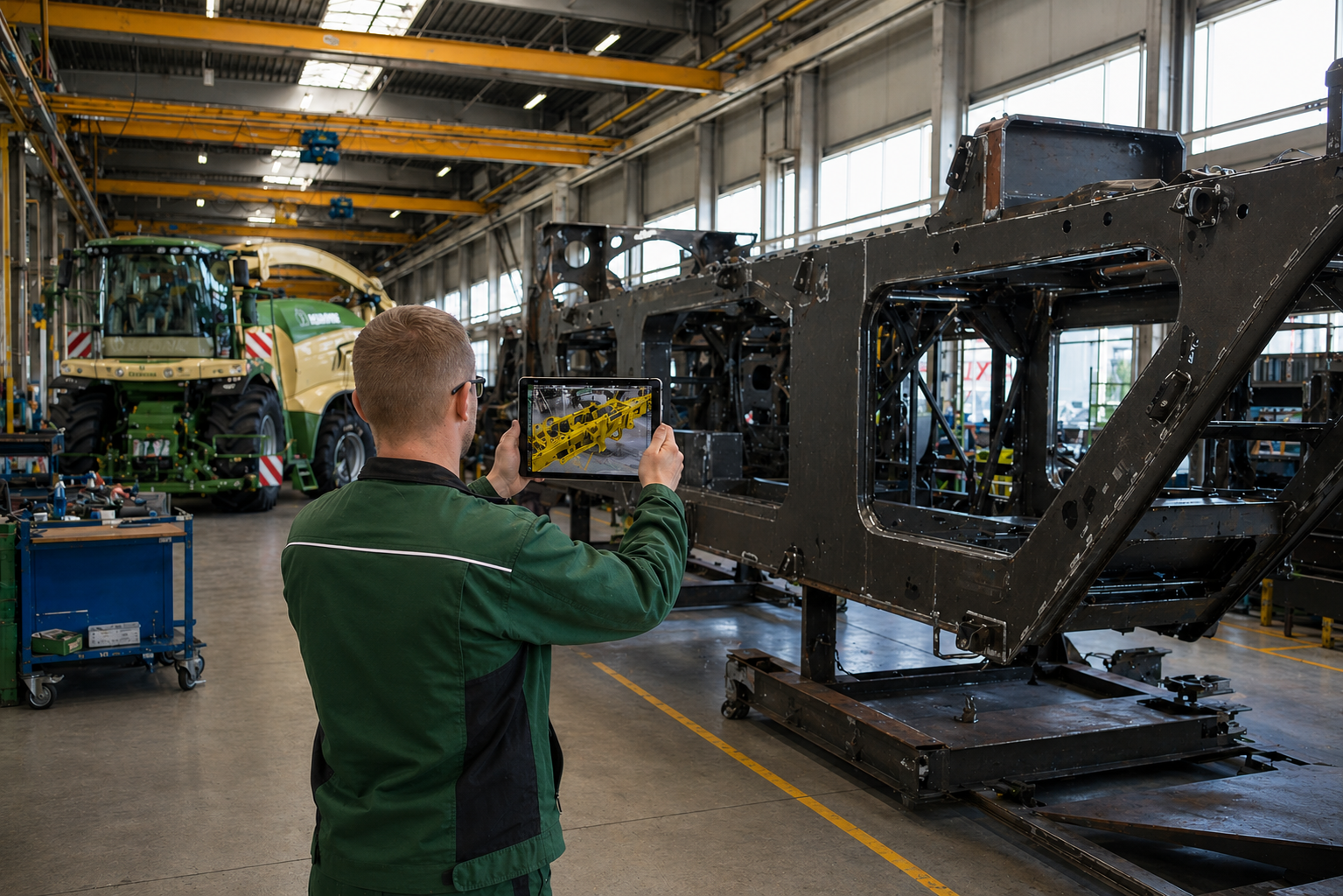
In response to this challenge, "the manufacturer didn't just seek an incremental improvement they opted for a paradigm shift. They implemented a state-of-the-art, tablet-based Augmented Reality solution from the technology provider Twyn, a move that would fundamentally redefine their approach to quality control. The new process was elegant in its simplicity and powerful in its execution. Instead of moving mountains of steel, the inspection process now moved at the speed of data. Inspectors, armed with ruggedized tablets, could walk directly to a component, whether it was on the receiving dock, in a staging area, or right on the assembly line. The core of the solution is the Twyn platform, a sophisticated yet user-friendly ecosystem composed of two key components: Twyn Studio and Twyn View. The Twyn platform is more than just an app; it's a complete ecosystem designed for industrial-scale deployment.
The process begins not on the factory floor, but in the engineering office. Using Twyn Studio, a quality engineer imports the component's master 3D CAD model—the "digital twin" or "source of truth" for the component—and uses it to create a detailed digital inspection plan. This plan is a comprehensive set of instructions, highlighting critical dimensions, tolerances, the placement of brackets and holes, and other key features that need to be verified. This preparation phase is swift and entirely digital, eliminating the need to create, maintain, or store physical templates. Once the plan is created, it is instantly available to the team on the factory floor. This eliminated the version control issues and delays associated with physical templates. The digital twin technology at the heart of the system is what makes this possible. It's not just a static 3D model; it's a dynamic, interactive representation of the physical component.
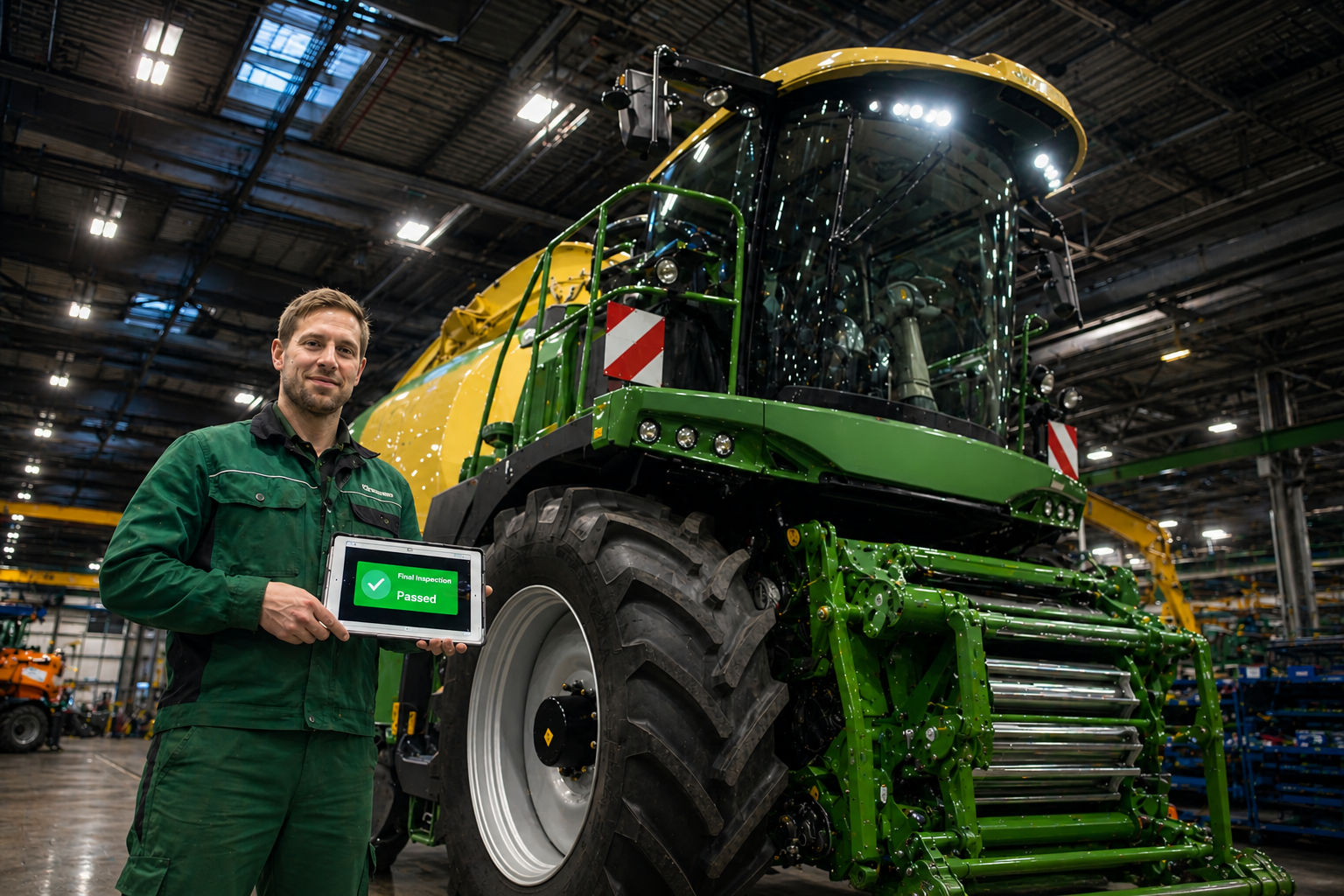
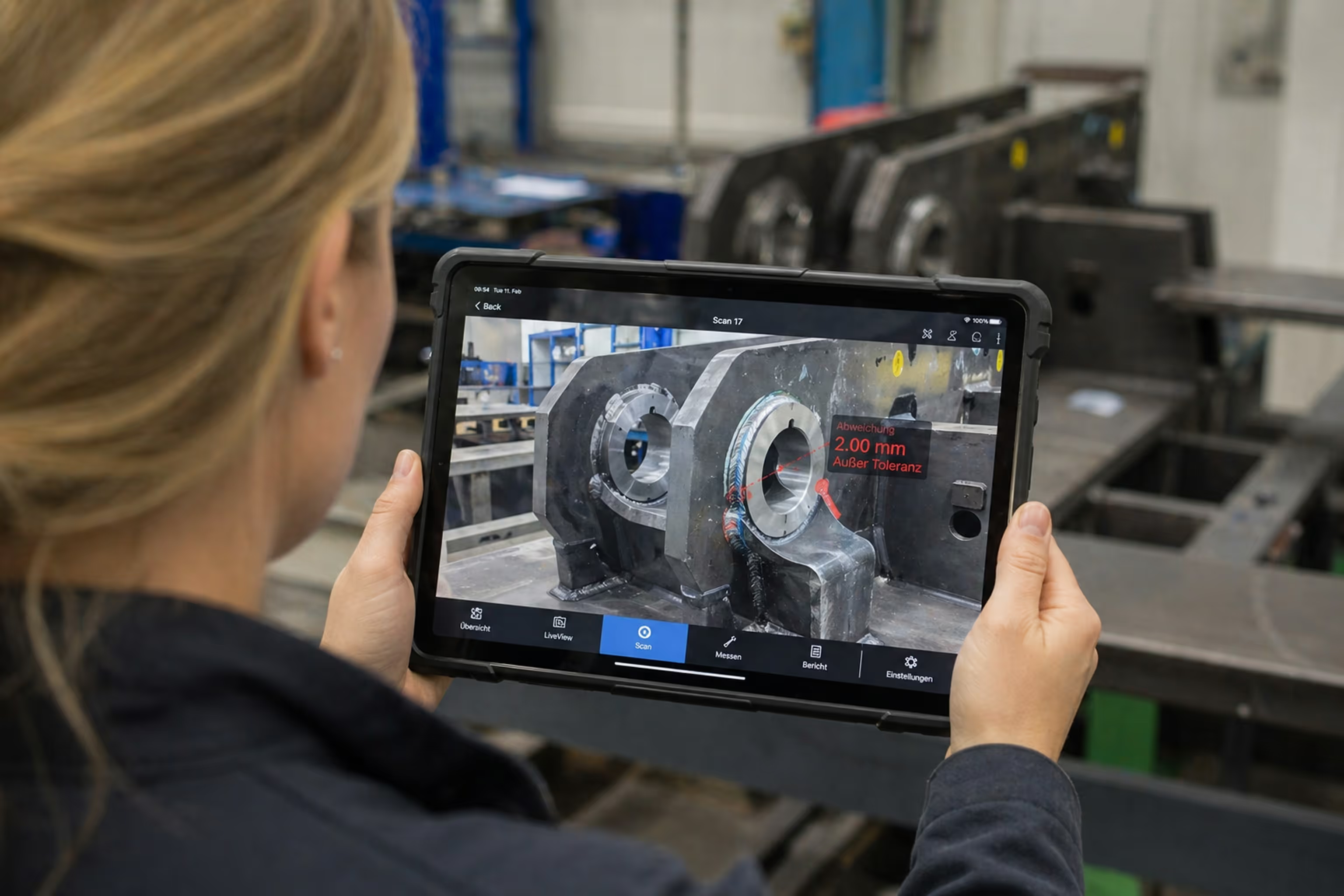
There, an inspector using the Twyn View application on their tablet simply points the device's camera at the physical component. The platform’s advanced, markerless tracking technology instantly recognizes the part and overlays the 3D CAD model onto the real-world view with millimeter-level accuracy. This is where the magic happens. The inspector can now see a perfect, one-to-one digital representation of the component superimposed on the physical object. Any deviations—a misaligned weld, an incorrectly drilled hole, a warped surface—are immediately and glaringly apparent, often highlighted in a contrasting color like red for instant recognition. This allows for a rapid, intuitive, and highly accurate visual verification that was previously impossible. The change management process was surprisingly smooth. The manufacturer's inspectors, accustomed to the old cumbersome methods, quickly embraced the new technology. The intuitive nature of the tablet interface, combined with a well-structured training program, meant that the team was up and running in a matter of days, not weeks. The data from each inspection, including photographic evidence of any deviations, is automatically captured andfed back into the manufacturer's Manufacturing Execution System (MES). This creates a closed-loop feedback system, providing a real-time, data-rich overview of supplier quality and performance, enabling a more strategic and proactive approach to quality management.
Departmental Impact
The implementation of the tablet-based AR solution sent a wave of positive transformation across the entire organization far beyond the confines of the quality department. It was a catalyst for a leaner, more agile, and more data-driven operation.
Quality Assurance:
This department experienced the most immediate and profound transformation. For Quality Assurance, the transformation was not just about efficiency; it was about empowerment. Inspectors were liberated from the slow, reactive, and logistically intensive CMM process. They were now empowered as proactive agents of quality, capable of performing comprehensive, in-situ inspections in minutes. The ability to catch non-conforming parts at the point of entry, before they ever entered the production stream, had a dramatic impact on downstream quality metrics. Rework costs plummeted, and the overall confidence in the quality of incoming materials soared. This shift from a reactive to a proactive quality culture was perhaps the most significant, yet intangible, benefit of the new system.
Logistics & Material Handling:
The ripple effect on the logistics team was significant. The constant, disruptive demand for crane and forklift operators to move components to and from the measurement room vanished. This freed up valuable material handling resources for more productive, value-adding tasks, such as supplying the assembly line and managing finished goods inventory. The factory floor became a safer, more organized, and more efficient environment, with a smoother flow of materials and a reduced risk of damage to high-value components during transit. The reduction in internal logistics created a domino effect of positive outcomes, from reduced fuel consumption to a less congested and safer factory floor.
Production & Assembly:
The assembly line is the heartbeat of any manufacturing operation, and it thrives on predictability. The AR solution provided a new level of confidence in the quality of incoming components. This meant fewer unexpected delays and disruptions on the line caused by out-of-spec parts. The assembly teams could work with a higher degree of certainty, leading to improved productivity, higher morale, and a more consistent production output. The result was a more predictable and reliable production schedule, which had a direct impact on the company's ability to meet customer demand and delivery timelines.
Engineering & Design:
The engineering department gained a powerful new tool. The AR system provided a constant stream of real-world, actionable data on supplier quality and manufacturing consistency. This data-rich feedback loop allowed engineers to identify recurring issues, refine designs for manufacturability, and make more informed decisions about material and supplier selection. It bridged the gap between the digital design and the physical reality of the factory floor. This direct line of sight into the manufacturing process allowed for a more agile and responsive design cycle, enabling Krone to bring better products to market, faster.
Procurement & Supplier Management:
The procurement team was armed with objective, undeniable data on supplier performance. Conversations with suppliers were no longer based on anecdotal evidence or occasional failures, but on a comprehensive, data-driven picture of quality. This allowed for more strategic and productive negotiations, fostering a culture of continuous improvement with their supply chain partners and enabling a more effective approach to supplier relationship management. This data-driven approach to supplier management transformed the procurement function from a cost center to a strategic partner in the value chain.
Finance & Controlling:
The financial impact was clear and compelling. The finance department could directly attribute significant cost savings to the AR implementation, including reduced labor costs for inspection and material handling, lower rework expenses, and the avoidance of costly production stoppages. The rapid ROI and the clear financial benefits made a powerful case for further investment in digital transformation initiatives across the organization. The ability to quantify the financial impact of a technology investment with such clarity and precision is the holy grail for any CFO, and the Twyn solution delivered in spades.
Quantified Business Impact
The transition to a tablet-based AR inspection system was not just a qualitative improvement; it delivered a powerful and precisely quantifiable return on investment that resonated from the factory floor to the executive boardroom. The numbers tell a story of profound operational and financial transformation for the manufacturer
The most dramatic improvement was in the reduction of setup time for inspections, which was slashed from several hours to mere minutes. The laborious process of moving a component, setting it up in a CMM, and programming the measurement routine was replaced by a simple, walk-up-and-inspect workflow. This single change unlocked a massive increase in operational efficiency and inspector productivity. This efficiency gain directly translated into a staggering reduction in total inspection costs, which were almost halved. This 50% cost reduction was a direct result of eliminating the non-value-added activities of transportation and setup, and it had a significant and immediate impact on the company's bottom line. This wasn't just a cost-saving measure; it was a strategic reallocation of resources from non-value-added activities to those that directly contribute to product quality and customer satisfaction.
Perhaps the most strategic benefit was the ability to dramatically increase the scope of inspections by 200-300% with the same number of employees. incoming parts, the manufacturer could now inspect every critical component or a much larger statistical sample, without increasing their headcount. This exponential increase in inspection coverage led to a step-change in quality assurance, virtually eliminating the risk of defective parts entering the production process. The financial and operational benefits were so significant and so immediate that the return on investment for the entire AR solution was achieved in less than 12 months. This rapid ROI underscored the compelling business case for tablet-based AR and solidified the company's commitment to its digital transformation strategy. This rapid payback period is a testament to the power of a well-executed digital transformation initiative to deliver not just incremental improvements, but a fundamental shift in the economics of manufacturing.
Conclusion
This case study stands asas a powerful and unequivocal testament to the transformative potential of tablet-based Augmented Reality in a modern industrial setting. It is a compelling narrative of how a forward-thinking company can achieve a remarkable constellation of business outcomes—slashing costs, accelerating timelines, and elevating quality—by strategically deploying the right technology to solve a critical operational challenge. By fundamentally rethinking their approach to quality control,The manufacturer didn't just optimize a process; they revolutionized it.
the most profound lesson from the manufacturer's success is a principle that resonates across all industries: the most significant gains are often found not in the incremental improvement of a core process itself, but in the radical elimination of the wasteful, non-value-added activities that surround it. The future of manufacturing is not just about making things better; it's about making them smarter. It's about leveraging the power of data and digital technologies to create a more agile, more efficient, and more resilient value chain. The manufacturer has provided a blueprint for this future, a future where the physical and digital worlds converge to create a new paradigm of industrial excellence. As other manufacturers look to navigate the complexities of the modern industrial landscape, they would do well to heed the lessons from this German agricultural giant. The message is clear: the future of manufacturing is here, and it fits in the palm of your hand.
Frequently Asked Questions
Q1 Can a similar AR solution work for my industry, such as automotive or aerospace, where we also deal with large, complex components?
A: Absolutely. While this case study focuses on agricultural machinery, the core principles of tablet-based AR for quality inspection are highly transferable. Industries like aerospace, automotive, defense, and heavy machinery manufacturing, which also manage large or complex components, can see similar benefits in cost reduction and efficiency gains. The key is leveraging your existing 3D CAD models to create a digital twin for visual inspection, eliminating the need for physical templates or moving parts to a CMM.
Q2How long does it take to deploy a tablet-based AR inspection solution and what does it cost?
A: Deployment time can vary based on the complexity of your components and the number of inspection plans required, but a pilot program can often be implemented in a matter of weeks, not months. The cost is significantly lower than traditional methods that rely on expensive CMMs or custom-built physical templates. The primary investment is in the software platform and ruggedized tablets, which provides a much faster path to ROI compared to heavy capital equipment.
Q3Q: What's the ROI and how soon will I see results?
A: The return on investment is typically seen very quickly. As demonstrated by the Krone Group, which halved its total inspection costs, the ROI is driven by a dramatic reduction in non-productive setup time (from hours to minutes) and the elimination of logistical costs. This allows you to double or even triple the number of inspections with the same resources, leading to immediate improvements in quality control, reduced rework, and fewer production delays. Most companies start seeing a measurable impact within the first few months of deployment.
Q4We are convinced of the benefits. How do we get started and what's the next step?
The next step is to schedule a discovery call to discuss your specific use case and components. Our team can then arrange a demonstration tailored to your needs. To get started, please contact Rrahul Sethi at rrahul@metaverse911.in for inquiries in India, or Vandana Bansal at vandana@metaverse911.co.uk for Global inquiries.
For India: Rrahul Sethi at rrahul@metaverse911.in
For Global inquiries: Vandana Bansal at vandana@metaverse911.co.uk