

The Story
The relentless hum of the assembly line in Pune wasn't just noise; it was the financial heartbeat of a leading Tier-1 automotive component manufacturer, a critical artery in India's burgeoning manufacturing ecosystem. For decades, this plant, a sprawling campus of industrial sheds and administrative blocks, had thrived on the bedrock of traditional production methods. It was a world of laminated work-instruction binders, greasy with the fingerprints of a thousand operators, of clipboards holding quality checklists, and of institutional knowledge passed down from veteran to rookie like a sacred oral history. This analog system, once a source of pride and a symbol of disciplined execution, was now straining under the immense pressure of the 21st-century automotive market.
The problem wasn't a single, dramatic failure, but a slow, creeping erosion of efficiency that had been accumulating for years. Global automakers, their primary clients, were demanding flawless quality, with defect tolerances measured in microns. They required just-in-time delivery schedules that left zero room for error and a dizzying proliferation of product variations to meet consumer tastes. The old ways were buckling. Operators, under pressure to hit their targets, would spend precious minutes, sometimes hours, hunting for the correct, often outdated, Standard Operating Procedure (SOP) binder amidst a library of similar-looking files. For a seasoned operator with twenty years on the line, the work was a high-stakes memory game, their hands moving with an ingrained, intuitive rhythm. But for a new hire, fresh from a technical institute, it was an overwhelming deluge of paper and tribal knowledge, leading to high attrition rates and a perpetual cycle of costly retraining. The human cost was palpable; stress and frustration were etched on the faces of the line supervisors, and these pressures inevitably translated into errors—small misalignments, incorrect torque values, missed inspection points—that threatened multi-million-dollar contracts and the company's hard-won reputation.
The tipping point arrived on a sweltering Tuesday afternoon during a critical pre-production run for a new export order. A series of minor setup errors, stemming from a misread and poorly photocopied manual page, cascaded into a full-blown line stoppage. For twelve agonizing hours, the heart of the plant fell silent. The financial damage was immense, but the blow to morale was even greater. The leadership team, huddled in a late-night emergency meeting, knew the old way was not just unsustainable; it was a liability. They needed a digital, human-centric solution that was robust, scalable, and practical for the realities of their Indian shop floor. This crisis became the catalyst for a transformative journey into tablet-based Augmented Reality.
The answer was a comprehensive smart factory initiative, a bold fusion of Augmented Reality and the existing Manufacturing Execution System (MES), all delivered through standard, industrial-grade Android tablets. This strategic pivot didn’t just solve their immediate operational bottlenecks; it redefined their production philosophy and ultimately earned them the prestigious Gold Award for "Excellence in Digitalization" from the Automotive Component Manufacturers Association of India (ACMA) in 2024 [1], a testament to their successful leap into the future.
How It Works: The "e-Jidoka" Approach
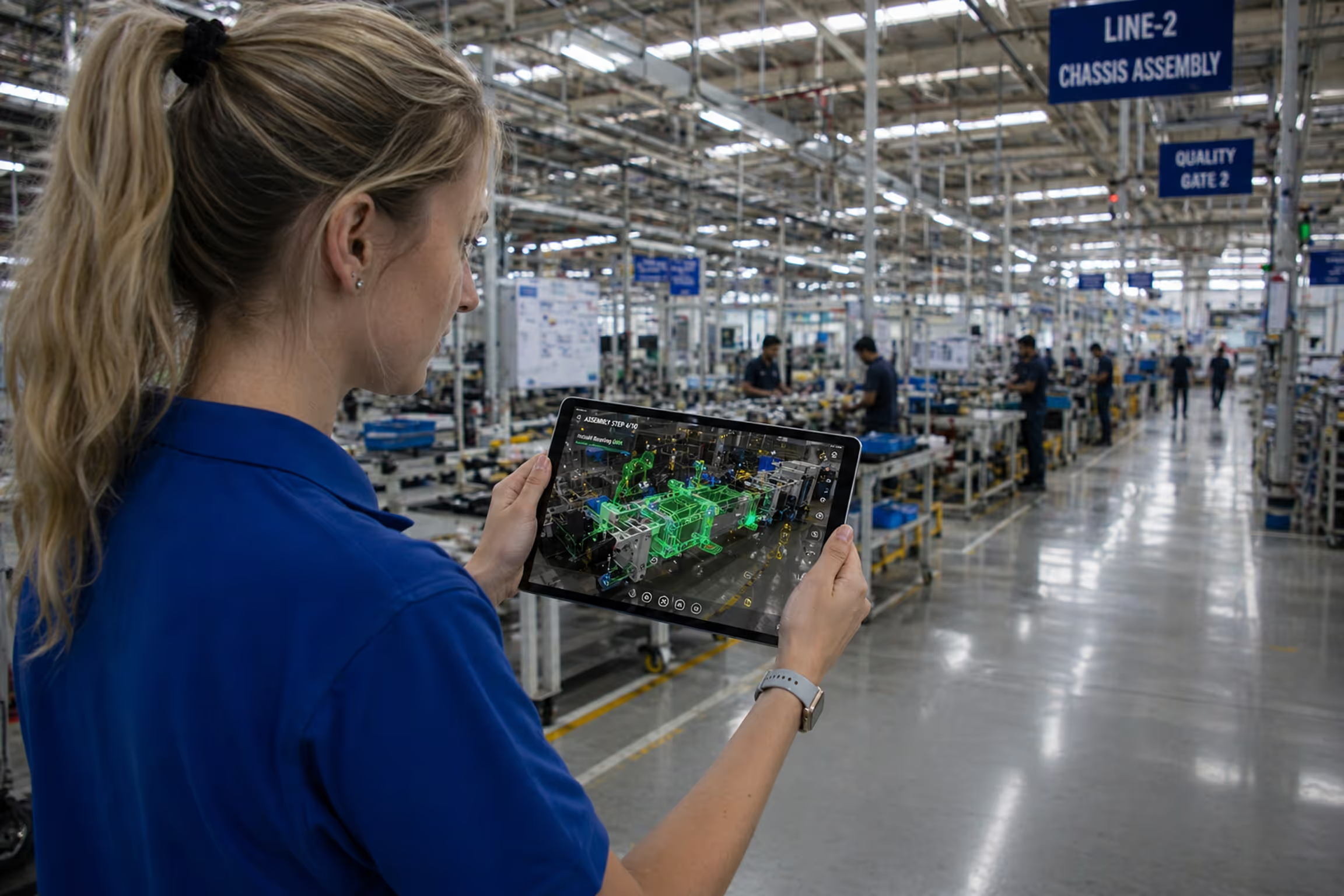
The core of this digital transformation is the concept of "e-Jidoka"—intelligent automation that empowers the human worker, a modern interpretation of the classic Toyota Production System principle of autonomation. The goal was not to replace the operator but to augment their intelligence with real-time, contextual data. Using standard, industrial-grade iPads and Android tablets, operators and maintenance personnel can now access AR overlays directly on the shop floor, bridging the gap between the digital world of data and the physical world of machinery.
The data flow is a closed-loop system designed for accuracy and speed. It begins with the company’s existing digital assets. 3D CAD models and procedural instructions are ingested by a centralized AR platform. This platform links instructions to specific machine parts or assembly zones. When an operator points their tablet's camera at equipment, the system uses computer vision to recognize the object and streams the relevant AR content to the tablet in real-time. This creates a dynamic, location-aware digital guide for the worker.
Deep, bi-directional integration with the existing Manufacturing Execution System (MES) and Product Lifecycle Management (PLM) systems is what elevates this from a simple viewing tool to a strategic enterprise platform. As an operator completes a task—for instance, tightening a series of bolts—they confirm it on the tablet with a simple tap. This action is more than just a checkmark; it’s a digital handshake that feeds data instantly back into the MES. This provides management with a live, granular, and previously unattainable view of production status, quality metrics, and operator performance. This two-way data flow is the cornerstone of traceability and continuous improvement. For example, during a complex changeover, the tablet not only visually highlights which valves to adjust and in what sequence but also displays the required torque settings, all overlaid directly on the live camera feed. Once a step is completed and verified, the system automatically logs the timestamp, operator ID, and any data entered (like a torque value), creating an immutable digital audit trail. This eliminates guesswork, ensures procedural adherence, and provides a rich dataset for future analysis and process optimization.
Security and data integrity are paramount in this connected environment. The entire system operates on a secure, segregated, plant-wide Wi-Fi network, with all data encrypted both in transit and at rest. The AR platform is firewalled from the open internet, and access is controlled through granular, role-based permissions, ensuring that operators only see the information relevant to their specific tasks and security clearance. Change management was a critical component of the rollout. The deployment began with a carefully planned pilot program on a single, high-priority production line. A cross-functional team of 'digital champions'—tech-savvy operators, maintenance staff, and quality inspectors—were trained first. This team became the project's internal advocates, providing invaluable, real-world feedback to refine the user interface and workflows before the system was scaled to the entire plant. The training program was hands-on, conducted directly on the shop floor, allowing operators to learn in their actual work environment. The intuitive, visual nature of the tablet interface, familiar to anyone who has used a smartphone, meant that most operators were comfortable and proficient with the system within a single shift, a powerful testament to the user-centric design.
Departmental Impact
The implementation of tablet-based AR created a powerful ripple effect of efficiency across multiple departments, rewiring how teams collaborated and accessed information, breaking down silos, and fostering a culture of data-driven decision-making.
Production Department
For the production team, the impact was immediate. The AR system reduced the cognitive load on operators by providing step-by-step visual guidance, accelerating onboarding and reducing human error. This led to a new level of process standardization, boosting first-pass yield and reducing rework.
Quality Assurance
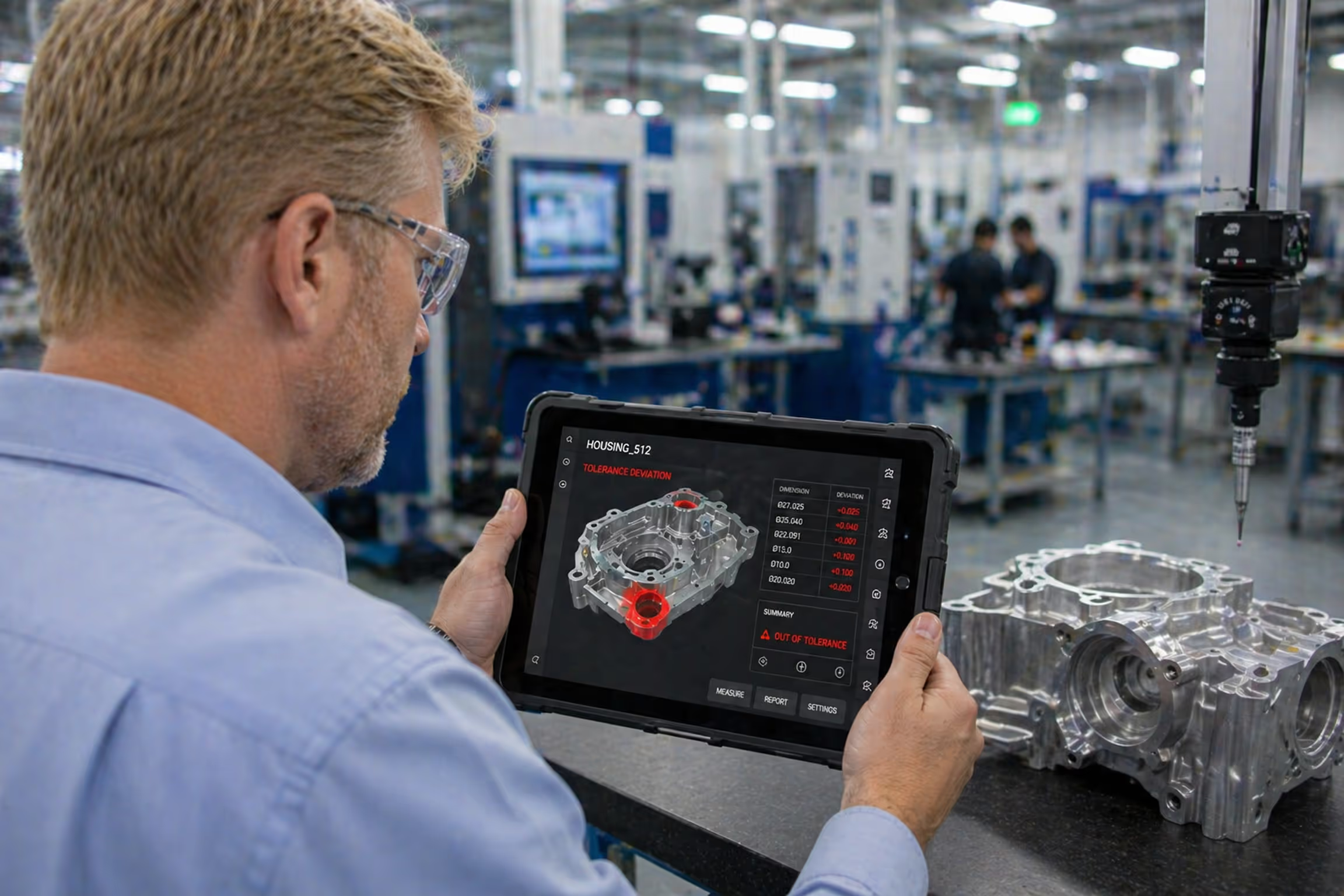
The Quality Assurance department became a proactive, in-process quality gate. With AR-enabled tablets, inspectors verified components against a digital twin in real-time, spotting microscopic deviations. This created a time-stamped visual record for audits and root cause analysis, reducing the defect escape rate by over 60% and ensuring compliance with global standards.
Maintenance & Engineering
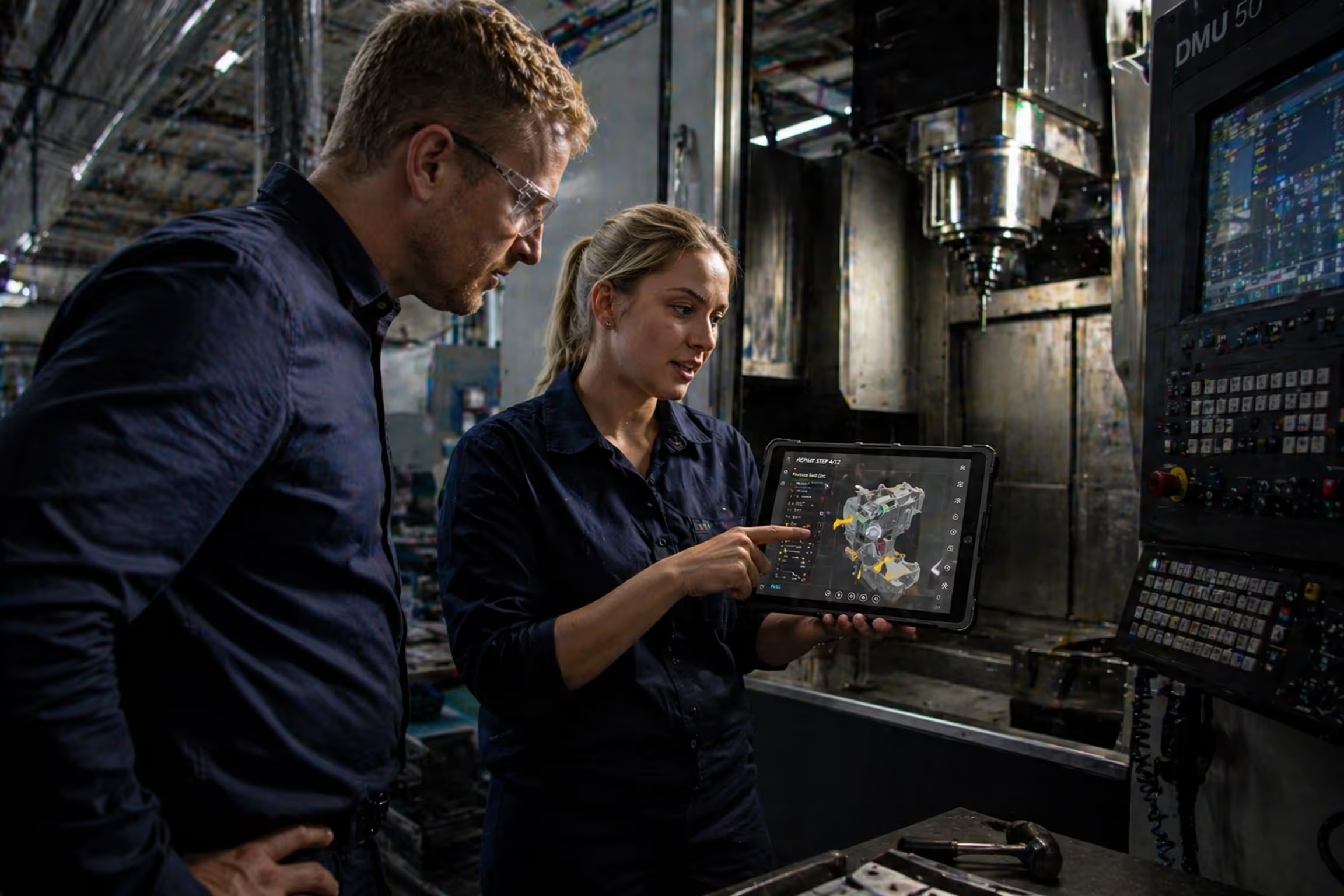
The maintenance and engineering teams became a unified force for reliability. Maintenance technicians, guided by AR overlays, could now quickly and accurately diagnose and repair faulty components. The tablet would highlight the specific failing part and display the exact repair sequence, complete with animated 3D instructions. This dramatically reduced the Mean Time To Repair (MTTR). The system also integrated with the inventory management system, allowing technicians to instantly see if a spare part was in stock and its precise location in the storeroom. For the engineering team, the data flowing back from the AR platform was a goldmine. They could now see which components were failing most frequently, identify patterns of wear and tear, and use this real-world data to inform future product design and process improvements, creating a virtuous cycle of reliability.
IT & Digital Infrastructure
The IT department’s role shifted from support to strategic enabler. They deployed a robust Wi-Fi network and managed the secure integration of the AR platform with MES, PLM, and ERP systems. This created a unified data ecosystem, enabling advanced analytics and predictive maintenance models, placing IT at the forefront of the company's Industry 4.0 journey.
EHS (Environment, Health & Safety)
The AR solution also benefited the EHS department. Safety procedures were delivered as interactive alerts and checklists on tablets. For high-risk tasks, the system provided mandatory warnings and required operator confirmation. This proactive approach reduced accidents and ensured regulatory compliance. The digital audit trail simplified safety audits, providing a clear record of all safety-related checks.
Quantified Business Impact
The shift to tablet-based AR was not a technology experiment; it was a strategic business decision that delivered measurable, award-winning results. The financial and operational improvements provided a compelling business case, with a full return on investment (ROI) achieved in just under 11 months.
Key Performance Indicators:
Machine Downtime: The most immediate and financially significant impact was a 35% reduction in machine downtime. By empowering maintenance technicians with AR-guided repair sequences and real-time access to schematics, the Mean Time To Repair (MTTR) was cut by nearly 50%. This translated into millions of rupees saved in lost production and a significant increase in overall equipment effectiveness (OEE).
First-Pass Yield: The plant achieved a world-class 97% first-pass yield, a dramatic improvement from the previous 82%. By catching errors in-process with AR-powered quality checks, costly end-of-line rework and scrap were virtually eliminated. This not only saved money but also enhanced the company’s reputation for quality and reliability.
Operator Training Time: Onboarding time for new operators on complex assembly lines was reduced by over 60%. The intuitive, step-by-step visual guidance allowed new hires to become proficient and productive in days rather than weeks, dramatically reducing training costs and improving workforce flexibility.
Beyond these core metrics, the initiative delivered broader business benefits. Employee retention improved by 25%, and operators reported higher job satisfaction. This stability became a competitive advantage. Improved quality led to higher scores in customer audits and reduced post-sale quality claims, strengthening client relationships. The enhanced agility in production changeovers also reduced the time-to-market for new components, allowing the company to respond more effectively to market demands. This digital transformation culminated in the facility winning the prestigious ACMA Gold Award for Digitalization in 2024 [1], validating their vision and signaling that tablet-based AR is a mature technology for the Indian automotive sector.
Conclusion: The Future is on a Tablet
This ACMA award-winning case study is a blueprint for the future of Indian manufacturing. It demonstrates that expensive or fragile AR headsets are not a prerequisite for shop floor digitization. The future is on a tablet.
By leveraging the power of standard industrial iPads and Android tablets, this Tier-1 supplier successfully implemented the principle of "e-Jidoka," empowering their workforce with real-time, contextual, and visual data. They didn’t just reduce their MTTR, improve their first-pass yield, and accelerate operator training; they fundamentally changed the relationship between their workers and their work. They replaced ambiguity with clarity, frustration with empowerment, and guesswork with data-driven precision. And they did it all using devices that their workforce already knew how to use, eliminating the friction and resistance that so often plagues new technology adoption. The lesson learned is that the user experience is paramount; technology must adapt to the user, not the other way around.
"For the thousands of mid-to-large Indian automotive component manufacturers, and indeed for any complex manufacturing or assembly operation, facing similar challenges of rising quality demands, skills shortages, and intense global competition, the path forward is clear. Tablet-based AR is not a futuristic dream; it is a pragmatic, high-ROI, and enterprise-ready solution for the here and now. It offers a tangible and accessible entry point into Industry 4.0, one that solves immediate and costly operational bottlenecks in production, quality, and maintenance. The lesson from this award-winning story is simple: the power to transform your factory is already in your hands. It’s time to pick it up.
Frequently Asked Questions
Q1Can a similar AR solution work for my industry/problem?
A: Absolutely. While this case study focuses on automotive manufacturing, the core principles of tablet-based AR for guided work instructions, quality control, and maintenance are transferable to any industry with complex manual processes. Aerospace, heavy machinery, pharmaceuticals, and consumer goods manufacturing have all seen significant benefits from similar solutions.
Q2How long does it take to deploy and what does it cost?
A pilot program for a specific use case, like a single production line or critical machine, can typically be deployed in 6-8 weeks. The cost is significantly lower than headset-based AR solutions, as it leverages existing industrial tablets (like iPads or rugged Android devices). The primary investment is in the software and integration, which provides a much more accessible entry point to Industry 4.0.
Q3 What's the ROI and how soon will I see results?
The Return on Investment (ROI) is driven by direct operational improvements. Key metrics include a 15-30% reduction in Mean Time To Repair (MTTR), a 20-40% improvement in first-pass yield, and a 50% reduction in training time for new operators. Tangible results are often visible within the first 3-6 months of a pilot deployment, with the ROI case strengthening as the solution scales across the plant.
Q4How do I get started? What's the next step?
The first step is a 30-minute discovery call to understand your specific challenges and operational goals. We can then schedule a tailored demo to show you how a tablet AR solution would address your use case. To get started, please contact Rrahul Sethi at rrahul@metaverse911.in for inquiries in India, or Vandana Bansal at vandana@metaverse911.co.uk for global inquiries.
For India: Rrahul Sethi at rrahul@metaverse911.in
For Global inquiries: Vandana Bansal at vandana@metaverse911.co.uk