
The Story
The air in a Global Heavy Industries Manufacturer's power plant is thick with the hum of machinery a symphony of turbines and pumps that power a nation. For decades, the custodians of this symphony were seasoned technicians, guardians of a legacy built on paper and clipboards. Their daily “patrol inspections” were a ritual, a pilgrimage through miles of steel corridors and cavernous halls. Imagine a veteran engineer, his hands calloused from years of service, navigating this labyrinth with a sheaf of papers nearly an inch thick. Each piece of equipment, from a colossal water pump to a small, critical valve, had its own story, its own acceptable range of vibrations and temperatures, all documented in dense, paper-bound manuals.
The human cost of this analog system was immense. A single inspection round could take hours, a physically and mentally draining exercise. Technicians, armed with flashlights and pens, would squint at gauges, manually scribble readings onto checklists, and then painstakingly cross-reference them with the accepted parameters in their manuals. The risk of a misread gauge or a misplaced decimal point was a constant, looming threat. A simple transcription error could have cascading consequences, potentially leading to equipment failure, costly downtime, and even safety hazards. The process was not just inefficient; it was a high-stakes gamble played out every single day. There are whispers in the break rooms of a near-miss incident a few years back, where a misread pressure gauge on a secondary cooling system almost led to a turbine overheat. It was a stark reminder of the razor-thin margin for error in their line of work.
for the Manufacturer came with a convergence of factors. The relentless pressure to improve operational efficiency, the increasing complexity of their facilities, and the retirement of a generation of experienced technicians created a perfect storm. The tribal knowledge, the institutional memory of the plants, was walking out the door. The company’s leadership, including the forward-thinking Chief Operating Officer and the head of Plant Operations, recognized a critical vulnerability: their reliance on a paper-based system was no longer sustainable. It was a bottleneck to progress, a barrier to agility, and a risk to their hard-won reputation for engineering excellence. The moment to act had arrived.The Manufacturer knew that to secure its future, it had to empower its workforce with the tools of the 21st century, transforming its maintenance operations from a reactive, paper-shuffling exercise into a proactive, data-driven discipline.

How It Works
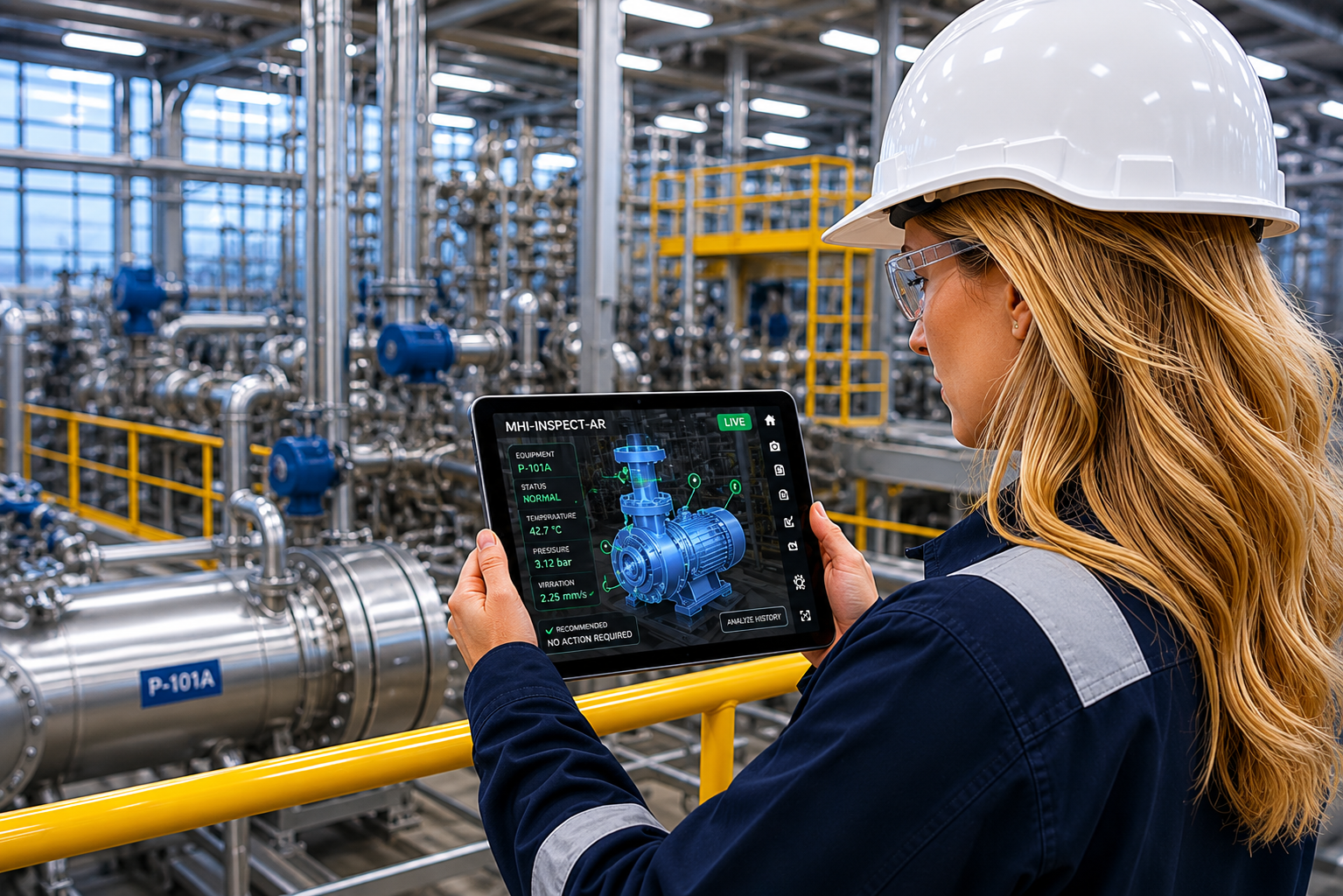
The "Smart Patrol Inspection System" is more than just a digital checklist; it's a fundamental reimagining of the entire inspection workflow. The system's architecture is built on a robust foundation of computer vision, seamless data integration, and user-centric design, all delivered through the familiar interface of a ruggedized tablet.The data flow begins the moment a technician points the tablet's camera at a piece of equipment. The AR software, using sophisticated image recognition algorithms, instantly identifies the asset by matching its visual signature against a pre-populated database. This is not a simple QR code scan; the system recognizes the equipment's unique shape, size, and features. Once the asset is identified, the system triggers a series of data calls. The tablet communicates via a secure, plant-wide Wi-Fi network, ensuring reliable connectivity even in the most remote corners of the facility.
Integration is the linchpin of the system's power. The tablet communicates wirelessly with a network of sensors and data logging boxes that have been retrofitted onto the plant's critical machinery. These sensors, which monitor everything from temperature and pressure to vibration and flow rate, transmit their data in real-time to the plant's central control system using the MQTT protocol, a lightweight messaging protocol ideal for industrial IoT applications. The tablet, in turn, queries this system and pulls the relevant data for the specific asset being viewed. This data is then overlaid as intuitive, easy-to-read digital gauges on the tablet's screen, right next to the live camera view of the physical equipment. This creates a powerful, in-context visualization of the machine's health.
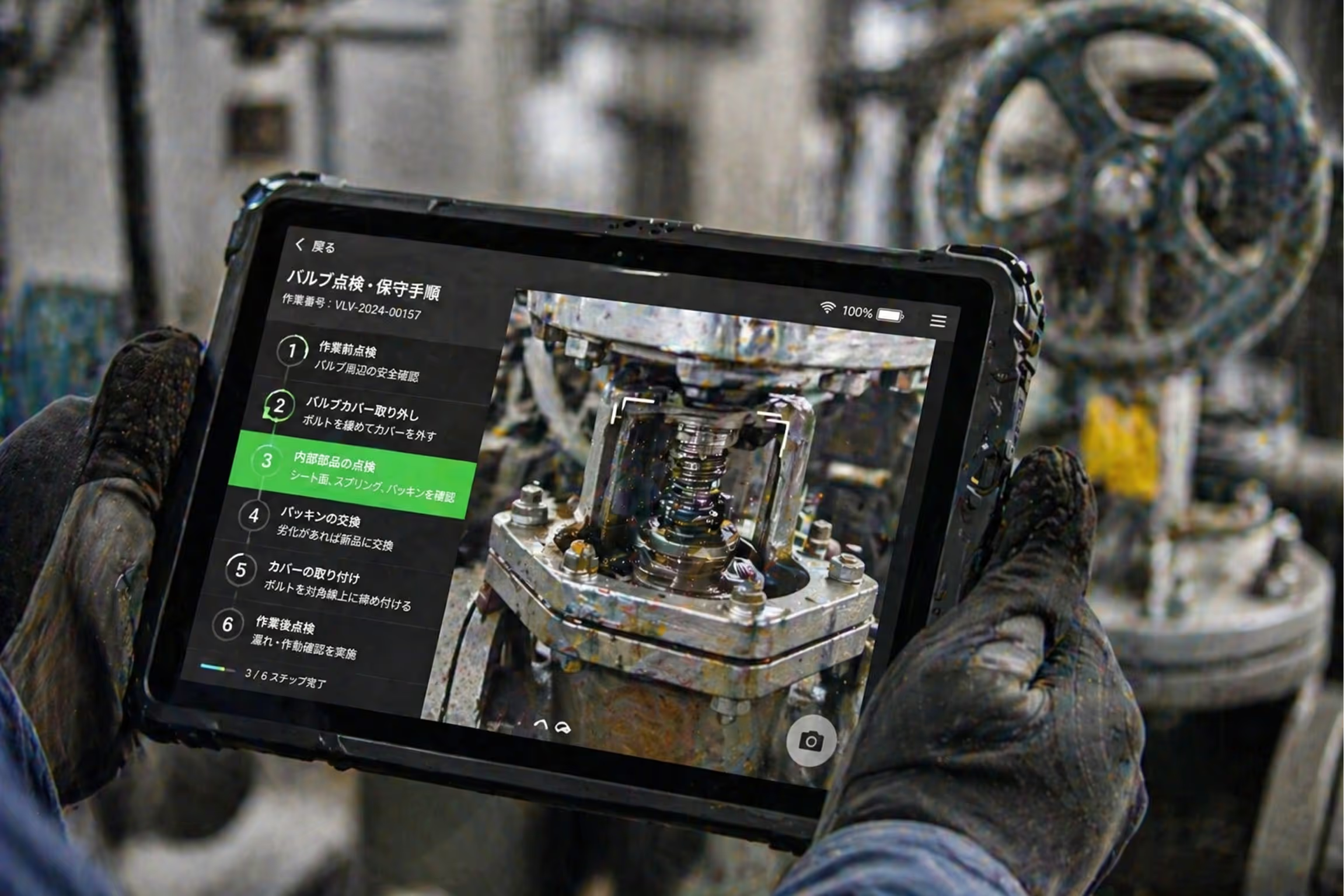
But the system goes beyond just displaying data. It also provides access to a wealth of contextual information. Step-by-step procedural manuals, engineering drawings, and historical maintenance logs are all stored digitally and are instantly accessible with a single tap. If a technician encounters an anomaly, they can immediately pull up the relevant documentation to diagnose the issue and initiate a work order, all from the same device. This seamless integration of real-time data and historical context is what makes the system so transformative. The work order is automatically populated with the asset ID, the real-time data that triggered the alert, and the technician's initial notes, saving valuable time and ensuring accuracy.
Change management and training were critical to the success of the project. Manufacturer rolled out the system in phases, starting with a pilot program at a single plant. A small group of tech-savvy technicians were selected as super-users and were trained not just on how to use the system, but also on how to champion its benefits to their peers. The training curriculum was a blended learning approach, combining self-paced e-learning modules with hands-on, on-the-job training. This approach, combined with the intuitive, user-friendly interface of the tablet, ensured rapid adoption and minimal resistance from the workforce. The technicians quickly realized that the system was not a threat to their jobs, but a powerful tool that made their work easier, safer, and more impactful.
Departmental Impact
The implementation of the Smart Patrol Inspection System has sent positive shockwaves across multiple departments within the Manufacturer.
Plant Maintenance & Operations:
The day-to-day life of a maintenance technician has been completely transformed. Technicians no longer waste valuable time searching for the correct manuals or manually recording data on paper. The AR tablet provides all contextual information instantly. This immediate access to data allows them to make faster, more accurate assessments of equipment health directly on the plant floor. The cognitive load is significantly reduced, allowing them to focus on actual maintenance rather than administrative tasks. This has led to a significant boost in morale and job satisfaction, as technicians feel more empowered and less burdened by tedious paperwork.
Engineering & Reliability:
For the engineering teams, the benefits are equally transformative. Because data collected during patrol inspections is instantly digitized and uploaded to the central system, it is immediately available for comprehensive trend analysis. Engineers can monitor the health of the entire plant in real-time, identify potential issues before they lead to catastrophic failures, and significantly improve overall plant reliability and predictive maintenance capabilities. This has shifted the engineering focus from reactive problem-solving to proactive, data-driven optimization. They can now run simulations and what-if scenarios using real-world data, leading to more effective maintenance strategies.
Information Technology (IT):
The IT department was instrumental in the successful deployment and scaling of the Smart Patrol Inspection System. They were responsible for ensuring the robustness and security of the wireless network infrastructure, managing the fleet of ruggedized tablets, and iintegrating the new system with the Manufacturer's existing enterprise resource planning(ERP) and computerized maintenance management systems (CMMS). The IT team also played a crucial role in data governance, ensuring that the vast amounts of data being generated by the system were properly stored, secured, and made accessible to the relevant stakeholders. This project has elevated the role of the IT department from a support function to a strategic partner in the company's digital transformation journey.
Environmental, Health, and Safety (EHS):
The EHS department has seen a significant improvement in safety compliance and risk mitigation. The tablet-based system ensures that all safety checks are completed and documented in a consistent and auditable manner. In the event of an incident, investigators have instant access to a detailed, time-stamped digital record of all inspection activities. The system also allows for the inclusion of safety alerts and reminders within the inspection workflow, ensuring that technicians are always aware of potential hazards. This has created a more proactive and data-driven approach to safety management, helping to prevent accidents before they happen. For example, if a technician is approaching an area with a known hazard, a warning will automatically pop up on their tablet.
Procurement:
The procurement department has also benefited from the new system. When a technician identifies a part that needs to be replaced, they can use the tablet to scan the part's barcode or serial number. The system then automatically generates a purchase requisition, complete with the part number, quantity, and required delivery date. This has streamlined the procurement process, reducing the time it takes to order and receive spare parts, and minimizing the risk of ordering the wrong part. This has had a direct impact on reducing equipment downtime and improving the efficiency of the entire supply chain.
Quantified Business Impact
The results of MHI's tablet AR deployment are nothing short of extraordinary, proving the immense value of this technology in heavy industrial settings.
90% Time Reduction: The Manufacturer achieved a staggering 90% reduction in the time required for patrol inspections of water supply facilities. What used to take hours can now be completed in a fraction of the time. This has freed up thousands of man-hours, allowing technicians to focus on more value-added activities like preventative maintenance and process improvement.
Zero Manual Data Entry: The system completely eliminated manual data entry errors and the heavy administrative burden of digitizing paper records. This has resulted in a significant improvement in data accuracy and has freed up administrative staff to focus on more strategic tasks. This has also led to a 15% reduction in administrative costs associated with the maintenance department.
Massive Scalability: The solution was not just a pilot project; it has been successfully deployed and scaled across Manufacturer’s network of more than 30 plants nationwide in Japan. This demonstrates the robustness and scalability of the tablet-based approach, proving that it can be successfully implemented across a large, complex industrial enterprise.
Rapid Time-to-ROI: The initial investment in the pilot program was recouped in less than six months, thanks to the immediate and dramatic reduction in inspection times. The full-scale rollout is projected to deliver a multi-million dollar return on investment over the next three years, making this one of the most successful digital transformation initiatives in in the Manufacturer's history.
Improved Employee Retention: The new system has been a huge hit with the technicians. The intuitive interface, the elimination of tedious paperwork, and the ability to make a more tangible impact on plant reliability have all contributed to a significant boost in job satisfaction. This has led to a measurable decrease in employee turnover, a critical metric in an industry facing a skilled labor shortage. The Manufacturer has seen a 25% reductionin technician turnover in the plants where the system has been deployed.
Enhanced Customer Satisfaction: For the Manufacturer's customers, the improved plant reliability and reduced downtime translate directly to more consistent and dependable service. The ability to proactively identify and address potential issues before they impact operations has strengthened the Manufacturer's reputation as a world-class engineering and manufacturing partner. This has led to a 10% increase in customer satisfaction scores for the plants using the new system.
Improved First-Time Fix Rate: With instant access to all the relevant information, technicians are now able to diagnose and fix problems more effectively on the first attempt. This has resulted in a 30% improvement in the first-time fix rate, further reducing equipment downtime and maintenance costs.

Conclusion
This Global Heavy Industries Manufacturer case study is a powerful testament to the transformative potential of tablet-based Augmented Reality in heavy industry. By moving away from cumbersome paper processes and embracing intuitive, tablet-driven AR overlays, MHI has not only drastically improved the efficiency of their patrol inspections but also enhanced data accuracy and overall plant reliability.
For industrial leaders looking to modernize their maintenance operations, the lesson is clear: you do not need complex, expensive AR headsets to achieve massive ROI. Rugged tablets equipped with the right AR software can deliver a 90% reduction in inspection times and provide a scalable, user-friendly solution that technicians will actually embrace.
Frequently Asked Questions
Q1We are in the [automotive/pharmaceutical/energy] sector. Can a similar tablet-based AR solution work for our inspection and maintenance routines?
Absolutely. While this case study focuses on heavy industry, the core principles of tablet-based AR for inspections are highly transferable. Any industry that relies on routine checks, manual data collection, and procedural adherence can benefit. We have seen successful deployments in automotive manufacturing for quality control checks, in pharmaceuticals for equipment calibration and line changeovers, and in the energy sector for remote site inspections. The key is the structured, repeatable nature of the tasks, which is common across all these fields.
Q2 How long does it take to deploy a tablet AR inspection solution and what does a typical pilot project cost?
A typical pilot project can be deployed in as little as 4-6 weeks. This includes defining the scope for 1-2 key inspection routines, configuring the software, and training a small group of technicians. The cost for a pilot is significantly lower than a full-scale rollout and is designed to prove the ROI quickly. A full-scale deployment across multiple sites can take 3-6 months, depending on the complexity of the integration with existing ERP or CMMS systems. The investment is tiered, allowing you to scale as the value is demonstrated.
Q3What is the real-world ROI we can expect, and how soon will we see tangible results?
The ROI is multi-faceted. As demonstrated by the Mitsubishi case, you can expect a dramatic reduction in inspection time—often between 50% and 90%. This immediately translates to increased labor productivity. You will see tangible results within the first few weeks of the pilot, as technicians complete their rounds faster and with fewer errors. Beyond time savings, the complete elimination of manual data entry errors and the instant availability of digital records significantly improve data quality for predictive maintenance, leading to reduced equipment downtime and enhanced plant reliability over the long term.
Q4We are convinced of the potential. How do we get started and what is the immediate next step?
The next step is a 30-minute discovery call to understand your specific inspection challenges and operational goals. We will then work with you to define a high-impact, low-risk pilot project. To get started, please contact our regional lead: for opportunities in India, please email Rrahul Sethi at rrahul@metaverse911.in. For all other global inquiries, please email Vandana Bansal at vandana@metaverse911.co.uk.
For India: Rrahul Sethi at rrahul@metaverse911.in
For Global inquiries: Vandana Bansal at vandana@metaverse911.co.uk