
The Story
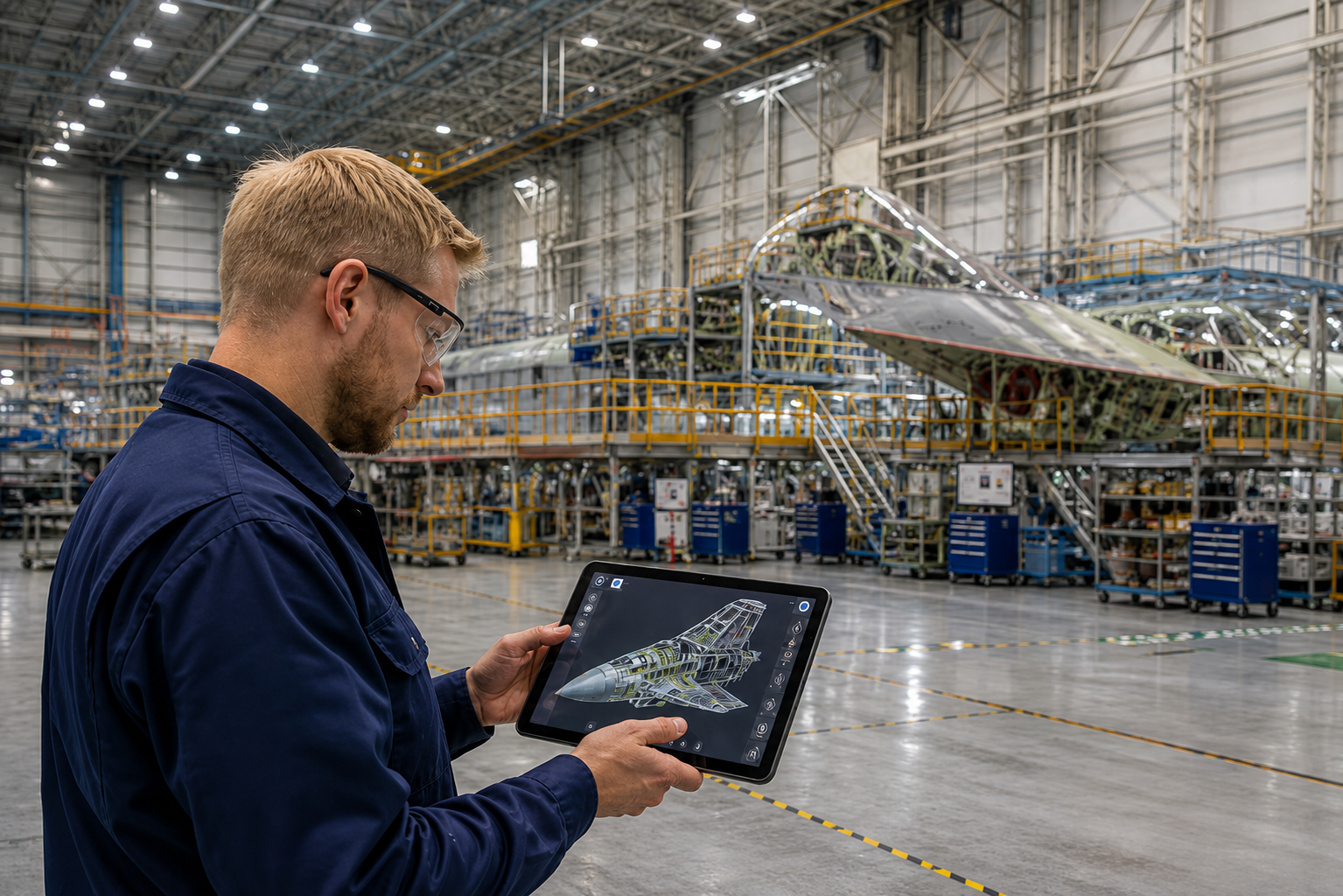
In the high-stakes world of aerospace manufacturing, precision isn't just a goal; it's the bedrock of safety and performance. For theat a leading aerospace & defence manufacturer, assembling the Eurofighter Typhoon, a multi-role combat aircraft that represents the pinnacle of modern engineering, this principle is a daily reality. The challenge was monumental. The Typhoon is not merely a machine but a tightly integrated system of systems, a symphony of thousands of intricate components, from advanced avionics to powerful jet engines. Weaving these elements together with flawless accuracy is a task where a single, minuscule error—a misaligned bracket, an incorrectly torqued bolt, a misplaced wire—could have catastrophic consequences, not just for the multi-million-dollar aircraft, but for the pilots who entrust their lives to its reliability. The history of the project was steeped in a tradition of meticulous, yet increasingly outdated, craftsmanship.
The human cost of the old way was palpable and growing. On the bustling assembly floor at the Warton/Samlesbury facility, frustration mounted daily. Highly skilled technicians, experts in their craft, found themselves spending more time deciphering dense, convoluted 2D engineering drawings and cross-referencing paper-based manuals than physically building the aircraft. The cognitive load was immense. They were forced to mentally translate complex, layered schematics into a three-dimensional reality, a process that is inherently slow and fraught with the potential for human error. This constant mental gymnastics led to a pervasive sense of stress, a feeling of being perpetually caught between the conflicting demands of maintaining uncompromising quality while adhering to an ever-accelerating production schedule. The pressure to maintain both speed and accuracy was a constant, draining force on the workforce.
The reliance on these legacy methods created a significant and growing disconnect between the design office and the production floor. When design engineers made crucial updates or modifications to the aircraft’s plans, the changes triggered a logistical nightmare. New drawings had to be printed, distributed, and verified, a cumbersome process that often resulted in version control issues and production delays. It became clear that this analog workflow was no longer sustainable. The trigger for change was the realization that to remain competitive and to continue pushing the boundaries of aerospace innovation, a fundamental shift was necessary. In response, the aerospace manufacturer launched ” initiative, a strategic imperative to digitize and revolutionize its entire manufacturing process, placing advanced technologies at the heart of its operations.
How It Works
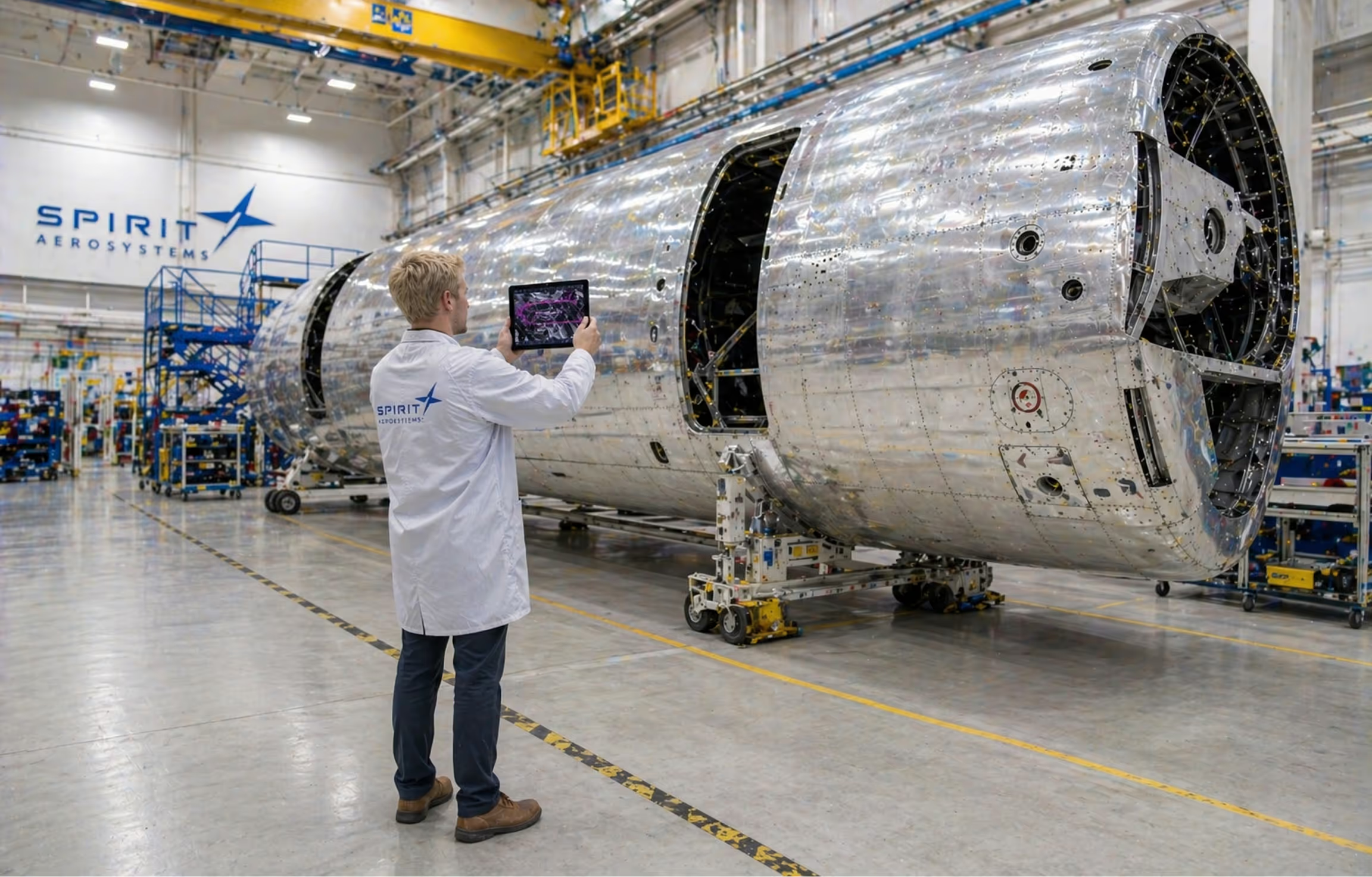
The aerospace manufacturer's digital evolution the strategic deployment of tablet-based Augmented Reality (AR), a practical solution for real-world problems. Technicians were equipped with ruggedized industrial tablets, replacing cumbersome paper manuals. The magic happened when a technician pointed the tablet's camera at a specific aircraft component or assembly area. Pointing the tablet's camera at a component instantly overlaid digital information like 3D models and instructions onto the real-world view. For instance, a glowing 3D path for a wiring harness could be seen, eliminating guesswork.
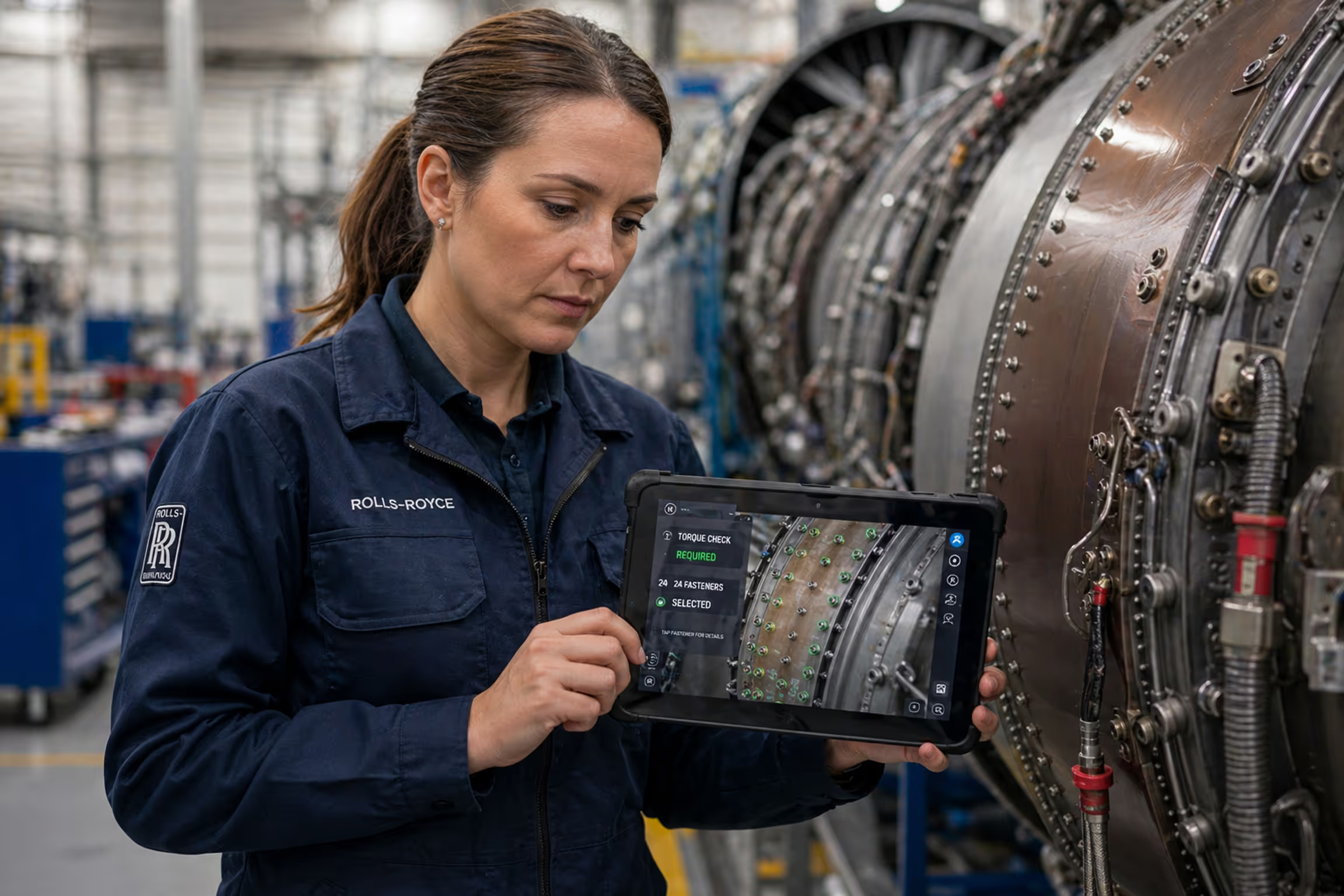
The system’s intelligence extended far beyond simple visual aids. The AR application provided a wealth of critical, context-sensitive data in real-time. As a technician worked, the tablet would display precise torque specifications for bolts, confirm correct part numbers, and provide instant access to relevant quality standards. This seamless fusion of digital information and the physical work environment streamlined the entire assembly process, delivering a dual benefit of significantly boosting both speed and accuracy. Furthermore, this digital approach established a comprehensive "digital thread," a complete and unbroken record of the entire assembly process. This enabled technicians to digitally verify and sign off on their work at each critical step, creating an exhaustive and easily auditable record for quality control and compliance purposes. The data flow was architected for real-time accuracy and operational efficiency. The AR application was not a standalone tool but was deeplywith the aerospace manufacturer's core enterprise systems , including its Product Lifecycle Management (PLM) and Manufacturing Execution Systems (MES). This integration ensured that the digital work instructions were always based on the very latest design revisions, eliminating the risk of using outdated information.
Recognizing that technology is only as effective as the people who use it, change management was a critical pillar of the rollout strategy. The aerospace manufacturer adopted a carefully phased approach, initiating the project with a focused pilot program in a specific, high-complexity assembly area. This allowed the project team to gather invaluable, direct feedback from the technicians on the front lines. This user-centric feedback loop was instrumental in refining the application's user interface, optimizing workflows, and building a cohort of enthusiastic internal champions who would advocate for the new technology among their peers. The training program was designed to be hands-on, immersive, and context-specific. Instead of generic classroom sessions, technicians were trained in their actual work environment, focusing on how the AR tool would make their specific tasks easier, faster, and more effective. This approach fostered a sense of ownership and empowerment, ensuring that the technology was not just adopted, but truly embraced by the workforce.
Departmental Impact
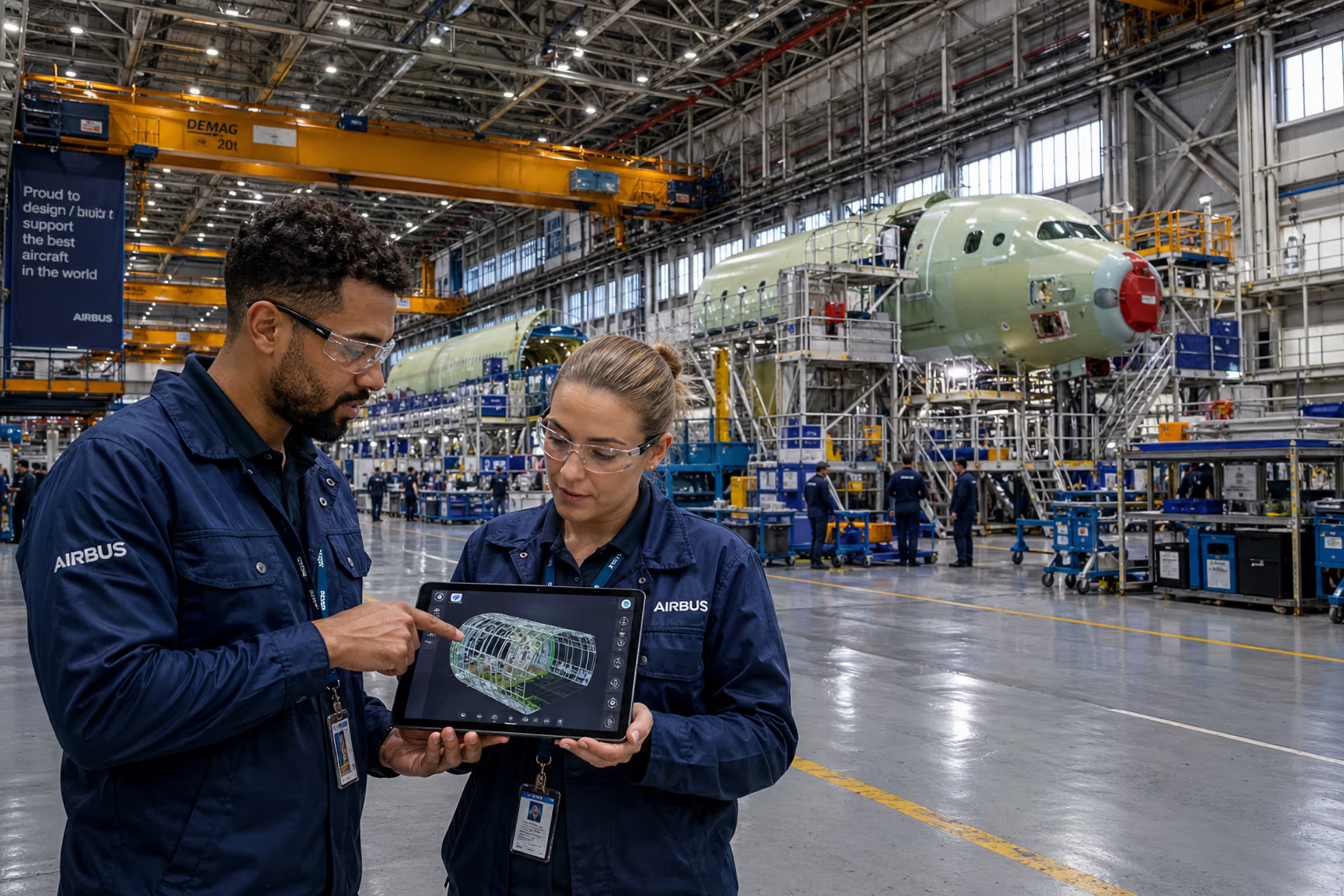
The adoption of tablet-based AR transformed workflows and fostered collaboration across the organization.
Production & Assembly: This was the epicenter of the transformation. Technicians on the factory floor experienced a dramatic and immediate reduction in cognitive load. The mental strain of translating 2D drawings into 3D space was replaced by clear, intuitive 3D guidance. This directly translated into faster assembly times, a sharp decline in errors, and a significant boost in overall productivity. The technology didn't just improve the process; it empowered the workforce, elevating their roles from manual assemblers to skilled operators of an advanced digital manufacturing system. This, in turn, streamlined the training process for new operators, who could now get up to speed and contribute to the production line more quickly and with greater confidence.
Quality Assurance: The QA department shifted from a reactive to a proactive role. The near-elimination of assembly errors meant that QA personnel were no longer consumed with identifying and documenting defects. Instead, they could redirect their expertise toward higher-value activities like process improvement, root cause analysis, and statistical process control. The digital thread created by the AR system provided complete, granular traceability for every single component and action, giving the QA team unprecedented insight into the manufacturing process and making audits both seamless and data-rich.
Engineering & Design: The AR system created a direct feedback loop between the design office and the factory floor. For the first time, design engineers could receive real-world, data-driven insights from the production line almost instantly. If a particular assembly step was consistently causing delays or confusion, this data would be captured and relayed back to the design team. This allowed for rapid, iterative design optimizations based on actual production data, leading to designs that were not only innovative but also optimized for manufacturability. This collaborative cycle of design, build, and feedback accelerated the entire product development lifecycle.
Information Technology (IT): The IT department was instrumental in this digital transformation. Their role extended far beyond simply deploying tablets. They were instrumental in architecting and ensuring the seamless, secure integration of the AR platform with the aerospace manufacturer complex ecosystem of existing enterprise systems, including the PLM and MES. They managed the robust, high-availability wireless infrastructure required to deliver real-time, high-bandwidth data to hundreds of tablets across the vast hangar floor, ensuring that the system was always reliable and performant. Their expertise in data security and network management was paramount to the project's success.
Training & Development: The AR solution revolutionized new employee onboarding. The intuitive, visual, and interactive nature of the AR work instructions significantly flattened the learning curve. New technicians, even those with limited prior experience in aerospace, could become proficient and productive members of the team in a fraction of the time previously required. This not only slashed training costs but also provided The aerospace manufacturer with much greater workforce flexibility, allowing them to scale their production capacity up or down more effectively in response to changing demand.
Quantified Business Impact
The implementation of tablet-based AR on the Eurofighter Typhoon production line delivered tangible and significant returns.
The most immediate and dramatic impact was the virtual elimination of time spent referencing paper drawings, a classic example of a non-value-added activity. This freed up technicians to focus on high-quality aircraft assembly. This efficiency gain was compounded by the AR solution's ability to dramatically reduce assembly errors. By providing unambiguous, visually-guided instructions, the system mitigated the risk of costly rework, scrap, and production delays, directly enhancingthe aerospace manufacturer's bottom line and reinforcing its hard-won reputation for manufacturing excellence and reliability. The intuitive nature of the AR application also had a profound effect on workforce training. The system allowed new technicians to become proficient and productive in a fraction of the time, a critical advantage in an industry facing a shortage of skilled labor. This not only reduced direct training costs but also provided the organization with greater flexibility in workforce management and scheduling. The financial case was compelling: the initial investment in a proof-of-concept often paid for itself within the first six months through these direct efficiency gains alone, with a full-scale return on investment (ROI) typically realized within a remarkably short 12 to 18 months.
Beyond these hard metrics, the AR implementation catalyzed a deeper, cultural shift within the organization. It fostered a pervasive culture of innovation and continuous improvement, where employees were encouraged to identify opportunities for digital enhancement. Employee retention in the highly competitive assembly department saw a notable and sustained increase, as technicians felt more empowered, less frustrated by their tools, and more engaged in their work. The enhanced accuracy and efficiency also contributed to faster overall production cycle times, a critical factor in improving time-to-market for the Eurofighter Typhoon and meeting customer delivery schedules. Furthermore, the impeccable digital records created by the system streamlined audit compliance, making it easier to demonstrate adherence to the stringent safety and quality standards of the aerospace industry. This comprehensive digital footprint also supported sustainability goals by reducing paper consumption and minimizing waste from rework.
Conclusion
The aerospace manufacturer's success with the Eurofighter Typhoon showcases the transformative power of tablet-based AR in complex manufacturing. This initiative proves, unequivocally, that Augmented Reality is not a distant, futuristic fantasy but a mature, results-driven technology that is delivering profound value today. By deliberately choosing to focus on a human-centric solution—empowering their skilled technicians with intuitive, robust, and reliable tablets—The aerospace manufacturer's achieved a digital transformation that was both profound and sustainable. The results—a drastic reduction in errors, a significant increase in efficiency, a more agile and engaged workforce, and a clear financial ROI—speak for themselves and offer a compelling blueprint for others to follow.
This case study provides a clear and actionable roadmap for the future of manufacturing, a future where human intelligence and expertise are not replaced by automation, but are augmented and amplified by powerful digital tools. It is a future where the workplace becomes more efficient, more accurate, and ultimately, more human-centric. The lessons learned from the aerospace manufacturer's' journey are universal: by focusing on solving real-world problems with practical technology and by placing the user at the center of the implementation process, any manufacturing organization can unlock new levels of performance and innovation. The call to imagination is clear: it is time to move beyond the hype and embrace the proven potential of tablet-based AR to build the factories of the future.
Frequently Asked Questions
Q1We are in the automotive/heavy machinery/specialty vehicle sector. Can a similar AR solution work for our complex assembly lines?
Absolutely. The principles of tablet-based AR for guided assembly are highly transferable to any industry dealing with complex, multi-step assembly processes. Whether you are manufacturing tractors, building specialty medical devices, or assembling intricate automotive components, AR can deliver significant value. The technology excels at reducing cognitive load and eliminating errors by providing contextual, 3D work instructions, which is a universal challenge in high-stakes manufacturing. The key is to adapt the digital content and workflows to your specific products and processes.
Q2 How long does it take to deploy a tablet-based AR solution and what does a typical proof-of-concept cost?
A proof-of-concept (PoC) can typically be deployed within 8-12 weeks, depending on the complexity of the selected use case. This timeframe includes initial discovery, 3D model preparation, workflow configuration, and on-site training. The cost for a PoC generally ranges from $15,000 to $30,000. This investment covers the software platform, content creation for a specific assembly process, and expert guidance to ensure a successful pilot that clearly demonstrates the potential ROI.
Q3What is the typical ROI for a tablet AR solution, and how soon can we expect to see measurable results?
The Return on Investment (ROI) for tablet AR is driven by direct and indirect cost savings. Directly, you can expect a 30-50% reduction in assembly and inspection times and a near-elimination of errors, which drastically cuts down on rework costs. Indirectly, you will see lower training costs and increased workforce flexibility. Most companies see a measurable positive ROI within 6 to 9 months of full-scale deployment, with the initial PoC often paying for itself through the efficiency gains in the pilot phase alone.
Q4We are convinced of the potential. How do we get started and what are the next steps?
The first step is to schedule a discovery call with one of our lead AR strategists to discuss your specific challenges and objectives. We will help you identify the most impactful use case for a proof-of-concept. To begin the conversation, please contact Rrahul Sethi at rrahul@metaverse911.in for opportunities in India, or Vandana Bansal at vandana@metaverse911.co.uk for all other global inquiries. They will guide you through the process of launching a successful AR initiative.
For India: Rrahul Sethi at rrahul@metaverse911.in
For Global inquiries: Vandana Bansal at vandana@metaverse911.co.uk