
The Story
As artificial intelligence rapidly transitions from a buzzword to a core business imperative, global enterprises face a critical challenge: understanding exactly where their workforce stands on the AI maturity curve. For a leading Big-4 consulting firm, the mandate was clear. They needed to evaluate the AI readiness of over 10,000 employees across multiple regional offices, diagnose individual proficiency levels, and guide each professional through a personalised AI enablement journey. However, traditional assessment methods—such as static online quizzes or lengthy tablet-based surveys—were deemed insufficient. They suffered from low engagement rates, failed to generate excitement, and often felt like a mandatory compliance exercise rather than an inspiring step toward the future of work. The firm required an intervention that was not only data-rich and secure but also highly engaging, public, and capable of sparking a cultural shift around AI adoption.
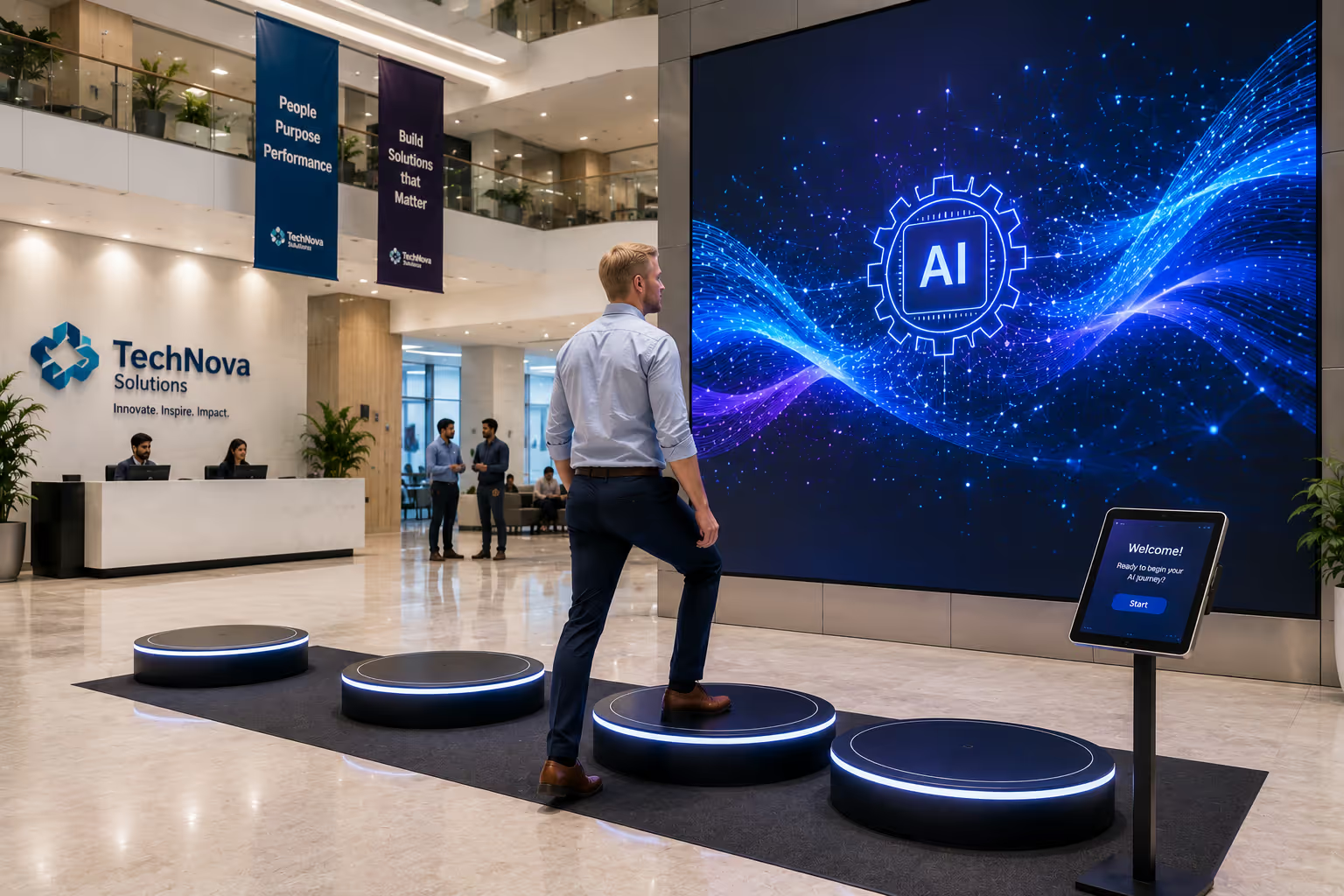
The solution was an ambitious internal initiative designed to transform the assessment process into a gamified, phygital (physical plus digital) experience. The firm partnered with immersive technology specialists to deploy a suite of interactive assessment modules directly within high-footfall office zones, such as lobbies and collaboration spaces. The goal was to move the assessment out of the isolated desktop environment and into the physical workspace, creating a spectacle that would draw employees in, encourage participation, and foster healthy competition. By placing these interactive stations in highly visible areas, the firm ensured that the assessment became a shared, communal event rather than a solitary chore. Employees could watch their peers participate, cheering them on and discussing the questions, which naturally sparked organic conversations about AI across the office floor. This initiative was not just about assigning a score; it was about categorising employees into distinct maturity bands—Beginner, Emerging, Practitioner, and Leader—and mapping them to specific upskilling personas, whether they were Generalists needing foundational knowledge, Specialists requiring industry-specific applications, or Experts ready to champion AI innovation. This granular mapping allowed the firm to move away from a one-size-fits-all training approach, ensuring that every employee received the exact level of support they needed to thrive in an AI-augmented workplace.
The centrepiece of this initiative was the deployment of interactive podium assessments, a system that completely reimagined how questions were asked and answered. By combining physical movement with digital feedback, the firm successfully diagnosed the AI maturity of its vast workforce while simultaneously generating unprecedented enthusiasm for its AI upskilling programmes. The data collected provided leadership with a granular, location-by-location view of their AI readiness, enabling targeted training investments and ensuring that the firm remained at the forefront of technological advisory services. This case study explores the mechanics, impact, and underlying technology of this groundbreaking approach to corporate learning and development.
How It Works: The Mechanics of Phygital Assessment
The core of the gamified assessment is a proprietary interactive system designed to make testing a physical, embodied experience. The setup consists of a large LED screen or projector, a tablet mounted on a stand, and four circular floor podiums labelled A, B, C, and D. The process begins when an employee approaches the station and registers using their corporate ID. The tablet, acting as a private interface, displays a multiple-choice question related to AI concepts, tools, or industry applications. The four possible answers are displayed on the large public screen, corresponding to the four podiums.
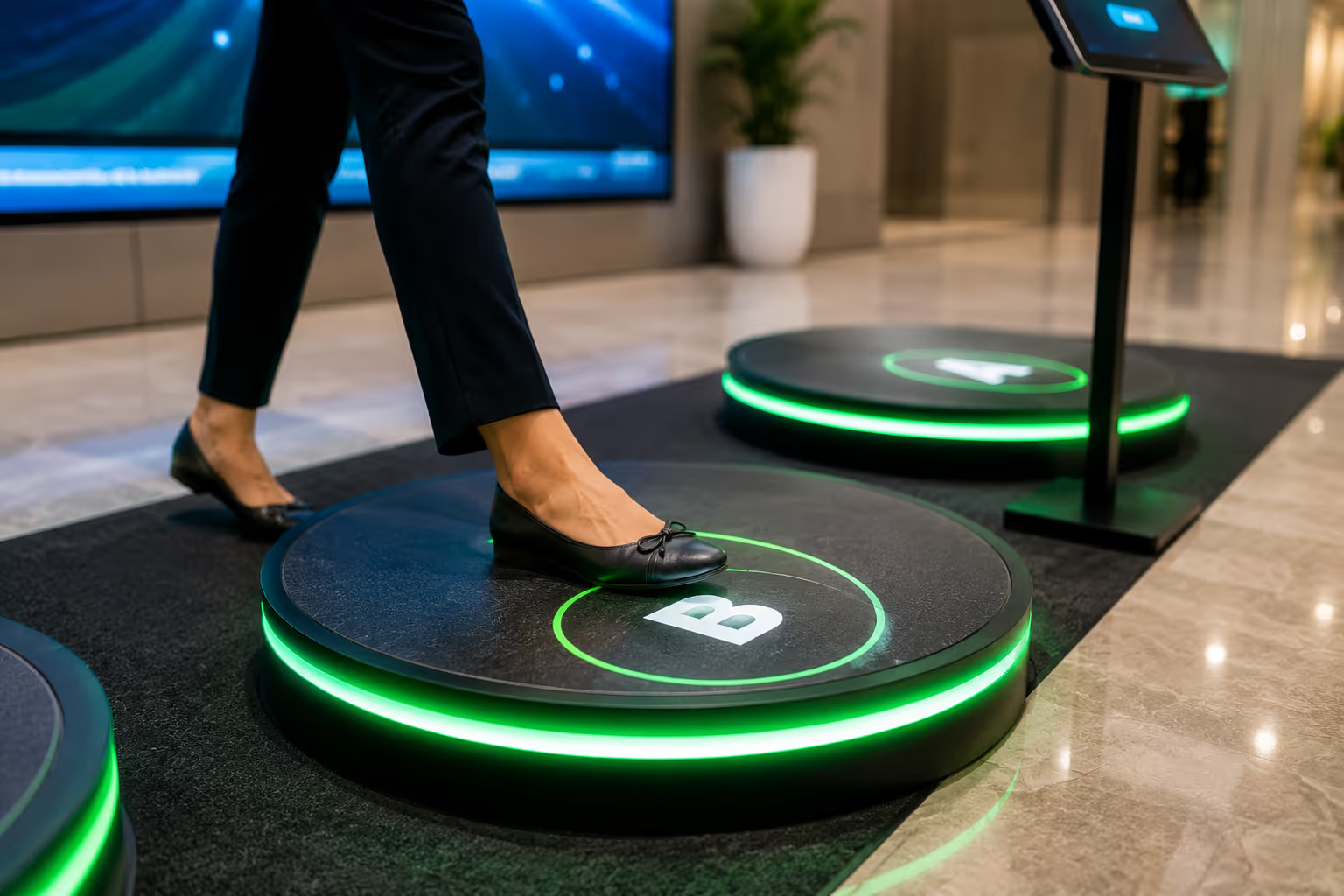
Instead of tapping a screen to select an answer, the employee must physically step onto the podium that matches their choice. Each podium is equipped with highly sensitive load sensors connected to an Arduino board, which instantly detects the user's weight and registers the selection. This embodied interaction forces the user to commit physically to their answer, adding a layer of kinaesthetic engagement that is entirely absent from traditional digital assessments. The system provides immediate, real-time feedback: if the answer is correct, a green LED beneath the chosen podium illuminates, accompanied by a success chime. If the answer is incorrect, a red LED flashes alongside an error sound. The user then returns to a neutral position to receive the next question. This physical mechanic transforms a standard quiz into an engaging, game-show-like experience that captures the attention of both the participant and onlookers. The immediate sensory feedback loop not only reinforces learning but also creates a memorable experience that employees are eager to discuss and share with their colleagues, further amplifying the reach and impact of the initiative..
Behind the scenes, the system is powered by a robust technological architecture. A high-performance laptop (typically an i7 processor with 32GB RAM and an RTX 4070 GPU) drives the visual display and processes the sensor data in real-time. Crucially, the system features 'Returning Player Recognition Logic.' When an employee re-enters their ID for a subsequent attempt, the system recalls their previous score and greets them personally—for example, "Hi Akash, you scored 30 last time. Ready to level up your AI Index?" This progressive difficulty scaling ensures that the assessment remains challenging and relevant, guiding the employee along a continuous learning journey rather than serving as a one-off test.
Departmental Impact
Learning & Development (L&D)
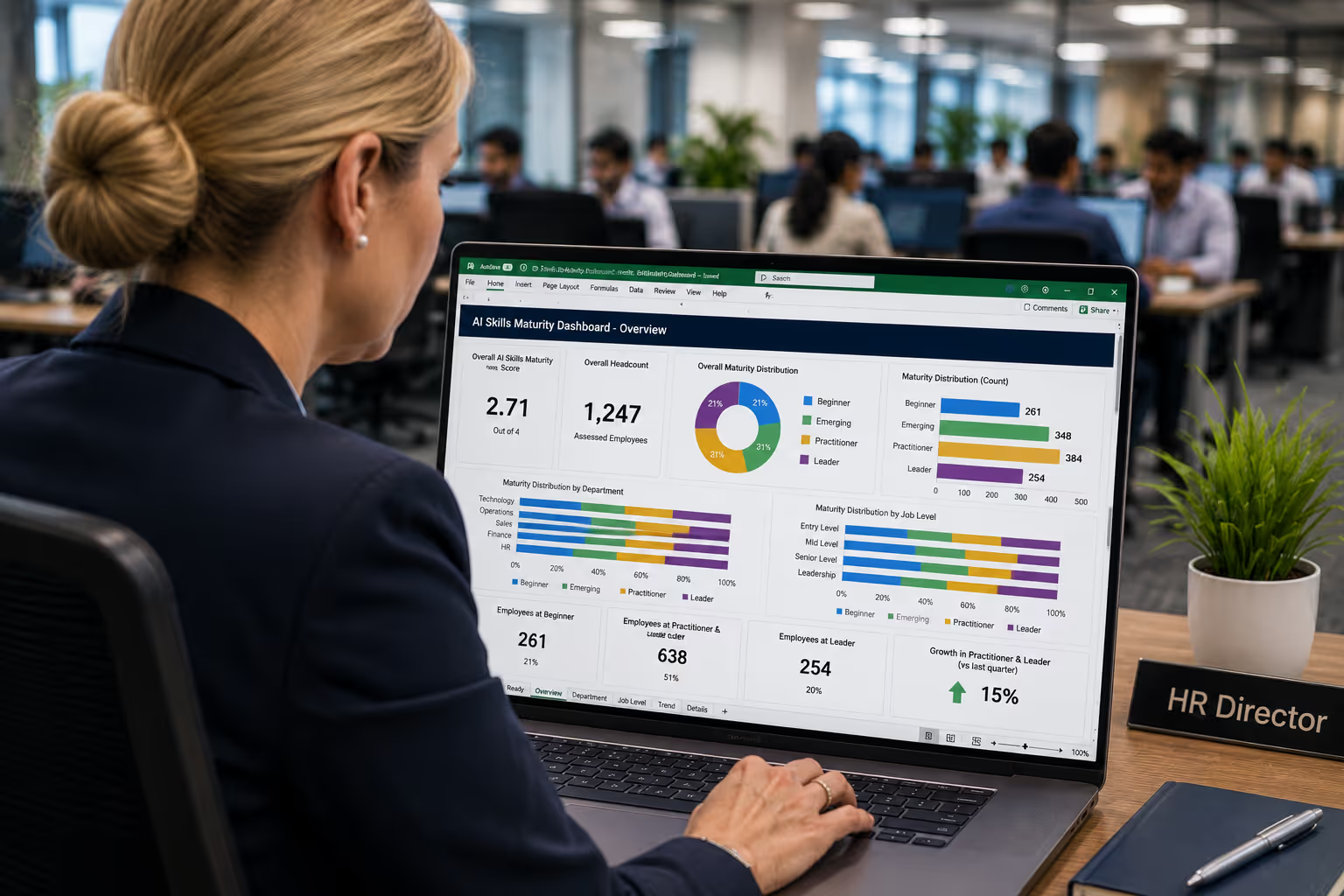
For the L&D department, the gamified podium assessments provided a revolutionary way to map the organisation's skills landscape. Instead of relying on self-reported surveys or low-completion-rate online modules, L&D leaders gained access to highly accurate, verified data on the AI proficiency of thousands of employees. This data-driven approach eliminated the guesswork from curriculum planning, allowing the L&D team to see exactly where the knowledge gaps lay across different departments and regions. The system automatically categorised users into maturity bands—Beginner, Emerging, Practitioner, and Leader—allowing L&D to tailor their follow-up interventions. Beginners were directed to foundational AI tool sessions, while Practitioners were enrolled in advanced, industry-specific AI conversation series. This targeted approach ensured that training budgets were deployed efficiently, maximising the impact of upskilling initiatives. By aligning the training content precisely with the diagnosed maturity level of each employee, the L&D department was able to significantly accelerate the overall AI readiness of the firm, ensuring that no employee was left behind and no advanced user was bored by redundant foundational material.
Human Resources (HR)
The HR department benefited significantly from the initiative's ability to drive engagement and foster a culture of continuous learning. The public, interactive nature of the assessments created a buzz within the offices, transforming a mandatory evaluation into a highly anticipated event. Employees actively sought out the assessment stations, eager to test their knowledge and see how they stacked up against their peers. The integration of location-based leaderboards, which displayed the top 10 scorers of the day for that specific office, introduced a healthy element of competition. This gamification strategy dramatically increased participation rates and encouraged employees to take ownership of their AI learning journeys, aligning perfectly with HR's goals of talent retention and workforce future-proofing. Furthermore, the initiative served as a powerful internal branding tool, demonstrating to the workforce that the firm was deeply committed to investing in their professional development and equipping them with the skills necessary to succeed in an AI-driven future.
IT & Compliance
From an IT and compliance perspective, the solution was designed to meet the stringent security requirements of a Big-4 consulting firm. The system offered flexible data storage options, with a strong emphasis on local-server deployment. By saving all assessment data on a local drive accessible only to internal teams, the system eliminated internet dependency and mitigated the risks associated with cloud storage. This offline capability was particularly crucial for deployment in highly secure regional offices where external network connections were restricted. Furthermore, the assessments were designed to collect only essential performance data—such as ID, location, date, and score—ensuring that no sensitive personal information was stored within the experience itself. This privacy-first approach guaranteed full compliance with corporate data governance policies, allowing the IT department to confidently endorse the rollout without fear of data breaches or regulatory violations. For offices that required centralised reporting, an optional UK GDPR/ISO-compliant cloud storage solution with role-based access and end-to-end encryption was also made available, providing the ultimate flexibility in data management.
Quantified Business Impact
The deployment of the gamified assessment system yielded significant, measurable outcomes that validated the investment in phygital L&D technologies. The initiative successfully diagnosed the AI maturity of a massive workforce while generating actionable data for future training programmes.
The most immediate impact was the sheer scale of engagement. The intuitive, plug-and-play nature of the podium system allowed for high throughput, enabling thousands of employees to be assessed within a condensed timeframe. Unlike traditional assessments that require dedicated time away from the desk, the podiums allowed employees to complete their evaluation in just a few minutes while moving through the office. The real-time data capture provided leadership with an instant, granular view of AI readiness across different regional offices, highlighting areas of strength and identifying critical skills gaps that required immediate attention. This level of insight was unprecedented, allowing the firm's leadership to make informed, strategic decisions about where to focus their AI enablement efforts and how to best support their workforce through the technological transition. The data also provided a baseline against which future progress could be measured, ensuring that the firm's investment in AI upskilling delivered a tangible return. By transforming a mundane task into an interactive event, the firm not only gathered essential data but also significantly boosted employee morale and enthusiasm for the upcoming AI training programmes.
Key Performance Indicators (KPIs) for the gamified assessment initiative highlight its success:
Workforce Assessed: Over 10,000 employees successfully diagnosed across multiple regional offices.
Maturity Mapping: 100% of participants categorised into actionable maturity bands (Beginner to Leader).
Persona Alignment: Automated recommendation of specific upskilling tracks (Generalist, Specialist, Expert) based on individual scores.
Persona Alignment: Automated recommendation of specific upskilling tracks (Generalist, Specialist, Expert) based on individual scores.
Data Security: Zero breaches or compliance issues, achieved through local-server data storage and minimal PII collection.
Conclusion
The Big-4 consulting firm's deployment of gamified podium assessments represents a paradigm shift in how enterprises evaluate and upskill their workforce. By moving beyond static quizzes and embracing phygital, interactive technologies, the firm successfully diagnosed the AI maturity of over 10,000 employees while fostering a culture of excitement and continuous learning. The combination of load-sensor podiums, real-time feedback, and location-based leaderboards transformed a routine diagnostic into a highly engaging corporate event.
Crucially, this initiative demonstrates that effective L&D interventions must be both engaging for the user and rigorously secure for the enterprise. The system's ability to operate on local servers, coupled with its progressive difficulty scaling and persona-based recommendations, provided a scalable, compliant, and highly effective blueprint for corporate upskilling. As artificial intelligence continues to reshape the business landscape, organisations that adopt innovative, data-driven assessment methods will be best positioned to build the future-ready workforces required to maintain a competitive edge.
Frequently Asked Questions
Q1What industries are best suited for gamified podium assessments?
Gamified podium assessments are highly versatile and suitable for any industry requiring large-scale, engaging workforce evaluation. They are particularly effective in professional services, consulting, BFSI (Banking, Financial Services, and Insurance), and IT sectors, where diagnosing technological maturity (such as AI readiness or cybersecurity awareness) is critical. The physical, interactive nature of the assessment makes it ideal for corporate environments looking to boost L&D engagement.
Q2How long does it take to deploy a gamified assessment system across multiple offices?
A standard deployment typically follows a 30-working-day implementation plan. This includes solution planning, game development (mapping questions to maturity bands), hardware integration (programming the load sensors and UI), and backend data setup. The physical on-site installation and testing usually require just 3 days per location, ensuring minimal disruption to daily operations while guaranteeing a smooth rollout.
Q3What is the expected ROI of implementing phygital assessments compared to traditional online quizzes?
The primary ROI is driven by significantly higher participation rates, improved data accuracy, and more efficient allocation of training budgets. Traditional online quizzes often suffer from low completion rates and survey fatigue. Phygital assessments, through their public and gamified nature, drive near-total engagement. Furthermore, the precise maturity mapping allows HR to direct employees only to the training they actually need, eliminating wasted spend on redundant foundational courses for advanced users.
Q4What hardware is required to run the interactive podium assessments?
The core hardware includes a high-performance laptop (typically an i7 processor with an RTX 4070 GPU) to drive the system, a large LED screen or projector for public display, a tablet on a stand for private question viewing, and four custom-built floor podiums equipped with load sensors and Arduino boards. A local router is also used to ensure seamless wireless communication between the laptop and the interactive elements.
For India: Rrahul Sethi at rrahul@metaverse911.in
For Global inquiries: Vandana Bansal at vandana@metaverse911.co.uk
Q5 How does the system integrate with our existing HR and L&D platforms?
The assessment system is designed for flexible data integration. It generates comprehensive reports in standard formats like Excel (.xlsx) or CSV, which include fields such as Employee ID, location, score, and recommended maturity band. These reports can be easily imported into most major HRIS or LMS platforms. For organisations requiring automated syncing, cloud-based storage options with API connectivity can be configured, subject to security approvals.
Q6How do you ensure data security and compliance, especially for sensitive corporate information?
Data security is a foundational element of the system. For organisations with strict compliance requirements, the system can operate entirely on a local server (a local drive accessible only to internal teams), completely removing internet dependency. Furthermore, the experience is designed to collect only non-sensitive performance data (ID, location, score). No personal identifiable information (PII) is stored within the assessment modules themselves, ensuring alignment with corporate data governance policies and UK GDPR requirements.
Q7How do we get started with designing a custom assessment for our workforce?
The process begins with a detailed consultation to understand your specific learning objectives, whether that is AI maturity, compliance knowledge, or product familiarity. Our team will then work with your subject matter experts to develop the question bank, map the scoring logic to your desired maturity bands, and design the physical layout for your office spaces. Contact our enterprise solutions team to schedule an initial briefing and view a demonstration of the technology.
For India: Rrahul Sethi at rrahul@metaverse911.in
For Global inquiries: Vandana Bansal at vandana@metaverse911.co.uk