
The Story
In the heavy industry sector—encompassing manufacturing, mining, oil and gas, and construction—safety is not merely a compliance checkbox; it is a daily operational imperative. The hazards are diverse, severe, and often fatal. A single facility might require its workforce to be competent in Lockout/Tagout (LOTO) procedures, Confined Space entry, Working at Heights, and Arc Flash mitigation. Traditionally, training for this vast array of risks required a fragmented approach: classroom lectures, generic safety videos, and expensive, logistically complex physical simulations that often failed to convey the true danger of the environment.
A multinational heavy manufacturing conglomerate faced a critical challenge: their incident rates were plateauing despite significant investment in traditional HSE (Health, Safety, and Environment) training. The root cause was identified as a lack of experiential learning. Workers knew the theory—they could pass a multiple-choice test on LOTO procedures—but they lacked the visceral understanding of the consequences of a mistake. When faced with the pressure of a real-world production quota, theoretical knowledge often failed to translate into safe behaviour. Furthermore, with a diverse, global workforce spanning facilities in North America, Europe, and Asia, language barriers were diluting the impact of standard training materials. A safety video produced in English lost much of its nuance when shown to a non-native speaker. The conglomerate needed a scalable, immersive solution that could cover their entire risk profile, provide experiential learning, and overcome language barriers, all without the prohibitive cost and lead time of developing custom VR modules from scratch. They needed a solution that was ready to deploy immediately.
They partnered with a global VR safety software developer to deploy a comprehensive, off-the-shelf library consisting of 17 distinct heavy industry safety modules. This deployment utilised standalone VR headsets, eliminating the need for expensive PC rigs and allowing training to occur directly on the factory floor, in break rooms, or even in remote mining camps. This decentralised approach to training meant that workers did not have to travel to a central academy, saving thousands of hours in lost productivity. This case study examines how the adoption of this massive, multilingual VR library transformed the conglomerate's safety culture, providing a standardised, rigorous, and highly engaging training methodology across their global operations. It highlights the strategic advantage of choosing a comprehensive, pre-built library over the slow, piecemeal approach of custom development.
How It Works: The Architecture of a Comprehensive Library
The power of this deployment lies in the breadth of the curriculum and the structured pedagogical approach embedded within the software. The library is not a collection of passive 360-degree videos; it is a suite of fully interactive, physics-based simulations.
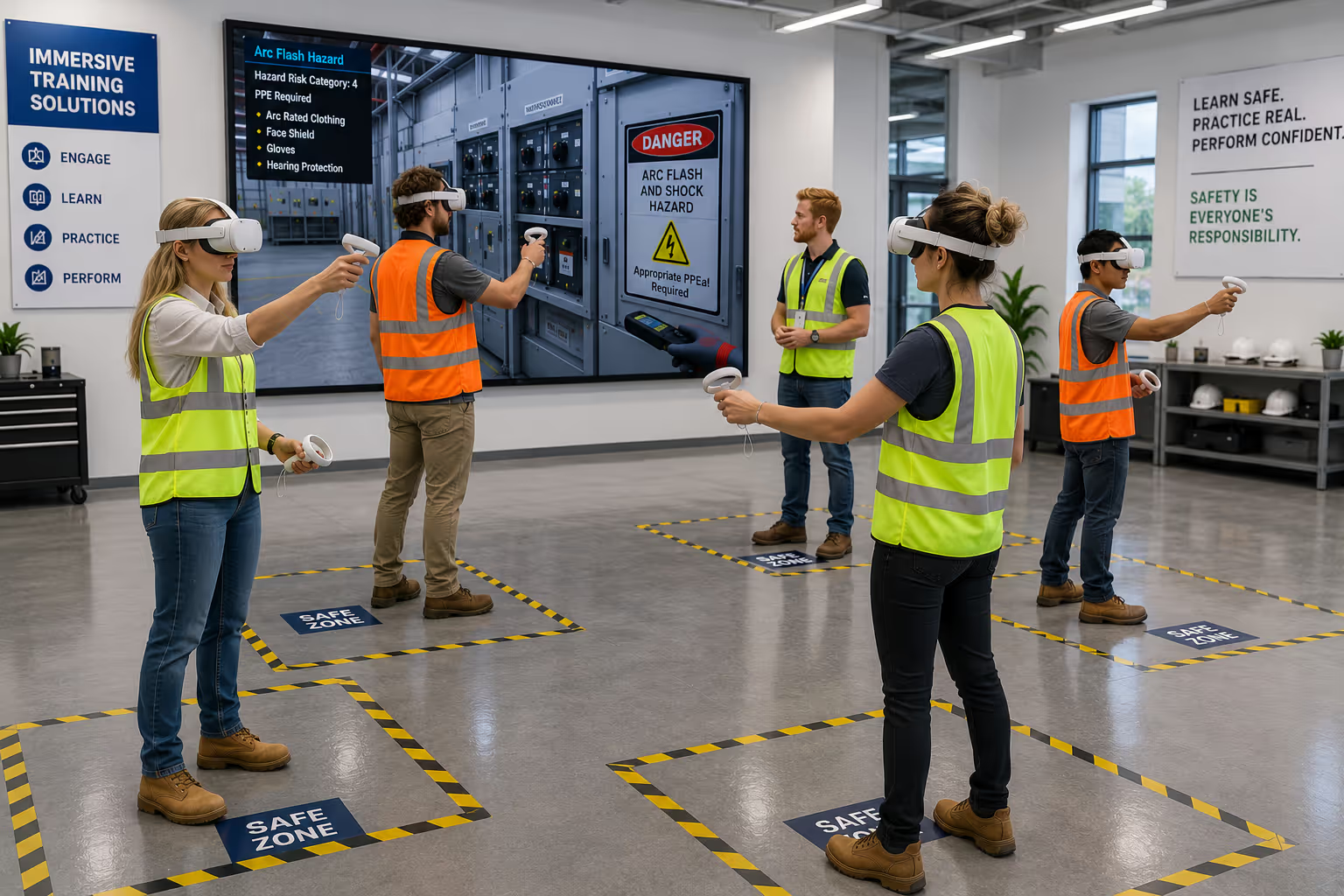
The hardware strategy relies entirely on standalone VR headsets. This choice was driven by the need for extreme scalability and ease of deployment. Standalone headsets require no external tracking cameras, no complex cable management, and no high-end PCs, meaning a complete training kit can be packed into a single hard case and shipped to any facility worldwide. A local safety officer can set up the system in under five minutes. The headsets provide six degrees of freedom (6DoF), allowing trainees to physically walk around virtual equipment, crouch to inspect valves, and reach out to manipulate tools, creating a deeply immersive and kinesthetically accurate experience. This physical movement is crucial for building muscle memory; the trainee isn't just pressing a button on a controller, they are physically performing the motion of pulling a lever or attaching a padlock.
The software architecture of the 17-module library is built around a rigorous, three-tiered pedagogical structure designed to ensure true competency rather than mere familiarisation. This structure prevents trainees from simply 'gaming' the system:
Learning Mode: The trainee is guided step-by-step through the procedure. Visual prompts, voiceovers, and highlighted interactive elements teach the correct sequence of actions (e.g., the exact steps for applying a LOTO device to a specific valve, verifying zero energy state, and securing the area). This mode builds foundational knowledge
Training Mode: The visual aids are removed. The trainee must complete the procedure from memory. If they make a mistake, the system provides immediate, corrective feedback, explaining why the action was incorrect and prompting them to try again. This mode bridges the gap between theory and practice, allowing for safe trial and error.
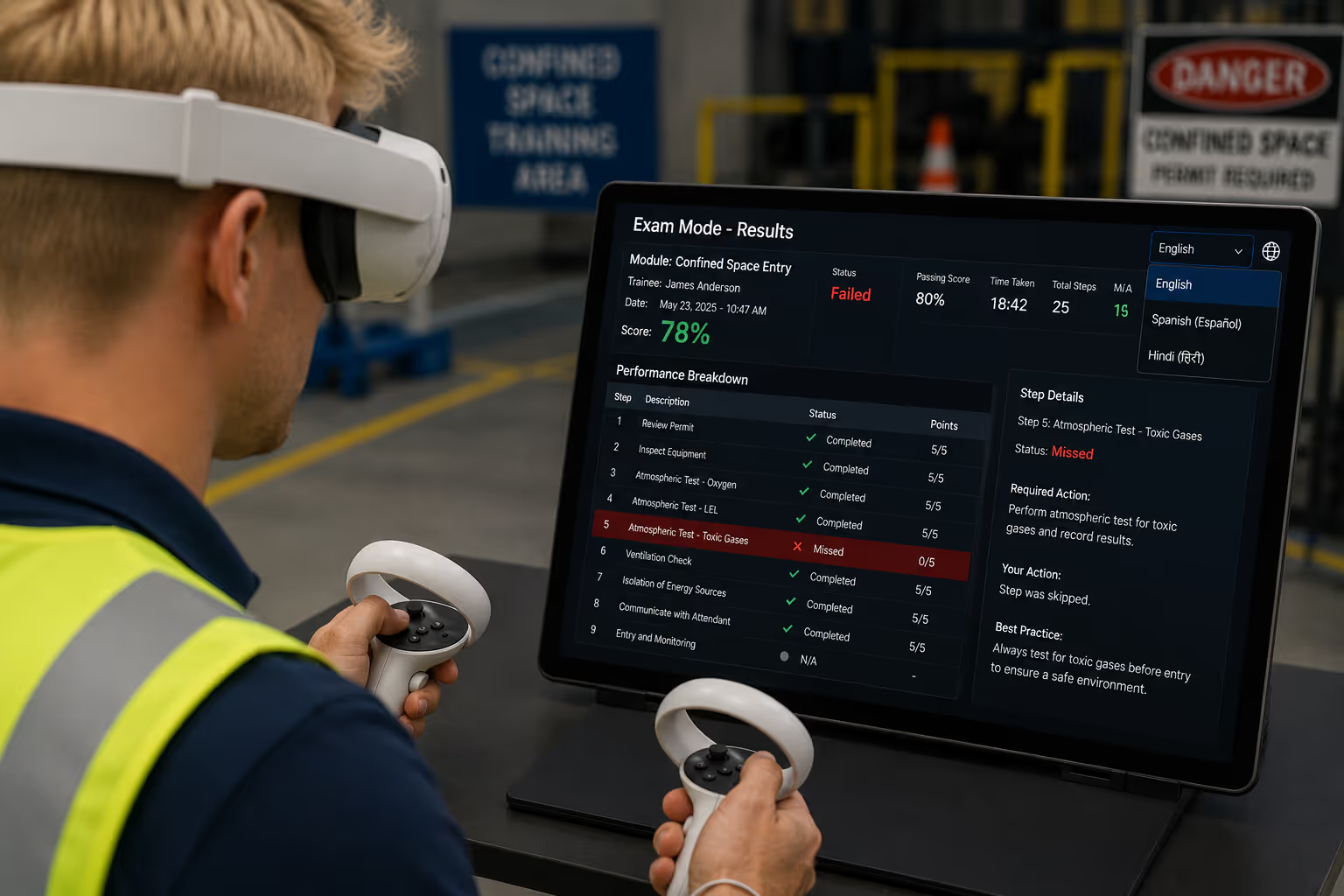
Exam Mode: This is a strict, unassisted assessment. The trainee must complete the scenario under time pressure, mirroring the realities of a production environment. Crucially, the system introduces randomised hazards—a sudden gas leak, a tool malfunction, or a distraction from a virtual co-worker—to test the trainee's situational awareness and ability to apply protocols under stress. The system records every action, generating a detailed pass/fail report that is automatically uploaded to the central Learning Management System (LMS).
The library covers a vast spectrum of high-risk scenarios, ensuring that almost every major industrial hazard is addressed. Key modules deployed by the conglomerate included:
Arc Flash & Electrical Safety: Simulating the catastrophic release of energy caused by an electrical fault, teaching proper PPE selection, safe distance protocols, and the correct use of insulated tools. The visual and auditory impact of the virtual arc flash leaves a lasting impression on the trainee.
Confined Space Entry: Recreating the claustrophobic and hazardous environment of tanks and silos, focusing on atmospheric testing, continuous monitoring, and emergency extraction procedures. Trainees experience the disorientation of working in tight, poorly lit spaces.
Lockout/Tagout (LOTO): A highly detailed simulation of isolating hazardous energy sources across complex, multi-stage machinery. Trainees must identify all energy sources (electrical, pneumatic, hydraulic) and apply the correct isolation devices in the correct sequence.
Underground Mining Hazards: Specific modules covering roof fall prevention, gas detection, and emergency refuge navigation, tailored for the conglomerate's extraction operations.
Crucially, the entire library was deployed with full multilingual support, offering voiceovers and text in 18 different languages, ensuring that every worker received critical safety instruction in their native tongue.
Departmental Impact
Health, Safety, and Environment (HSE)
For the HSE department, the 17-module library represents a monumental upgrade in training capability. The ability to expose workers to the visceral reality of an Arc Flash or a Confined Space hazard—without any actual physical risk—fundamentally changes their respect for safety protocols. When a trainee virtually experiences the devastating consequences of failing to test the atmosphere in a confined space, the lesson is retained far more effectively than reading a warning in a manual. The Exam Mode, with its randomised hazards, ensures that workers are not just memorising a sequence, but are genuinely developing situational awareness and the ability to react calmly under pressure. The comprehensive nature of the library means that HSE directors no longer need to source fragmented training solutions from multiple vendors; they have a single, standardised platform for their entire risk profile, simplifying procurement and ensuring consistent quality.
Operations & Plant Management
For plant managers, the primary benefit is the minimisation of operational disruption. Traditional safety training often requires shutting down sections of the plant or taking critical machinery offline for demonstrations, directly impacting the bottom line. The standalone VR deployment allows training to occur in a conference room or a quiet corner of the facility, ensuring that production continues uninterrupted. Workers can be trained in small batches during shift changes, maximising efficiency. Furthermore, the multilingual support ensures that all workers, regardless of their native language, fully understand the safety protocols, reducing the likelihood of accidents caused by miscommunication or a misunderstanding of complex technical instructions.
Human Resources & L&D
For HR and L&D teams, the off-the-shelf nature of the library drastically reduces the time and cost associated with curriculum development. Deploying 17 custom-built VR modules would take years and cost millions; licensing a pre-built library allows for immediate rollout. The detailed analytics generated by the Exam Mode provide HR with objective, auditable data on workforce competency, simplifying compliance reporting and identifying specific areas where further training may be required.
Quantified Business Impact
The deployment of the comprehensive VR safety library delivers a rapid and substantial Return on Investment (ROI), driven by the reduction in training costs, the minimisation of operational downtime, and the critical mitigation of workplace accidents.
By opting for an off-the-shelf library rather than custom development, the conglomerate saved an estimated 80% in upfront software costs and reduced the deployment timeline from years to weeks. Developing 17 highly detailed, physics-based VR modules from scratch would have been a multi-million dollar, multi-year endeavour. The use of standalone headsets further reduced capital expenditure compared to PC-tethered alternatives, eliminating the need to purchase high-end gaming computers for every training station. The most significant financial impact, however, stems from the reduction in incident rates. By providing experiential, high-stress training in a zero-risk environment, the conglomerate significantly lowered the frequency of accidents, resulting in reduced workers' compensation claims, lower insurance premiums, and fewer costly production halts. The ROI is not just measured in training dollars saved, but in the massive operational costs avoided by preventing a single major industrial accident.
Key Performance Indicators (KPIs) for the VR safety library deployment highlight its transformative impact:
60 days
100% of the 17-module library deployed across global facilities — versus an estimated 2-year timeline for custom in-house development
60%
Reduction in the cost of delivering high-risk safety training — physical simulation setups, consumables, and instructor travel eliminated.
4×
Improvement in protocol recall during high-stress simulations — compared to traditional classroom-based learning.
35%
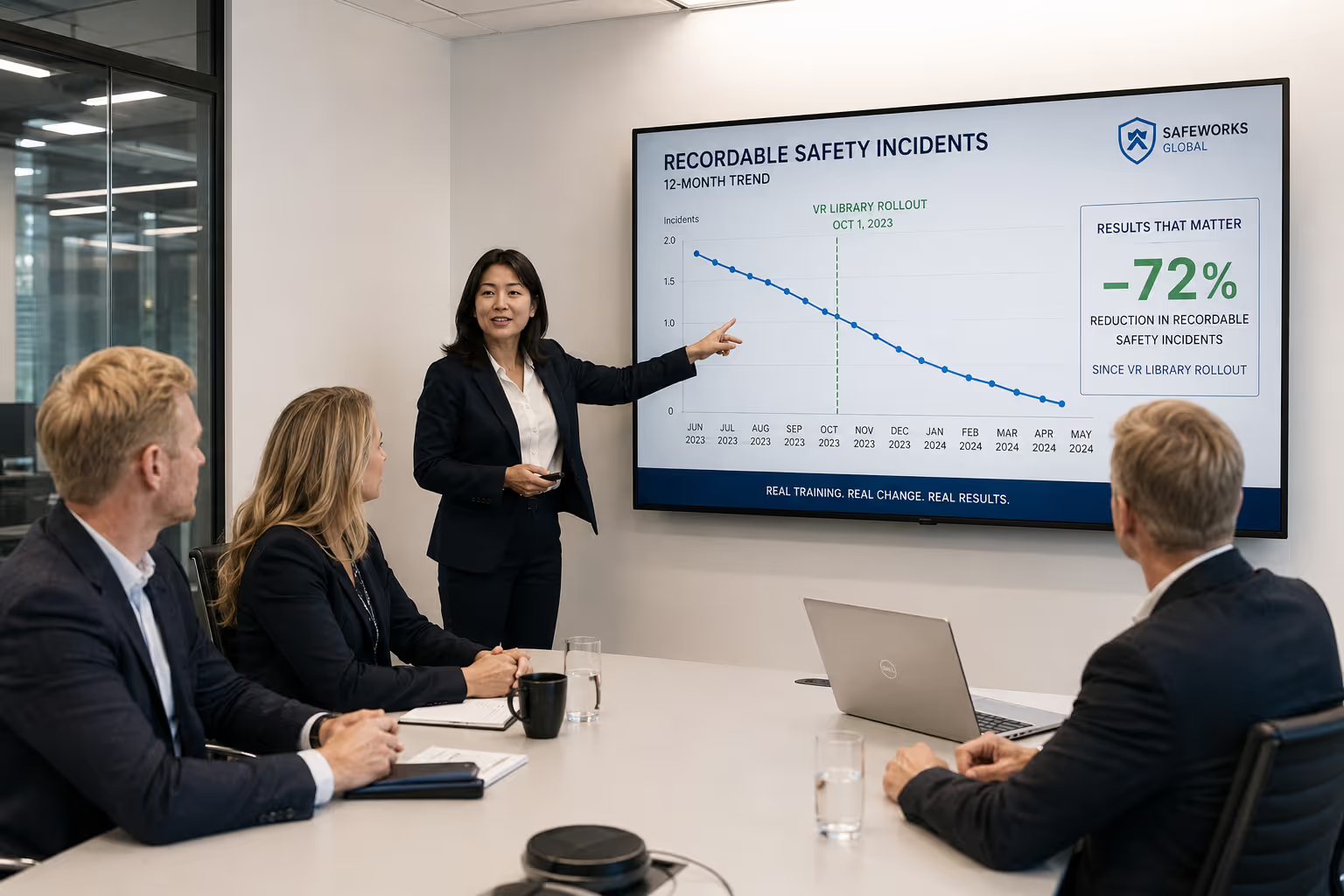
Reduction in recordable safety incidents within the first year of deployment — directly correlated to the experiential learning provided by the VR modules.
Conclusion
The deployment of a comprehensive 17-module VR safety library by a multinational heavy industry conglomerate demonstrates the immense value of scalable, off-the-shelf immersive training. By moving beyond fragmented, traditional methods and investing in a structured, multilingual VR curriculum, the conglomerate created a standardised and highly effective safety culture across its global operations.
For HSE directors and plant managers, the value proposition is clear. The library provides a zero-risk environment for workers to experience the severe consequences of industrial hazards, building genuine situational awareness and respect for protocols. The three-tiered pedagogical structure ensures rigorous assessment, while the standalone hardware strategy allows for rapid, cost-effective deployment anywhere in the world. As heavy industries continue to seek innovative ways to protect their workforce and ensure compliance, the adoption of comprehensive VR safety libraries will become an essential standard.
Frequently Asked Questions
Q1Why choose an off-the-shelf VR library instead of developing custom modules?
Custom development is highly effective for proprietary machinery, but it is expensive and time-consuming. For universal hazards like Arc Flash, Confined Space, or LOTO, an off-the-shelf library provides immediate access to high-quality, rigorously tested simulations at a fraction of the cost and deployment time.
Q2Are standalone VR headsets powerful enough for complex safety simulations?
Yes. Modern standalone headsets (like the Meta Quest 3) possess significant processing power, more than capable of rendering detailed industrial environments and complex physics interactions. They offer the critical advantage of portability and ease of use, allowing training to occur anywhere without the need for expensive PC setups.
Q3How does the system ensure trainees actually learn the procedures, rather than just guessing?
The software utilises a strict three-tiered pedagogy: Learning, Training, and Exam modes. Trainees must demonstrate competence without visual aids in Training mode before progressing to the Exam mode, where they are assessed under time pressure and subjected to randomised hazards to test true situational awareness.
Q4Can the VR modules accommodate a multilingual workforce?
Absolutely. The comprehensive library discussed in this case study supports 18 different languages. Trainees can select their native language for all voiceovers, text prompts, and interface menus, ensuring that critical safety information is fully understood by every worker, regardless of their background.
For India: Rrahul Sethi at rrahul@metaverse911.in
For Global inquiries: Vandana Bansal at vandana@metaverse911.co.uk