
The Story
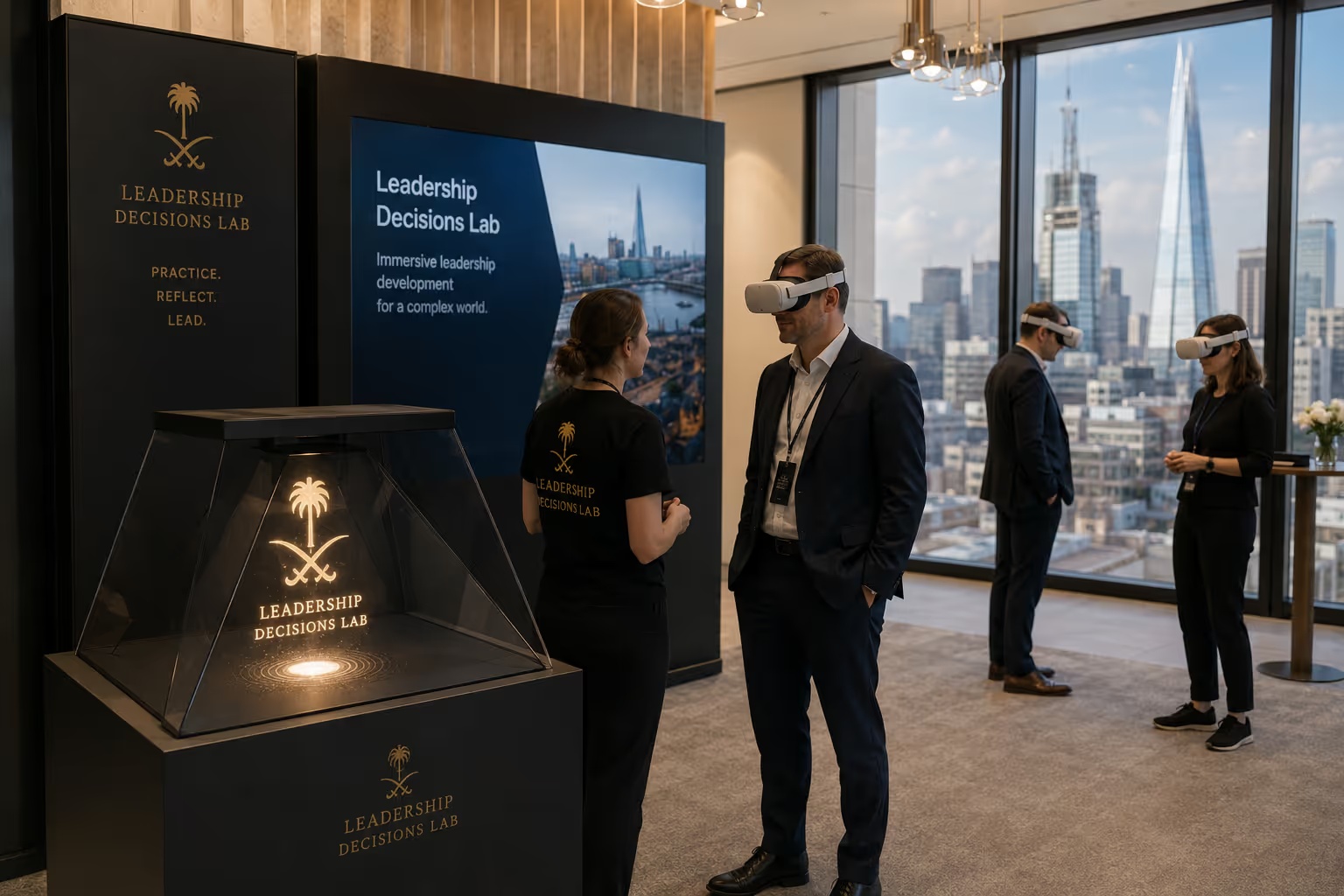
Corporate Learning and Development (L&D) events are often characterised by keynote speeches, breakout sessions, and networking breaks. While these traditional formats serve a purpose, they frequently struggle to capture the imagination of a modern workforce accustomed to highly interactive, digital-first experiences. For a global professional services leader, the challenge was to elevate their annual internal innovation summit from a standard conference into a truly transformative event. The summit was designed to showcase the future of work, specifically focusing on the impact of emerging technologies across various industries. To achieve this, the firm knew they needed more than just slide decks; they needed their employees to physically experience the technology.
The firm decided to integrate immersive technologies—specifically Virtual Reality (VR) and 3D holographic displays—into the event space. However, deploying VR at a large-scale corporate event presents significant logistical hurdles. The primary concern is throughput: how do you move hundreds of attendees through a VR experience without creating massive bottlenecks and frustrating wait times? In a typical conference setting, attendees have only brief windows between scheduled sessions to explore the exhibition floor. If an immersive experience takes ten minutes per person, queues quickly form, leading to attendee frustration and ultimately, a low return on investment for the technology deployment. Furthermore, how do you ensure the hardware remains secure, the content is consistently delivered, and strict hygiene standards are maintained? The firm needed a deployment strategy that was as innovative as the technology itself, ensuring that the immersive activations enhanced the event rather than disrupting it. They recognised that the success of the initiative would not be judged solely on the quality of the VR content, but equally on the seamlessness of the user journey from the moment an attendee approached the booth to the moment they took off the headset.
Partnering with immersive technology deployment specialists, the firm developed a highly structured, high-throughput operational model. This model was built around the "3-Minute Rule," a strict content design philosophy that maximised the number of users who could experience the technology while still delivering a meaningful impact. Coupled with passive, plug-and-play 3D holographic displays that required zero supervision, the firm successfully integrated cutting-edge technology into the flow of the event. This case study details the logistical blueprint, the hardware choices, and the operational protocols that made this large-scale immersive deployment a resounding success, providing a template for any organisation looking to bring VR to their corporate events.
How It Works: The Logistics of High-Throughput Immersive Activations
The success of the deployment hinged on a meticulously planned operational strategy, divided into two distinct technological interventions: passive 3D holographic displays and active VR experience stations.
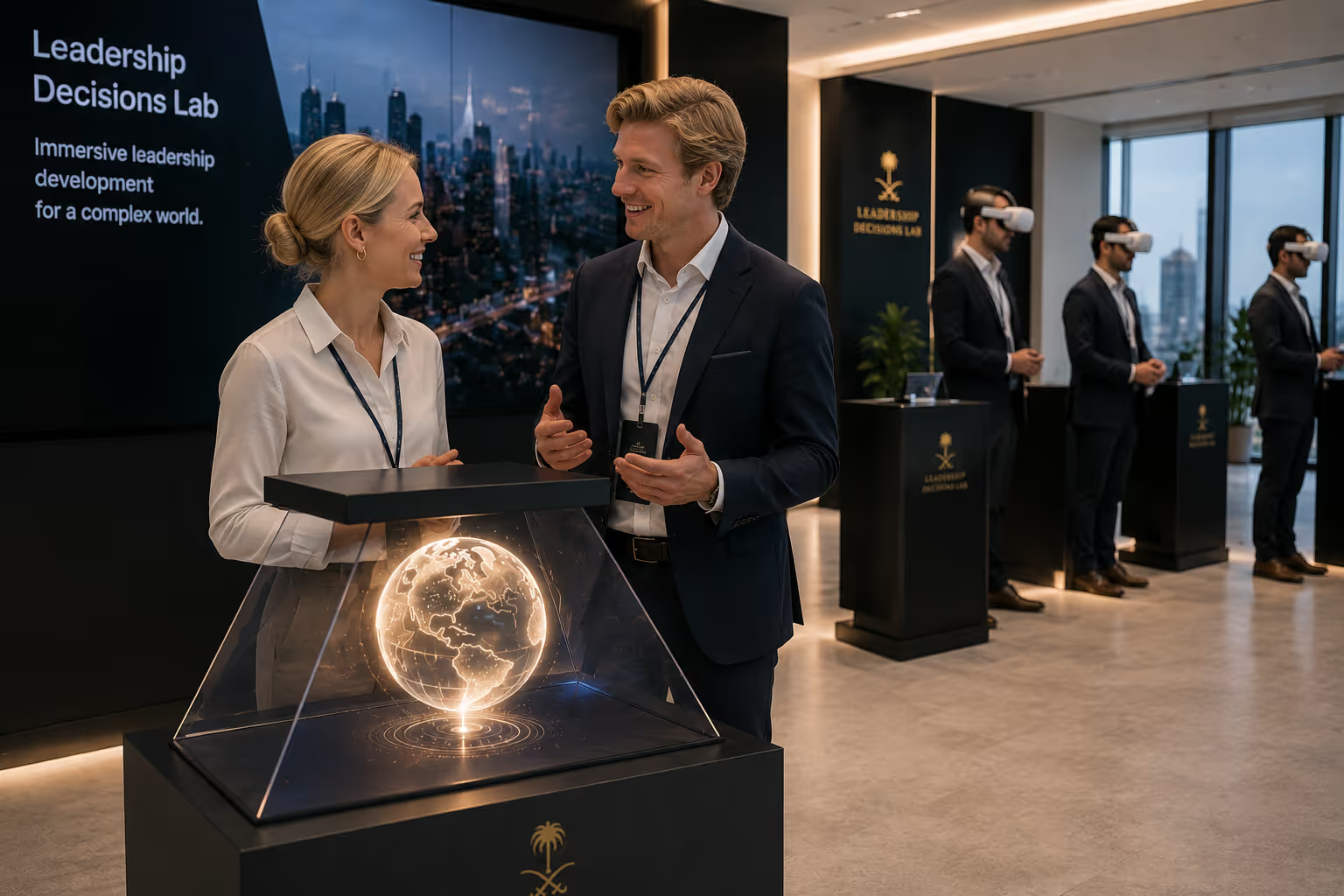
The passive intervention utilised 3D holographic displays (often referred to as Holofans). These 2ft x 2ft devices use rapidly rotating LED blades to project high-resolution, three-dimensional animations—in this case, the event's logo and key thematic visuals. The brilliance of this technology lies in its plug-and-play nature. The content (typically .MP4 or .H265 files) is pre-loaded onto the devices before dispatch. Once installed on-site, they auto-play upon power-up, requiring absolutely no manual input or supervision from event staff. Placed strategically in high-footfall areas like registration desks and catering zones, these displays provided a continuous, futuristic visual anchor for the event without demanding any attendee interaction time. They served as highly effective digital signage, drawing the eye and setting a tone of innovation from the moment attendees entered the venue. Because they operate independently and require no user onboarding, they effectively absorbed the ambient attention of the crowd, reducing the perceived wait times for the active VR stations nearby.
The active intervention—the VR experience stations—required a much more rigorous operational protocol to manage throughput. The firm deployed a fleet of Oculus Quest 3 headsets, chosen for their standalone capabilities and high-resolution displays. By opting for standalone devices, the deployment team eliminated the need for cumbersome PC tethers and complex cable management, allowing for a cleaner, safer, and more flexible booth design. To prevent bottlenecks, the content was strictly governed by the "3-Minute Rule." Each headset was pre-loaded with a maximum of three distinct experiences (e.g., "5G Impact Across Industries"), with each experience hard-capped at three minutes. This ensured a predictable user turnover rate. The content itself was designed to be immediately impactful, bypassing lengthy tutorials in favour of dropping the user directly into the core narrative. Crucially, every headset was locked into 'Kiosk Mode.' This security feature prevents users from exiting the designated application, accessing the device's settings, or accidentally launching other programs, ensuring a seamless, foolproof experience for every attendee. It meant that event staff did not have to spend valuable time resetting the software between users; the headset was always ready for the next person the moment it was put on.
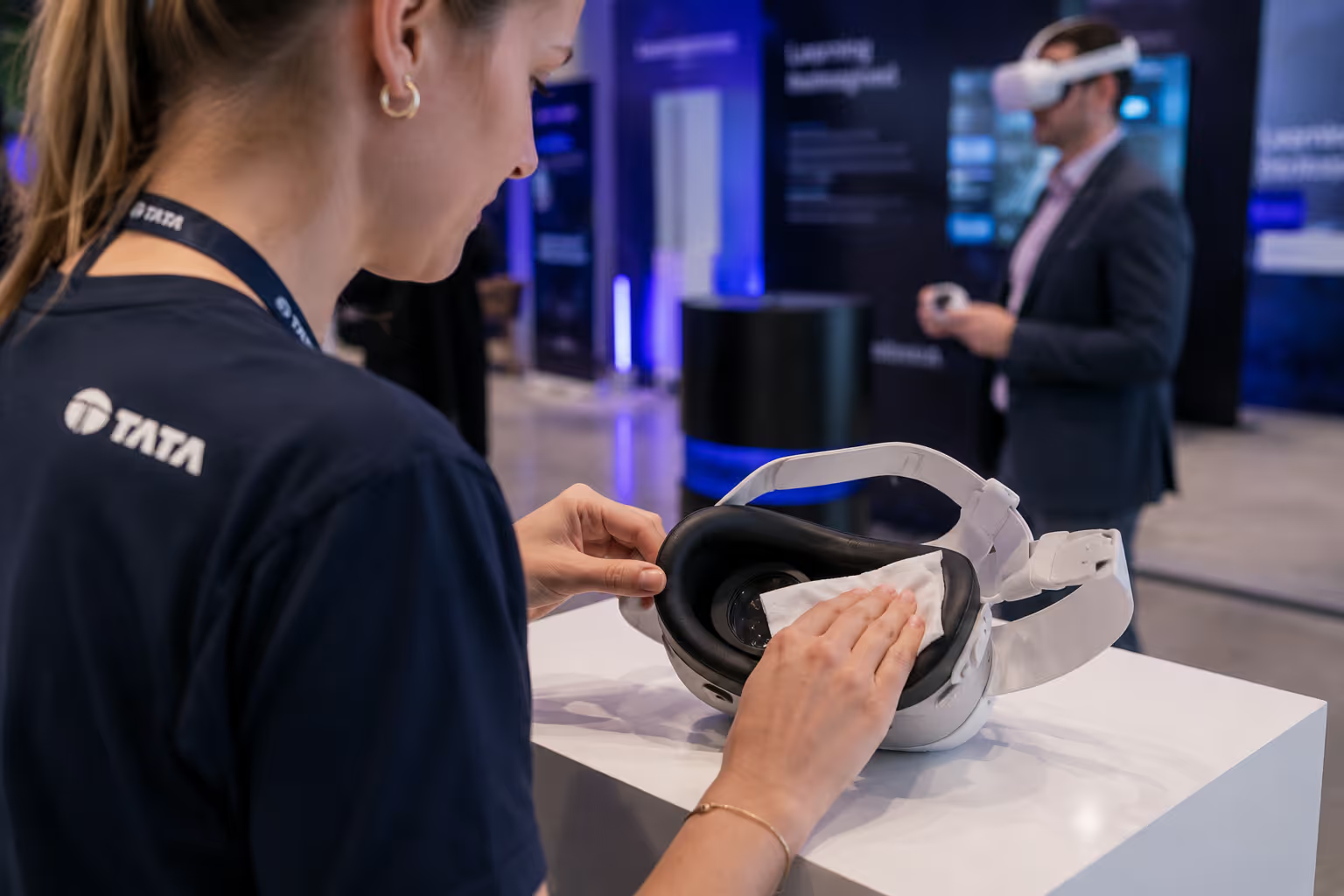
The on-site deployment was executed over a precise three-day schedule. Day 1 focused on site readiness, power allocation, and the physical unboxing and assembly of the hardware. Day 2 was dedicated to software integration, dry runs, and testing the Kiosk Mode locks. Day 3 was the live event, where the focus shifted to throughput management and hygiene. A strict hygiene protocol was enforced, with dedicated staff wiping down the face cushions of every headset after every single use, and offering optional disposable eye masks to attendees. This meticulous attention to detail ensured that the VR stations remained safe, clean, and operational throughout the entire event.
Departmental Impact
Event Management & Logistics
For the event management team, the structured deployment model alleviated the traditional headaches associated with experiential technology. The plug-and-play nature of the 3D holographic displays meant they could be set up and forgotten, providing high visual impact with zero ongoing maintenance. The strict adherence to the 3-Minute Rule for the VR stations allowed the team to accurately forecast queue times and manage crowd flow, preventing the immersive zones from becoming congested bottlenecks. This predictability is vital for event planners who must ensure that attendees can move freely between scheduled sessions without getting trapped in long lines. The comprehensive three-day setup and testing protocol ensured that technical glitches were identified and resolved before the doors opened, resulting in a smooth, stress-free live environment. By treating the VR deployment as a logistical exercise rather than just a technological showcase, the event management team was able to deliver a flawless execution that reflected positively on the firm's organisational capabilities.
Learning & Development (L&D)
The L&D department was able to deliver their core message—the transformative power of emerging technologies—in a format that was impossible to ignore. Instead of passively listening to a presentation about 5G or AI, attendees were actively immersed in those concepts. The short, punchy nature of the 3-minute experiences ensured that the learning was focused and memorable, avoiding the cognitive overload that can occur with longer VR sessions. This experiential approach significantly boosted knowledge retention and sparked deeper, more engaged conversations during the subsequent networking sessions and breakout workshops. By providing a shared, visceral experience, the VR activations acted as a powerful icebreaker, encouraging employees from different departments and regions to connect and discuss the practical applications of the technology they had just witnessed. This cross-pollination of ideas was a key objective for the L&D team, and the immersive technology proved to be the perfect catalyst.
IT & Security
From an IT perspective, the deployment was a masterclass in secure, scalable device management. The use of standalone Oculus Quest 3 headsets eliminated the need for complex tethered PC setups or extensive local network infrastructure. The implementation of Kiosk Mode was the critical security feature, ensuring that the devices were locked down to the specific event applications. This prevented attendees from altering settings, accessing the internet, or viewing inappropriate content, mitigating significant security and reputational risks for the firm. The pre-loading of all content prior to the event further reduced reliance on the venue's often-unpredictable Wi-Fi network. This offline capability was particularly praised by the IT department, as it guaranteed 100% uptime regardless of the venue's bandwidth limitations or potential network outages. It also simplified the setup process, as the deployment team did not need to spend hours configuring routers or troubleshooting connectivity issues on the morning of the event.
Quantified Business Impact
The integration of high-throughput VR and 3D holographic displays transformed the corporate summit, delivering measurable results that justified the investment in immersive event technology. The structured operational model ensured that the technology enhanced the attendee experience without compromising the event's schedule.
The most significant impact was the volume of attendees successfully processed through the VR stations. By strictly enforcing the 3-Minute Rule and limiting each device to three experiences, the event staff achieved a highly efficient turnover rate. Factoring in a one-minute reset and hygiene wipe-down between users, each headset was able to process approximately 15 attendees per hour. Across a fleet of devices over a full-day event, this allowed hundreds of employees to experience the immersive content, ensuring a broad reach and maximising the ROI of the VR deployment. This high throughput was critical for justifying the hardware investment to senior leadership, proving that VR could be deployed at scale rather than remaining a niche novelty for a select few. Furthermore, the positive feedback gathered from attendees highlighted that the short, focused nature of the experiences was actually preferred, as it delivered the core message without causing the fatigue or motion sickness sometimes associated with longer VR sessions.
~15 / hr
Attendees processed per headset — bottleneck-free throughput
100%
Device uptime with zero unauthorised access (Kiosk Mode)
Zero
Technical downtime during the live event — 3-day setup paid off
100%
Hygiene-protocol adherence: post-use wipe-down on every headset
Conclusion
The global professional services leader's deployment of VR and 3D holographic displays demonstrates that immersive technology can be successfully integrated into large-scale corporate events when supported by a rigorous operational strategy. By moving away from unstructured, open-ended VR experiences and adopting the disciplined "3-Minute Rule," the firm was able to deliver high-impact learning moments to hundreds of attendees without disrupting the flow of the summit.
This case study highlights the critical importance of logistics in experiential technology. The use of passive, plug-and-play holographic displays provided continuous visual engagement, while the strict application of Kiosk Mode and hygiene protocols ensured that the active VR stations remained secure, clean, and efficient. For organisations looking to elevate their internal events, this high-throughput model provides a proven blueprint for turning emerging technology from a logistical challenge into a powerful tool for engagement and education.
Frequently Asked Questions
Q1What is the "3-Minute Rule" and why is it important for corporate events?
The "3-Minute Rule" is an operational guideline that restricts any single VR experience at a live event to a maximum of three minutes. This is crucial for managing throughput and preventing long queues. At large corporate events, attendees have limited time between sessions. Short, punchy experiences ensure that a maximum number of people can engage with the technology without causing bottlenecks or frustration.
Q2 How do you ensure the VR headsets are safe and hygienic for hundreds of users ?
Hygiene is a top priority for any large-scale deployment. We enforce a strict protocol where dedicated event staff wipe down the face cushion and controllers of every headset with antibacterial wipes immediately after each use. Additionally, we offer disposable, single-use eye masks to attendees for an extra layer of comfort and hygiene. This process is factored into the turnover time between users.
Q3What is 'Kiosk Mode' and why is it necessary?
Kiosk Mode is a security and usability feature that locks the VR headset to a specific application or set of applications. It prevents users from exiting the experience, accessing the device's core settings, browsing the internet, or launching unauthorised programs. This is essential at corporate events to ensure a consistent, foolproof user experience and to protect the devices from accidental or intentional tampering.
Q4Do the 3D holographic displays require a dedicated operator?
No, the 3D holographic displays (Holofans) are designed to be entirely passive and plug-and-play. The 3D animation files (such as rotating corporate logos or thematic visuals) are pre-loaded onto the devices before they arrive on-site. Once they are plugged into a power source, they automatically begin playing on a loop. They require zero supervision from event staff, making them a highly efficient way to add visual impact to an event space.
For India: Rrahul Sethi at rrahul@metaverse911.in
For Global inquiries: Vandana Bansal at vandana@metaverse911.co.uk
Q5 What happens if the venue's Wi-Fi goes down during the event?
The assessment system is designed for flexible data integration. It generates comprehensive reports in standard formats like Excel (.xlsx) or CSV, which include fields such as Employee ID, location, score, and recommended maturity band. These reports can be easily imported into most major HRIS or LMS platforms. For organisations requiring automated syncing, cloud-based storage options with API connectivity can be configured, subject to security approvals.
Q6How much space is required to set up a VR experience zone?
The space required depends on the number of headsets being deployed. For a standard standalone VR setup (like the Oculus Quest 3), we recommend a minimum clear physical space of 2m x 2m (approx. 6.5ft x 6.5ft) per user to ensure they can move their arms safely without hitting adjacent attendees or equipment. Our site readiness team works with event planners to optimise the layout within the available floor plan.
Q7 Can the VR content be customised for our specific corporate event?
Yes, the content can be highly customised. While we offer a library of pre-built experiences (such as industry-specific technology showcases), we frequently work with clients to develop bespoke VR modules that align perfectly with the theme of their summit or the specific learning objectives of their L&D program. This content is then pre-loaded onto the devices for seamless event delivery.
For India: Rrahul Sethi at rrahul@metaverse911.in
For Global inquiries: Vandana Bansal at vandana@metaverse911.co.uk