
The Story
In the highly competitive landscape of Indian manufacturing, operational efficiency and workforce safety are inextricably linked. A single workplace accident not only devastates lives but also halts production lines, incurs massive regulatory fines, and damages corporate reputation. Yet, despite the high stakes, traditional safety training methods—classroom lectures, generic videos, and paper manuals—often fail to resonate with a diverse, multilingual workforce. The result is a persistent gap between theoretical knowledge and practical, on-the-floor application.
A leading Indian manufacturing conglomerate, operating multiple facilities across the country, recognised this critical vulnerability. Their existing training programmes were slow, expensive to administer, and ultimately ineffective at reducing their baseline incident rate. The logistical challenge of pulling workers off the floor for days of classroom instruction was severely impacting production quotas, creating a constant tension between the HSE department and plant managers. Furthermore, the language barrier was a significant hurdle; safety manuals printed in English or Hindi were often poorly understood by migrant workers whose primary language was Marathi, Gujarati, or Tamil. This linguistic disconnect meant that critical safety nuances were lost in translation, leading to preventable errors on the factory floor. The conglomerate needed a paradigm shift. They required a training methodology that was not only more effective at instilling safety protocols but also demonstrably cost-efficient. They needed a solution that could scale across their entire operation without requiring a massive increase in their L&D budget. The traditional approach of simply hiring more trainers or printing more manuals was no longer viable; it was time to leverage technology to solve a deeply human problem.
They turned to a global VR safety software developer to implement a comprehensive, standalone VR training programme. This decision was not made lightly; it required a rigorous financial analysis to justify the initial investment to the board of directors. This case study breaks down the deployment and, crucially, the quantified Return on Investment (ROI) of this initiative, demonstrating how immersive technology transformed their safety culture while delivering massive financial savings. It provides a blueprint for other Indian manufacturers looking to modernise their training infrastructure while maintaining strict cost controls and ensuring compliance with increasingly stringent safety regulations.
How It Works: The Mechanics of Cost-Efficient Immersion
The financial success of this deployment was rooted in two strategic decisions: the choice of hardware and the pedagogical design of the software.
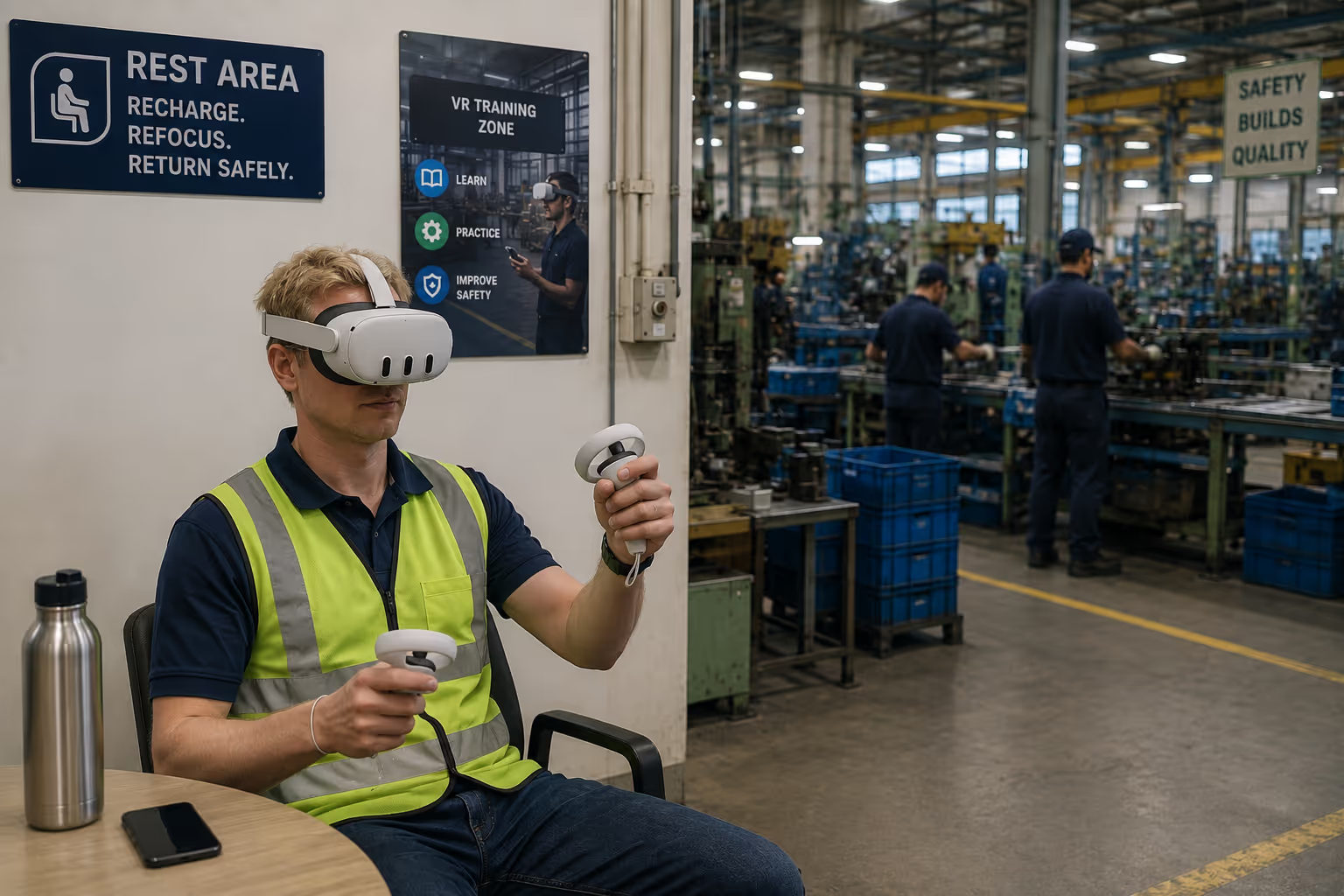
The conglomerate opted exclusively for standalone VR headsets. This was a critical cost-saving measure that fundamentally altered the ROI calculation. Unlike PC-tethered VR systems, which require a high-end gaming computer for every headset (often costing upwards of INR 1.5 Lakhs per station, plus the cost of the headset itself), standalone headsets are self-contained units. They require no external tracking cameras, no complex cable management, and no dedicated IT infrastructure. A complete training kit can be stored in a secure locker directly on the factory floor and deployed by a shift supervisor in minutes. This drastically reduced the initial capital expenditure (CapEx) and eliminated the need to build or repurpose dedicated, climate-controlled training rooms, which in a busy manufacturing facility is premium real estate. The portability of the standalone headsets also meant that a single unit could be shared across multiple shifts, further maximising the return on the hardware investment.
The software architecture was designed to maximise throughput and knowledge retention, ensuring that the time spent in VR was highly productive. The VR modules utilised a rigorous 'Learn, Train, Assess' methodology. Trainees were first guided step-by-step through a hazardous scenario (e.g., responding to a chemical spill or isolating an electrical fire), then required to perform the correct safety protocols from memory without visual prompts, and finally tested under simulated time pressure with randomised variables. Crucially, the software featured full multilingual support. A worker could select their native language—be it Hindi, Marathi, Gujarati, or Tamil—from a simple dropdown menu, ensuring that complex safety instructions were perfectly understood. This eliminated the need for human translators, reduced the cognitive load on the trainee, and ensured a standardised, high quality of instruction across all facilities, regardless of the local demographic. This standardisation is critical for maintaining a consistent safety culture across a geographically dispersed organisation.
The immersive nature of the VR experience—where trainees physically reach out to close virtual valves, select the correct fire extinguisher, or apply a LOTO padlock—builds deep muscle memory. This kinesthetic learning is vital for high-stress situations where cognitive recall may fail. When a worker experiences the visceral, simulated consequence of a mistake—such as a virtual explosion or a sudden release of hazardous gas—the emotional impact ensures the lesson is retained far more effectively than reading a warning on a whiteboard or watching a generic safety video. This experiential learning is the core driver of the subsequent reduction in incident rates. It bridges the gap between knowing what to do and actually doing it when it matters most.
Departmental Impact
Finance & Procurement
For the CFO and the finance department, the standalone VR deployment presented a highly attractive financial model that was easy to justify to the board. The elimination of PC hardware costs significantly lowered the barrier to entry, transforming what could have been a massive CapEx request into a manageable operational expense. Furthermore, the shift from instructor-led classroom training to self-guided VR modules drastically reduced ongoing operational expenditures (OpEx). The company no longer needed to pay for instructor travel, accommodation, printed materials, or the massive opportunity cost of taking entire shifts off the production line for days at a time. The ROI was measurable, rapid, and clearly visible on the balance sheet within the first two quarters of deployment. The predictability of the licensing model also allowed for more accurate budgeting in subsequent fiscal years.
Operations & Plant Management
For plant managers, the primary benefit was the preservation of operational uptime, which is the lifeblood of any manufacturing facility. Traditional training is inherently disruptive, often requiring complex scheduling gymnastics to ensure adequate coverage on the floor. The standalone VR system allowed training to be integrated seamlessly into the workday. Workers could complete a highly focused, 15-minute VR safety module during a shift change or a scheduled break, without ever leaving the factory floor. This micro-learning approach ensured that production quotas were met without compromise, while simultaneously elevating the overall safety standard of the facility. It transformed training from a logistical headache into a streamlined, continuous process that empowered shift supervisors to manage their teams' development directly.
Health, Safety, and Environment (HSE)
From an HSE perspective, the impact was transformative. The multilingual support ensured that every worker, regardless of their educational background or native language, fully comprehended the safety protocols, eliminating the dangerous ambiguity that often plagues diverse workforces. The experiential nature of the VR simulations—allowing workers to practise high-risk procedures in a zero-risk environment—built genuine situational awareness and respect for the hazards. The detailed analytics provided by the VR platform's backend allowed HSE directors to move from a reactive to a proactive safety posture. They could identify specific areas where the workforce was struggling—for example, a high failure rate on a specific LOTO step—and proactively address those vulnerabilities with targeted interventions before a real-world accident occurred. This data-driven approach to safety management is a hallmark of a mature, high-performing HSE organisation.
Quantified Business Impact
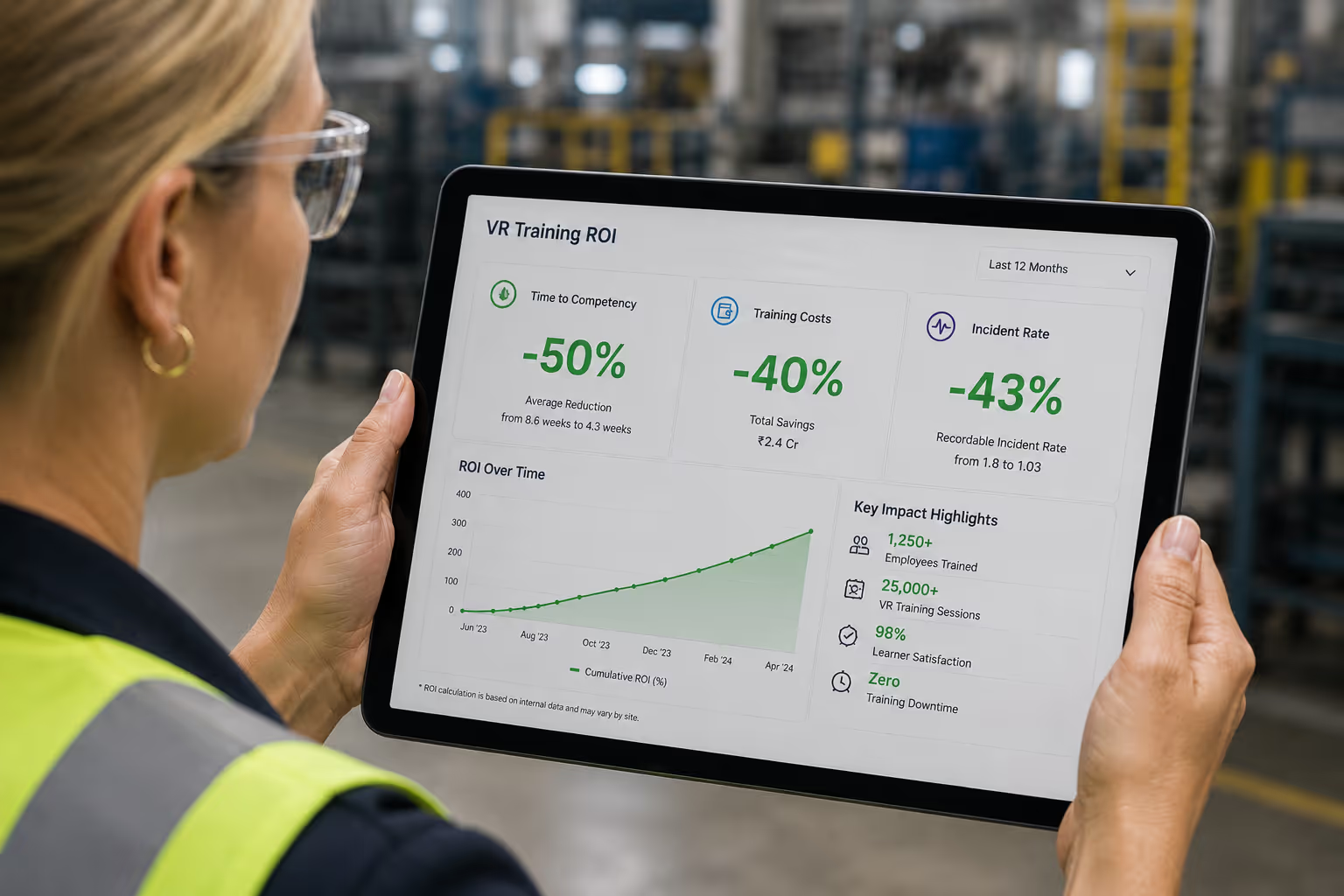
The financial justification for standalone VR in manufacturing is not based on theoretical projections; it is grounded in hard, aggregated data. The deployment by the Indian conglomerate yielded a massive Return on Investment, driven by accelerated learning, reduced training costs, and a critical drop in workplace incidents.
By shifting to immersive learning, the conglomerate achieved a remarkable 40% reduction in overall training time. Because VR commands 100% of the user's attention, eliminating the distractions common in a classroom, and facilitates 'learning by doing', trainees grasp complex concepts significantly faster. This acceleration directly translates to reduced labour costs associated with training; workers spend less time in the classroom and more time on the production line. Furthermore, the time-to-proficiency (TTP)—the critical metric measuring how long it takes for a new hire to become a safe, productive member of the team—was reduced by an astonishing 50% to 70%. This rapid onboarding is a massive competitive advantage in an industry with high turnover rates.
The most significant financial impact, however, came from the reduction in accidents. Workplace injuries incur massive direct costs, including medical expenses and workers' compensation claims, as well as crippling indirect costs, such as production halts, equipment damage, regulatory fines, and reputational damage. By preventing these incidents through superior training, the VR programme paid for itself many times over.
40%
Training Time Reduction
Thousands of man-hours returned to the production line through immersive, distraction-free learning.
50–70%
Faster Time-to-Proficiency
New hires reach full operational competency far quicker than via traditional methods — a step-change in onboarding.
Key Performance Indicators (KPIs) for the standalone VR deployment highlight its financial success: a 40% training time reduction in mandatory safety certifications; new hires reaching full operational competency 50% to 70% faster; a staggering 16x improvement in protocol recall during high-stress simulations versus traditional classroom learning; and a 43% reduction in recordable safety incidents within the first year — translating into significant savings on insurance premiums, workers' compensation claims, and avoided production halts. This single metric often justifies the entire VR investment.
16×
Knowledge Retention
Protocol recall in high-stress simulations versus traditional classroom-only learning.
43%
Incident Rate Reduction
Recordable safety incidents fell within the first year — the single metric that often justifies the entire VR investment.
Conclusion
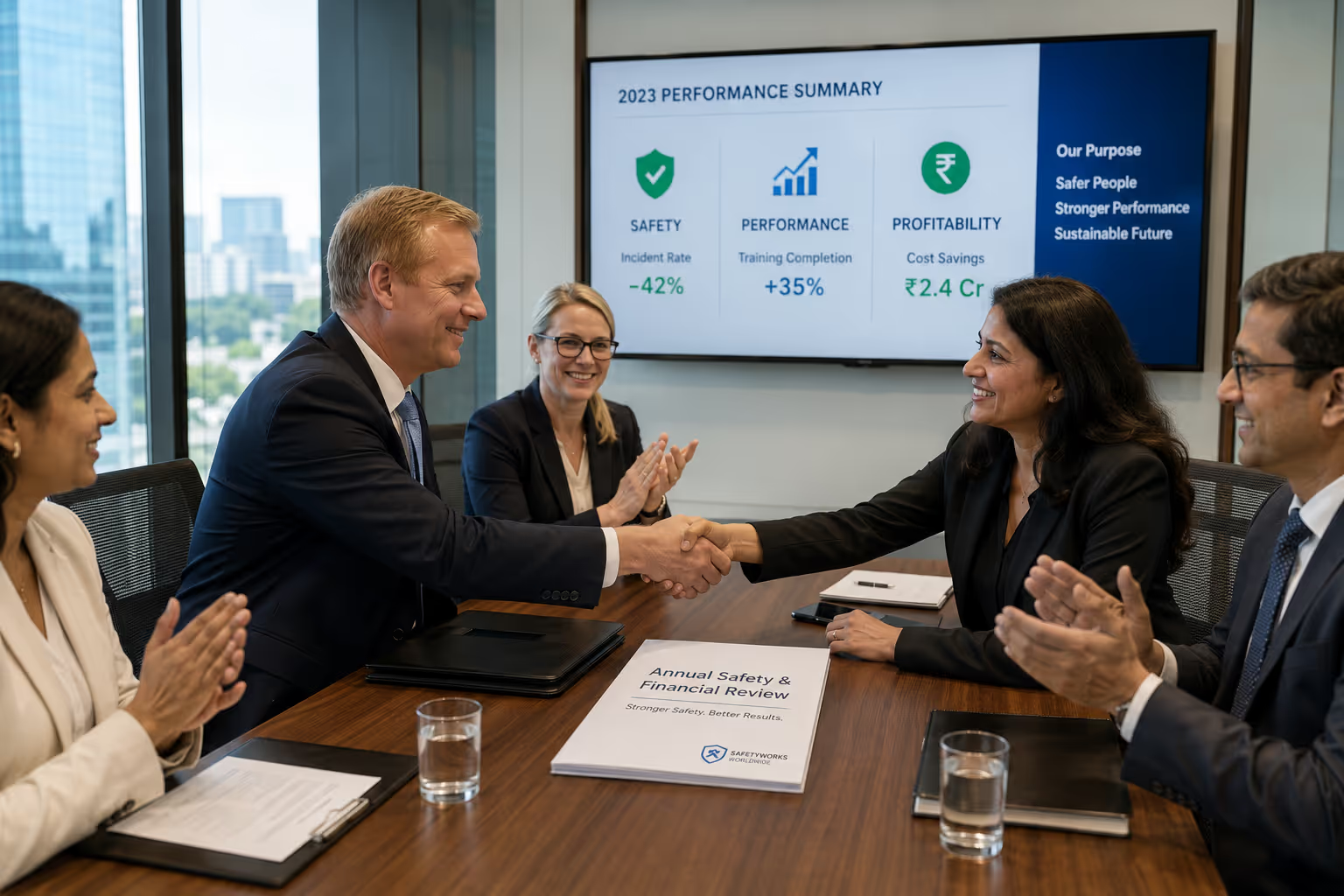
The deployment of standalone VR safety training by a leading Indian manufacturing conglomerate provides a definitive blueprint for achieving massive ROI in industrial L&D. By moving away from expensive, disruptive traditional methods and embracing scalable, immersive technology, the conglomerate fundamentally transformed its safety culture while delivering significant financial savings. This case study proves that safety and profitability are not mutually exclusive; in fact, investing in the right safety technology is one of the most effective ways to protect the bottom line.
For plant managers and CFOs, the value proposition is undeniable. Standalone VR eliminates the high capital expenditure associated with PC-tethered systems, while the immersive, multilingual software ensures that critical safety protocols are understood and retained by every worker, regardless of their native language. The aggregated data proves that VR is not a novelty or a gimmick; it is a highly efficient, data-driven training methodology that reduces training time by 40%, accelerates time-to-proficiency by up to 70%, and slashes incident rates by 43%. In the cost-sensitive, high-risk environment of Indian manufacturing, where margins are tight and safety is paramount, standalone VR is no longer an experimental luxury; it is a strategic financial imperative that delivers a rapid and measurable return on investment
Frequently Asked Questions
Q1Why is standalone VR more cost-effective than PC-tethered VR?
Standalone VR headsets (like the Meta Quest 3) are self-contained units that do not require a high-end gaming PC to operate. This eliminates a massive upfront capital expenditure (often saving over INR 1 Lakh per station) and removes the need for dedicated IT infrastructure and complex cable management.
Q2How does VR reduce overall training time by 40%?
VR commands 100% of the user's attention, eliminating the distractions common in classroom settings. Furthermore, 'learning by doing' in a simulated environment builds muscle memory and cognitive understanding much faster than passively watching a video or reading a manual, allowing trainees to reach competency in significantly less time.
Q3What is the impact of multilingual support on ROI?
In the Indian manufacturing context, language barriers are a major cause of training inefficiency and workplace accidents. Multilingual VR ensures that every worker understands the safety protocols in their native language (e.g., Hindi, Marathi, Gujarati), eliminating the need for human translators and drastically reducing the risk of costly, miscommunication-driven errors.
Q4How does VR accelerate Time-to-Proficiency (TTP)?
TTP is the time it takes for a new hire to become a safe, productive worker. VR accelerates this by providing a zero-risk environment where trainees can practise complex procedures and experience simulated hazards repeatedly until they achieve mastery, meaning they are ready to contribute to the production line much faster
Q5Can we track the financial impact of the VR training programme?
Yes. The VR software includes a robust backend analytics dashboard that tracks every trainee's progress, assessment scores, and time spent in the simulation. By correlating this data with your facility's incident rates, training expenditure, and production uptime, you can clearly calculate the ongoing ROI of the deployment.
Q6Is the hardware durable enough for a factory environment?
Modern standalone VR headsets are designed to be robust, but they are still electronic devices. For industrial deployments, we recommend using protective silicone covers, easily cleanable facial interfaces, and secure, charging storage lockers on the factory floor to ensure the longevity of the hardware.
Q7How do we get started with calculating our specific ROI?
The first step is a consultation to understand your current training expenditure, your baseline incident rates, and the specific hazards your workforce faces. From there, we can build a customised financial model demonstrating the projected savings and payback period of a standalone VR deployment in your facility.