
The Story
Operating a Powered Industrial Truck (PIT), commonly known as a forklift, is one of the most hazardous tasks in any warehouse or manufacturing facility. Despite rigorous safety protocols, forklift accidents remain a leading cause of workplace injuries and fatalities globally. For a premier, OSHA-certified PIT training institution, the challenge was not a lack of curriculum, but the inherent limitations of physical training. Traditional methods require taking an expensive piece of machinery out of production, dedicating a large, safe physical space, and exposing novice operators to real-world risks before they have developed the necessary spatial awareness and control.
The institution recognised that while classroom theory is essential, it cannot replicate the stress and complexity of navigating a busy warehouse floor. They needed a bridge between the classroom and the physical forklift—a safe environment where trainees could practice complex manoeuvres, experience simulated hazards, and make mistakes without consequence. A novice operator reading about the turning radius of a forklift is vastly different from that same operator attempting to manoeuvre a three-ton machine around a blind corner while carrying an unbalanced load. However, they also knew that low-fidelity, gamified VR would not suffice. To meet their strict OSHA-aligned standards, the simulation needed to be hyper-realistic, both visually and physically. It had to accurately model the physics of weight distribution, momentum, and the unique rear-wheel steering mechanics that make forklifts notoriously difficult to master. If the simulation felt like an arcade game, it would fail to instil the necessary respect for the machinery and could even build dangerous false confidence.
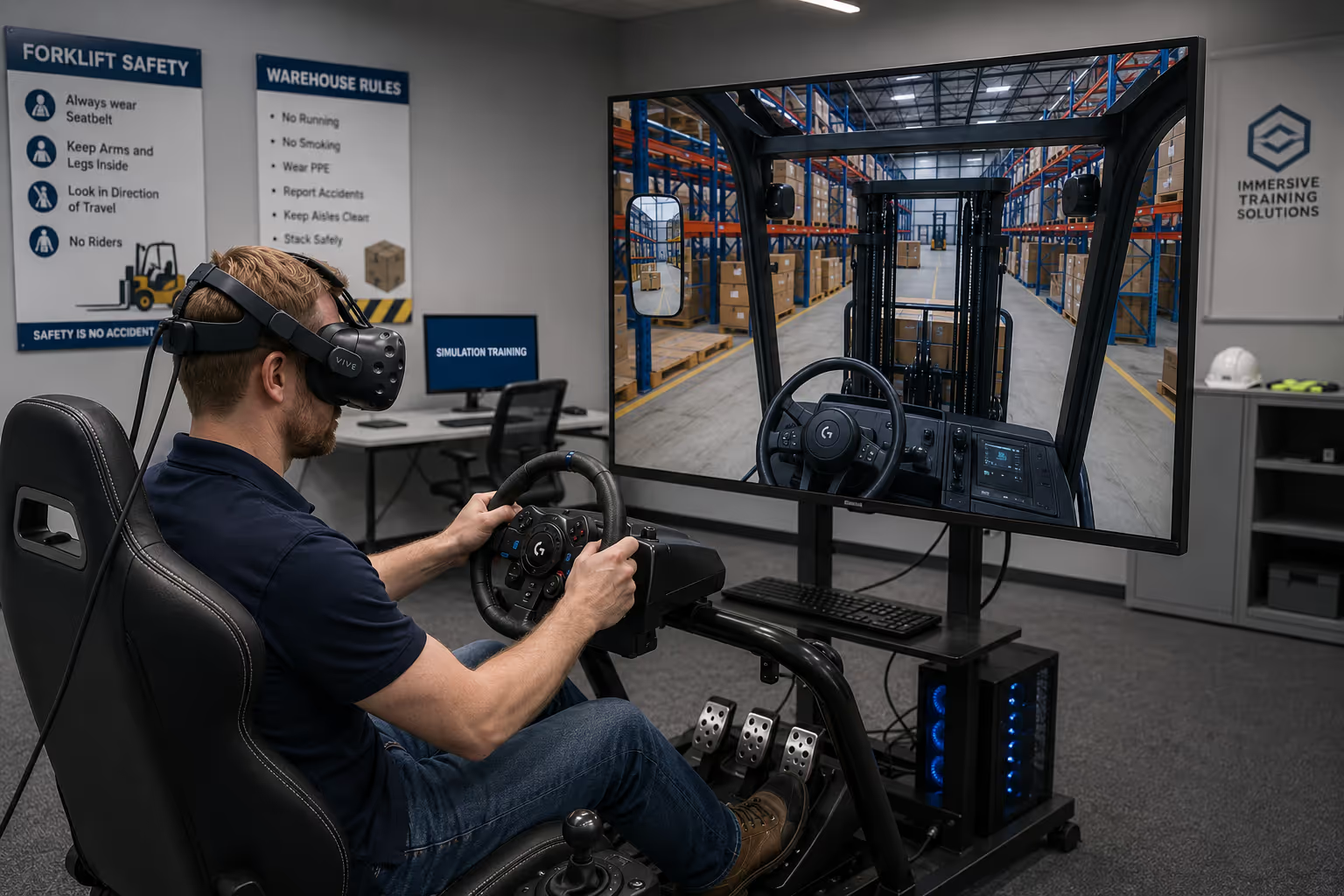
Partnering with a specialised VR development agency, the institution commissioned a bespoke, high-fidelity forklift simulator. They opted for a PC-tethered VR architecture, sacrificing the portability of standalone headsets for the immense processing power required to render a highly detailed, physics-accurate warehouse environment. This decision was driven by the need for absolute visual fidelity; trainees needed to be able to read small warning labels on virtual pallets and accurately judge distances down long, dimly lit aisles. Crucially, they integrated physical steering wheels and pedals, ensuring that the tactile experience matched the visual immersion. This case study explores how this high-end VR deployment transformed their training methodology, providing instructors with unprecedented oversight tools and trainees with a zero-risk environment to master one of the industry's most dangerous machines. It demonstrates that when it comes to heavy machinery training, the investment in high-end hardware and bespoke software pays dividends in safety and operational efficiency.
How It Works: The Architecture of High-Fidelity Simulation
The success of this deployment rests on the deliberate choice of high-end hardware and bespoke software architecture, designed specifically to meet the rigorous demands of PIT operator training.
The hardware setup is anchored by a high-performance PC, which provides the necessary graphical processing power to run the simulation at a consistently high frame rate. This is critical for preventing motion sickness, a common issue in lower-fidelity vehicle simulations where any lag between the user's head movement and the visual update can cause severe disorientation. The trainee wears a premium PC-tethered headset (specifically, the HTC Vive Pro 2), chosen for its exceptional resolution and wide field of view, which accurately replicates the peripheral vision required when operating a forklift. Operators must constantly scan their surroundings for pedestrians and obstacles, making a wide field of view non-negotiable. To provide the necessary tactile feedback, the system integrates a Logitech G920 steering wheel and pedal set. This physical interface ensures that the trainee develops genuine muscle memory for steering, accelerating, and braking, rather than relying on abstract controller inputs. The resistance in the steering wheel and the travel distance of the pedals mimic the feel of a real industrial vehicle, bridging the gap between digital simulation and physical reality.
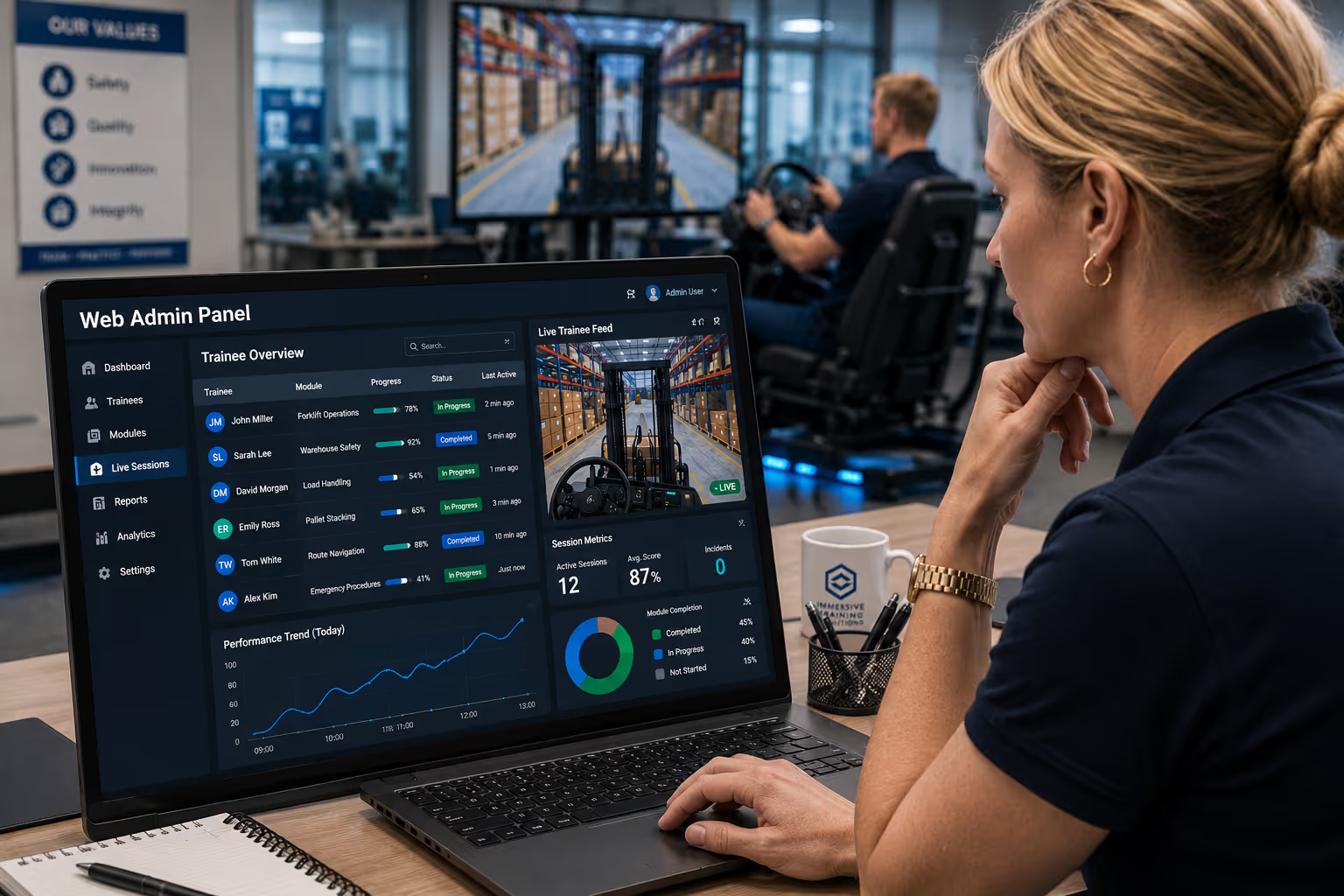
The software architecture is equally robust, featuring two critical components designed for instructor oversight and trainee assessment. The first is the Web Admin Panel. This secure, browser-based dashboard allows the instructor to manage the entire training session remotely. From the panel, the instructor can register new trainees, assign specific training modules (e.g., basic navigation, load handling, hazard avoidance), and monitor the trainee's progress in real-time. This live monitoring includes a direct feed of what the trainee is seeing inside the headset, alongside telemetry data such as speed, steering angle, and load height. The instructor can even trigger unexpected events within the simulation, such as a pedestrian walking into the forklift's path, a sudden spill on the warehouse floor, or a mechanical failure alarm, to test the trainee's reaction time and adherence to emergency protocols. This dynamic control allows the instructor to tailor the difficulty of the simulation to the individual trainee's skill level, ensuring they are constantly challenged but never overwhelmed.
The second critical software feature is the 360-Degree Replay system. Every action the trainee takes within the simulation is recorded. After the session, the instructor and trainee can review the performance together. The replay can be viewed from any angle—from the driver's perspective, from a bird's-eye view, or from the perspective of a pedestrian on the warehouse floor. This allows for highly detailed, objective debriefing, enabling the trainee to see exactly where they made an error and understand the potential real-world consequences. For instance, if a trainee clips a racking system while reversing, the instructor can pause the replay, switch to an overhead camera angle, and clearly demonstrate how the trainee misjudged the turning radius. This visual evidence is far more effective than verbal correction alone, as it removes any ambiguity or defensiveness from the feedback process. The trainee can clearly see their mistake and understand exactly how to correct it in the next session.
Departmental Impact
Training & Compliance
For the training department, the high-fidelity simulator provides a powerful tool for ensuring OSHA alignment. The ability to simulate complex, hazardous scenarios—such as navigating tight aisles, handling unbalanced loads, or reacting to sudden obstacles—allows instructors to assess a trainee's competence far more rigorously than is possible in a controlled physical environment. In a real warehouse, an instructor cannot safely ask a novice to drive a loaded forklift towards a pedestrian to test their braking response; in VR, this critical assessment can be conducted safely and repeatedly. The Web Admin Panel streamlines the administrative burden, providing a centralised platform for tracking progress and generating compliance reports. These digital records are invaluable during safety audits, providing concrete evidence that operators have been trained and assessed on specific hazard recognition scenarios. The 360-Degree Replay feature transforms the debriefing process, shifting it from a subjective discussion to an objective, evidence-based review, significantly improving the trainee's understanding of safety protocols.
Operations & Warehouse Management
For warehouse managers, the primary benefit is the reduction of risk and the preservation of operational efficiency. By shifting the foundational stages of PIT training to the virtual environment, managers no longer need to take active forklifts out of production for training purposes. This ensures that the fleet remains fully utilised, preventing the costly downtime associated with dedicating machinery solely to instruction. Furthermore, because trainees have already mastered the controls and experienced simulated hazards before they ever touch a real machine, the risk of accidents, product damage, and equipment wear-and-tear during the final physical training phase is drastically reduced. A novice operator is much less likely to grind the gears, burn out the brakes, or puncture a valuable pallet of inventory if they have already spent hours perfecting their technique in the simulator. This translates directly to lower maintenance costs and reduced product shrinkage.
Health, Safety, and Environment (HSE)
From an HSE perspective, the simulator is a game-changer. Forklift training is inherently dangerous, and novice operators are particularly prone to errors that can result in severe injury or property damage. The VR simulator provides a 100% safe, zero-risk environment for trainees to make their initial mistakes. They can experience the consequences of tipping a load or colliding with racking virtually, building a deep respect for the machinery without any physical danger. This proactive approach to safety training is essential for cultivating a strong safety culture and reducing the overall incident rate within the facility.
Quantified Business Impact
The deployment of the high-fidelity VR forklift simulator delivers a strong Return on Investment (ROI), driven by the reduction of physical training costs, the preservation of operational efficiency, and the mitigation of safety risks.
While the initial capital expenditure for a PC-tethered VR rig with physical peripherals is higher than that of a standalone headset, the long-term financial benefits are substantial. By reducing the amount of time trainees need to spend on physical forklifts, the institution significantly lowers fuel costs, maintenance expenses, and the opportunity cost of removing machinery from active duty. Furthermore, the accelerated learning curve—facilitated by the realistic physics and the 360-Degree Replay system—means that trainees reach certification-ready status faster, increasing the overall throughput of the training programme. This increased throughput allows the institution to train more operators within the same timeframe, effectively lowering the cost-per-trainee and generating a faster return on the initial hardware investment. The reduction in physical accidents during the training phase also contributes to lower insurance premiums, further enhancing the financial viability of the VR deployment.
Key Performance Indicators
KPIs for the high-fidelity simulator deployment highlight its operational success across utilisation, efficiency, safety, and assessment.
100%
Equipment Utilisation
Elimination of the need to remove active forklifts and pallet jacks from production for foundational training phases of the curriculum.
30%
Training Efficiency
Trainees reach competency milestones up to 30% faster due to the immersive realism and objective replay debriefing
100%
Safety Incidents
Elimination of property damage and near-misses during simulated training modules, significantly reducing overall liability.
100%
Assessment Accuracy
Objective, data-driven scoring of trainee performance via the Web Admin Panel — ensuring consistent compliance standards across cohorts.

Conclusion
The deployment of a high-fidelity, PC-tethered VR forklift simulator by a premier training institution demonstrates the immense value of immersive technology in high-risk operational training. By moving beyond basic, gamified VR and investing in realistic physics, physical peripherals, and robust instructor oversight tools, the institution created a training environment that meets the rigorous demands of OSHA-aligned compliance.
For safety directors and warehouse managers, the value proposition is clear. The simulator provides a zero-risk environment for trainees to master complex manoeuvres and experience hazardous scenarios, significantly reducing the likelihood of real-world accidents. The integration of the Web Admin Panel and the 360-Degree Replay system ensures that training is objective, measurable, and consistently high-quality. As the logistics and manufacturing sectors continue to prioritise safety and efficiency, the adoption of high-fidelity VR simulation will become an essential component of any comprehensive PIT operator training programme.
Frequently Asked Questions
Q1Why choose a PC-tethered VR setup over a standalone headset for forklift training?
While standalone headsets offer portability, a PC-tethered setup provides significantly more graphical processing power. This is essential for rendering a highly detailed, physics-accurate warehouse environment at a consistently high frame rate, which is critical for preventing motion sickness and ensuring the simulation feels realistic enough for OSHA-aligned training.
Q2 How important are the physical steering wheel and pedals?
They are absolutely crucial. Operating a forklift requires precise muscle memory. Using standard plastic VR controllers to simulate steering or braking is abstract and ineffective. The physical Logitech G920 wheel and pedals ensure that the tactile experience matches the visual immersion, allowing trainees to develop genuine, transferable skills.
Q3 What is the Web Admin Panel and how does it benefit instructors?
The Web Admin Panel is a secure, browser-based dashboard that gives instructors complete control over the training session. They can register trainees, assign specific modules, monitor progress in real-time, and even trigger unexpected hazards within the simulation to test reaction times. It centralises administration and provides objective data for compliance reporting.
Q4 How does the 360-Degree Replay system improve the debriefing process?
The replay system records every action taken during the simulation. Afterwards, the instructor and trainee can review the session from any angle—including a bird's-eye view or a pedestrian's perspective. This shifts the debrief from a subjective discussion to an objective, evidence-based review, allowing the trainee to clearly see their errors and understand the real-world implications.
For India: Rrahul Sethi at rrahul@metaverse911.in
For Global inquiries: Vandana Bansal at vandana@metaverse911.co.uk
Q5 Does this simulator replace the need for physical forklift training?
No, the simulator is designed to replace the foundational and intermediate stages of learning. It provides a zero-risk environment for trainees to master the controls, understand spatial awareness, and practice hazard avoidance. Once they demonstrate competence virtually, they must still complete a final phase of physical training and assessment on a real forklift to achieve full certification.
Q6 Can the virtual warehouse environment be customised to match our specific facility?
Yes, the software architecture allows for extensive customisation. The development team can create a bespoke virtual environment that accurately replicates your specific warehouse layout, including your racking systems, typical load types, and common pedestrian traffic routes, ensuring the training is highly relevant to your operations.
Q7How does this technology help with OSHA compliance?
While OSHA does not currently mandate VR, it strongly encourages comprehensive, hazard-recognition training. The simulator provides a highly controlled, measurable environment to teach and assess these critical skills. The detailed analytics and replay data generated by the system provide robust documentation of a trainee's competence, supporting your overall compliance efforts.
For India: Rrahul Sethi at rrahul@metaverse911.in
For Global inquiries: Vandana Bansal at vandana@metaverse911.co.uk