

The Story
India's manufacturing sector is undergoing a massive expansion, driven by initiatives like 'Make in India' and a global shift towards diversified supply chains. However, this rapid growth has exposed a critical vulnerability: a severe shortage of highly skilled tradespeople, particularly in precision disciplines like welding and industrial painting. For decades, Industrial Training Institutes (ITIs) and corporate academies have relied on traditional master-apprentice models. While effective, these methods are inherently slow, expensive, and fraught with safety risks. Trainees consume vast amounts of raw materials—steel plates, shielding gas, welding wire, and industrial coatings—just to practise basic techniques. Furthermore, the hazardous nature of the work means that beginners are often hesitant, slowing their learning curve and increasing the risk of workplace accidents.
Recognising this bottleneck, a leading Indian XR hardware manufacturer partnered with vocational training experts to develop a revolutionary solution tailored specifically for the domestic market. They understood that pure Virtual Reality (VR)—where a user simply holds standard plastic controllers—was insufficient for developing the muscle memory required for complex physical trades. The solution needed to be 'phygital': a seamless blend of physical tools and digital environments. They engineered bespoke welding and painting simulators that paired their high-resolution, standalone XR headsets with exact physical replicas of industrial welding torches and spray guns.
This phygital approach fundamentally changed the training paradigm. Trainees could now feel the weight, balance, and trigger resistance of a real tool while operating within a completely safe, zero-waste virtual environment. The simulators provided real-time, objective feedback on critical metrics like travel speed, torch angle, and distance to the workpiece—data that a human instructor could only estimate. This shift from subjective human observation to objective, data-driven assessment is crucial for standardising skill levels across different training centres. By deploying these simulators across ITIs and corporate training centres, the manufacturer not only accelerated the speed to competency but also democratised access to high-quality skills training, providing a scalable blueprint for upskilling India's industrial workforce. It allowed smaller institutes, which previously could not afford the high ongoing costs of physical consumables, to offer world-class training programs that rival those of massive corporate academies.
How It Works: The Mechanics of Phygital Simulation
The core innovation of these simulators lies in the integration of bespoke physical peripherals with advanced standalone XR hardware. The system does not rely on generic gaming controllers; instead, it utilises meticulously crafted replicas of industry-standard tools.
For the welding simulator, the trainee holds a physical torch that matches the exact weight and ergonomics of a real MIG, TIG, or Stick welding gun. This torch is embedded with high-precision spatial tracking sensors. When the trainee dons the XR headset, they are transported into a hyper-realistic virtual workshop. As they strike the virtual arc, the physical torch provides haptic feedback—subtle vibrations that mimic the feel of welding. The software tracks the trainee's performance in real-time, analysing four critical parameters: work angle, travel angle, travel speed, and contact-tip-to-work distance. If the trainee deviates from the optimal parameters, visual cues within the headset guide them back on track. For example, if the travel speed is too fast, a red indicator might appear, prompting the user to slow down until the indicator turns green. This immediate, objective feedback loop accelerates the development of correct muscle memory far faster than traditional trial-and-error methods. It prevents the ingraining of bad habits early in the learning process, ensuring that when the trainee eventually moves to a real welding bay, their foundational technique is already flawless
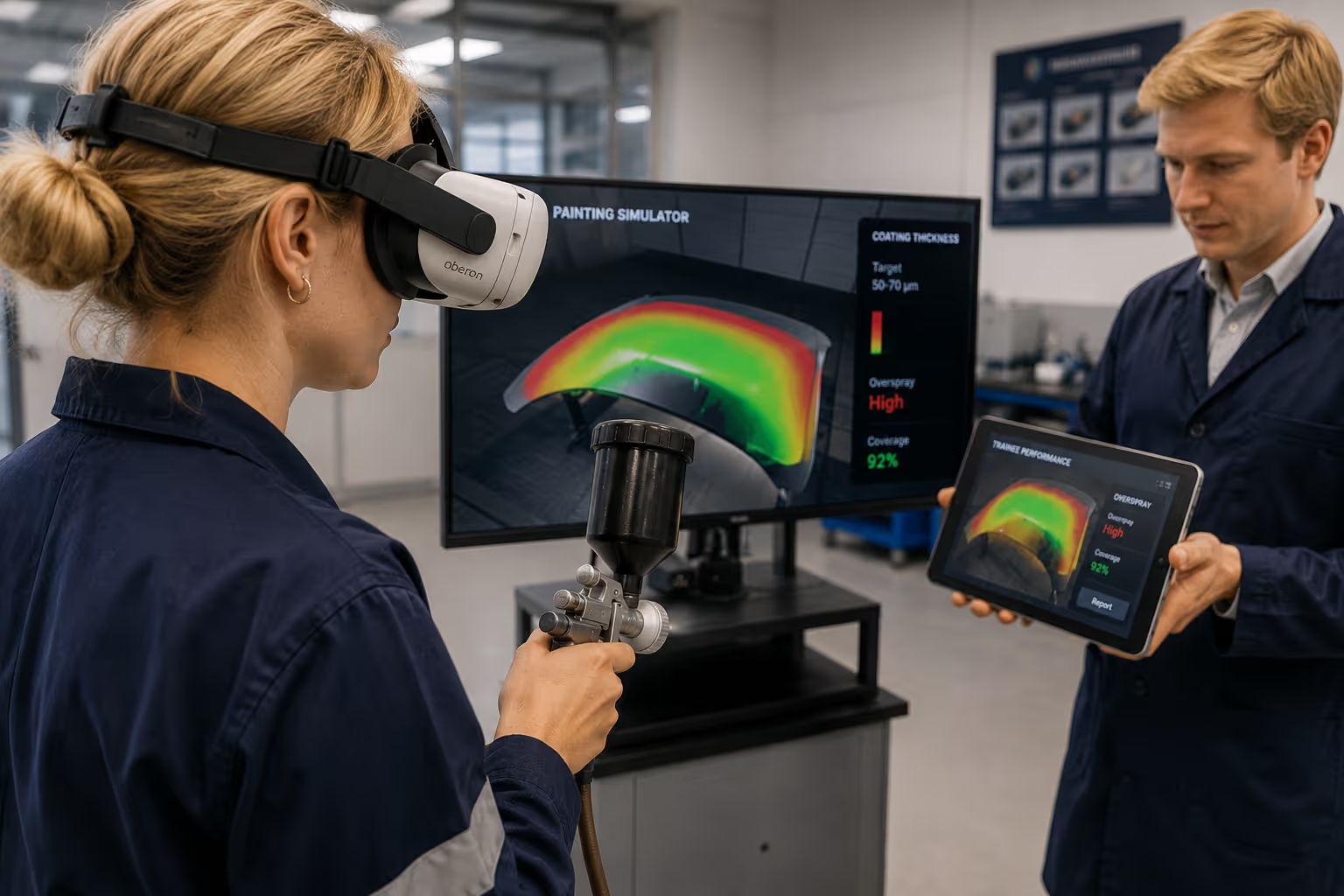
The painting simulator operates on a similar phygital principle. The trainee uses a physical spray gun replica, complete with a realistic trigger pull and weight distribution. In the virtual environment, they practise applying coatings to complex 3D models of automotive parts or industrial machinery. The software calculates the exact thickness of the applied virtual paint, highlighting areas of overspray, under-application, or incorrect overlap. This allows trainees to perfect their technique—minimising material waste and ensuring a flawless finish—before they ever touch a drop of real, expensive industrial coating. The ability to instantly reset the virtual workpiece and try again encourages experimentation and rapid iteration, a luxury that is simply too costly in a physical paint booth. Both simulators are powered by a robust, standalone XR headset, eliminating the need for tethered PCs and allowing for flexible deployment in any classroom or workshop setting. This portability means that training can be brought directly to the factory floor or moved between different ITI campuses with ease.
Departmental Impact
Vocational Training & ITIs
For directors of Industrial Training Institutes, the phygital simulators represent a paradigm shift in curriculum delivery. The most immediate impact is the dramatic reduction in consumable costs. By shifting the initial stages of learning to the virtual environment, ITIs can save millions of rupees annually on steel, gas, wire, and paint. This allows institutes to train more students within the same budget, or reallocate those funds towards upgrading other essential facilities. Furthermore, the simulators democratise the learning process. In a traditional workshop, a single instructor can only closely monitor one or two students at a time. The simulators act as a force multiplier, providing every student with a dedicated, tireless virtual tutor that offers instant, objective feedback, ensuring a standardised high quality of instruction across the entire cohort. The gamified nature of the scoring system also increases student engagement, turning what was once a daunting and hazardous task into an interactive challenge that motivates continuous improvement.
Corporate L&D and Plant Management
For corporate L&D heads and plant managers, the primary benefit is the accelerated speed to competency and the reduction of on-the-job errors. When new hires transition from the simulator to the actual factory floor, they already possess the correct muscle memory and procedural understanding. This significantly reduces the time required for onboarding and minimises the risk of costly mistakes—such as a botched weld on a critical component or a flawed paint job requiring rework. The detailed analytics generated by the simulators also allow managers to objectively assess a candidate's skill level before they are assigned to live production, ensuring that only fully competent operators handle expensive materials and complex tasks. This data-driven approach to skills verification is invaluable for maintaining high quality control standards and meeting the stringent compliance requirements often demanded by international clients and regulatory bodies.
Health, Safety, and Environment (HSE)
From a safety perspective, the impact is profound. Welding and industrial painting are inherently hazardous trades, exposing trainees to intense heat, toxic fumes, UV radiation, and volatile chemicals. The phygital simulators provide a 100% safe environment for beginners to make their initial mistakes. Trainees can practise complex, out-of-position welds or handle simulated hazardous materials without any physical risk. This zero-risk environment builds confidence rapidly, reducing the anxiety that often hinders early-stage learning. It also allows instructors to safely simulate emergency scenarios—such as a gas leak or a sudden equipment failure—that would be impossible to recreate in a real workshop. Additionally, the elimination of physical consumables significantly reduces the carbon footprint and environmental impact of the training facility. By removing the need for ventilation systems to run constantly during basic practice, and by drastically cutting down on scrap metal and wasted paint, the simulators align perfectly with the growing corporate emphasis on sustainable manufacturing practices.
Quantified Business Impact
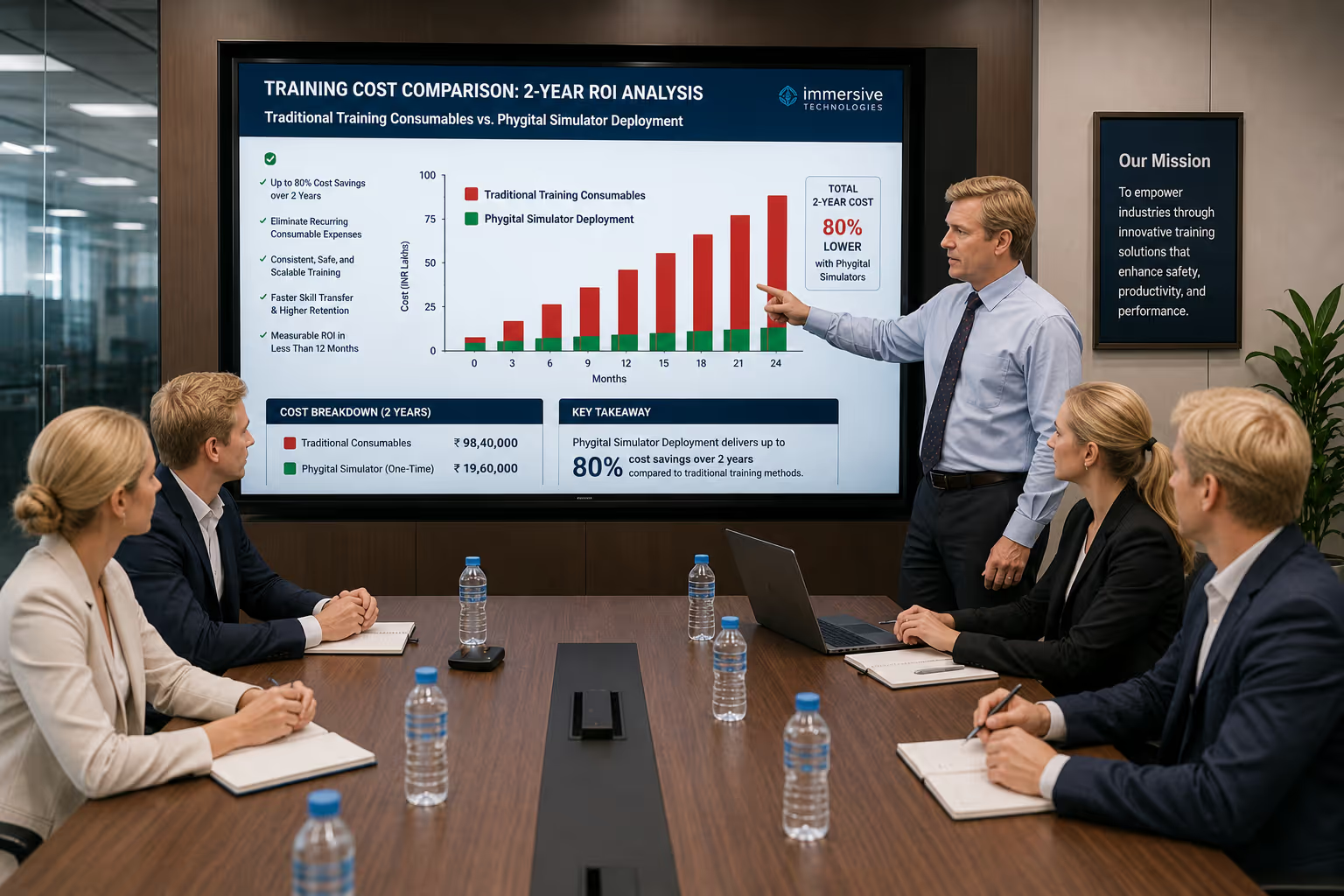
The deployment of phygital welding and painting simulators delivers a compelling Return on Investment (ROI), particularly in the cost-sensitive Indian manufacturing sector. The financial model is built on the elimination of recurring consumable costs and the acceleration of the training timeline.
The pricing structure for these advanced systems is highly competitive when compared to the long-term costs of traditional training. A complete phygital welding simulator unit—including the standalone XR headset, the tracked physical torch, the proprietary software, and the analytics dashboard—is priced between INR 11 Lakhs and INR 12 Lakhs. While this represents a significant initial capital expenditure, the payback period is remarkably short. By eliminating the need for practice steel, shielding gas, and welding wire during the foundational learning phases, a busy ITI or corporate academy can recoup the cost of the simulator within 12 to 18 months, depending on trainee throughput. This rapid ROI makes the technology accessible not just to massive multinational corporations, but also to mid-sized manufacturing firms and government-funded vocational institutes looking to modernise their training infrastructure without breaking the bank. The long-term financial benefits extend beyond just consumable savings, factoring in the reduced cost of rework, lower insurance premiums due to improved safety records, and the increased overall productivity of a faster-trained workforce. Furthermore, the hardware itself is designed for durability in industrial environments, ensuring that the initial investment continues to yield returns for years to come without requiring frequent replacements or expensive maintenance contracts.
~70%Reduction in consumable raw-material costs during foundational training phases
~40%Faster speed to certification-ready competency for trainees
100%Elimination of burns, fume inhalation and physical injuries during simulated modules
12-18 moTypical payback period on the INR 11-12 Lakh per-unit investment
Key Performance Indicators (KPIs) for the phygital simulator deployment highlight its transformative impact:
Consumable Cost ReductionUp to 70% reduction in the cost of raw materials (steel, gas, paint, shielding wire, and industrial coatings) used during the foundational training phases of the curriculum.
Speed to CompetencyTrainees reach certification-ready skill levels up to 40% faster due to real-time, objective feedback and increased practice time.
Safety Incidents100% elimination of burns, fume inhalation, and other physical injuries during the simulated training modules, significantly reducing liability.
Assessment Accuracy100% objective, data-driven scoring of trainee performance, eliminating instructor bias and standardising certification.
Conclusion
The introduction of phygital welding and painting simulators by a leading Indian XR manufacturer marks a critical turning point for industrial skills training in the region. By moving beyond generic VR and integrating precise physical tools with immersive digital environments, these simulators solve the fundamental challenges of traditional vocational education: high costs, safety risks, and subjective assessment.
For ITIs and corporate academies, the value proposition is clear. The initial investment of INR 11-12 Lakhs per unit is rapidly offset by the massive reduction in consumable waste and the accelerated speed to competency. More importantly, these systems produce a higher calibre of tradesperson—one who has developed perfect muscle memory in a zero-risk environment and is ready to contribute to the factory floor from day one. The objective, data-driven assessment provided by the simulators also ensures that certification is based on measurable skill rather than subjective opinion, elevating the overall standard of the trade. As India continues to position itself as a global manufacturing hub, the adoption of phygital training technologies will be essential for building the highly skilled, future-ready workforce required to sustain that growth. By embracing these advanced tools, Indian manufacturers can ensure they remain competitive on the world stage, delivering high-quality products while simultaneously improving worker safety and reducing environmental impact.
Frequently Asked Questions
Q1What exactly does 'phygital' mean in the context of these simulators?
'Phygital' is a blend of physical and digital. In these simulators, it means the trainee wears a digital XR headset but holds a physical, realistic replica of the actual tool (like a welding torch or spray gun). This physical peripheral is tracked in real-time, allowing the user to develop genuine muscle memory and feel the weight of the tool, which is impossible with standard plastic gaming controllers.
Q2How much does a complete phygital welding simulator cost in India?
A complete, enterprise-grade phygital welding simulator—which includes the standalone XR headset, the tracked physical torch peripheral, the proprietary training software, and the analytics dashboard—is typically priced between INR 11 Lakhs and INR 12 Lakhs per unit. This one-time capital expenditure is designed to replace the ongoing, recurring costs of physical training consumables.
Q3How quickly can an ITI or corporate academy expect to see a Return on Investment (ROI)?
The ROI is primarily driven by the elimination of consumable costs (steel plates, shielding gas, welding wire, industrial paint) during the foundational learning phases. For a busy training centre with high trainee throughput, the savings on these materials typically offset the initial INR 11-12 Lakh investment within 12 to 18 months.
Q4Do these simulators replace the need for real-world, physical training entirely?
No, the simulators are not designed to completely replace physical training. They are designed to replace the foundational and intermediate stages of learning. Trainees use the simulators to perfect their technique, muscle memory, and understanding of parameters in a safe, zero-waste environment. Once they achieve a high proficiency score virtually, they transition to the real workshop for final finishing and certification, requiring significantly less physical practice time.
For India: Rrahul Sethi at rrahul@metaverse911.in
For Global inquiries: Vandana Bansal at vandana@metaverse911.co.uk
Q5What specific metrics do the welding and painting simulators track?
The welding simulator tracks four critical parameters in real-time: work angle, travel angle, travel speed, and contact-tip-to-work distance. The painting simulator tracks the distance of the gun from the surface, the speed of the stroke, the angle of application, and calculates the exact thickness of the applied virtual coating, highlighting areas of overspray or under-application.
Q6Are these simulators difficult to set up and maintain in a standard classroom?
No, they are designed for easy deployment. Because they utilise standalone XR headsets, they do not require complex tethering to high-end gaming PCs or extensive external tracking cameras. The systems are essentially plug-and-play, requiring only a standard power outlet and a clear physical space for the trainee to stand and operate the physical peripheral safely.
Q7Can the software be customised for specific industrial processes or proprietary coatings?
Yes, the software can be tailored to meet specific corporate requirements. While the base modules cover standard MIG, TIG, and Stick welding, or standard industrial spray painting, the development team can create bespoke virtual environments, specific workpiece models, or simulate the exact viscosity and behaviour of proprietary industrial coatings used by a specific manufacturer.
For India: Rrahul Sethi at rrahul@metaverse911.in
For Global inquiries: Vandana Bansal at vandana@metaverse911.co.uk